
Erik Visits an American Grave, Part 2,185
 By
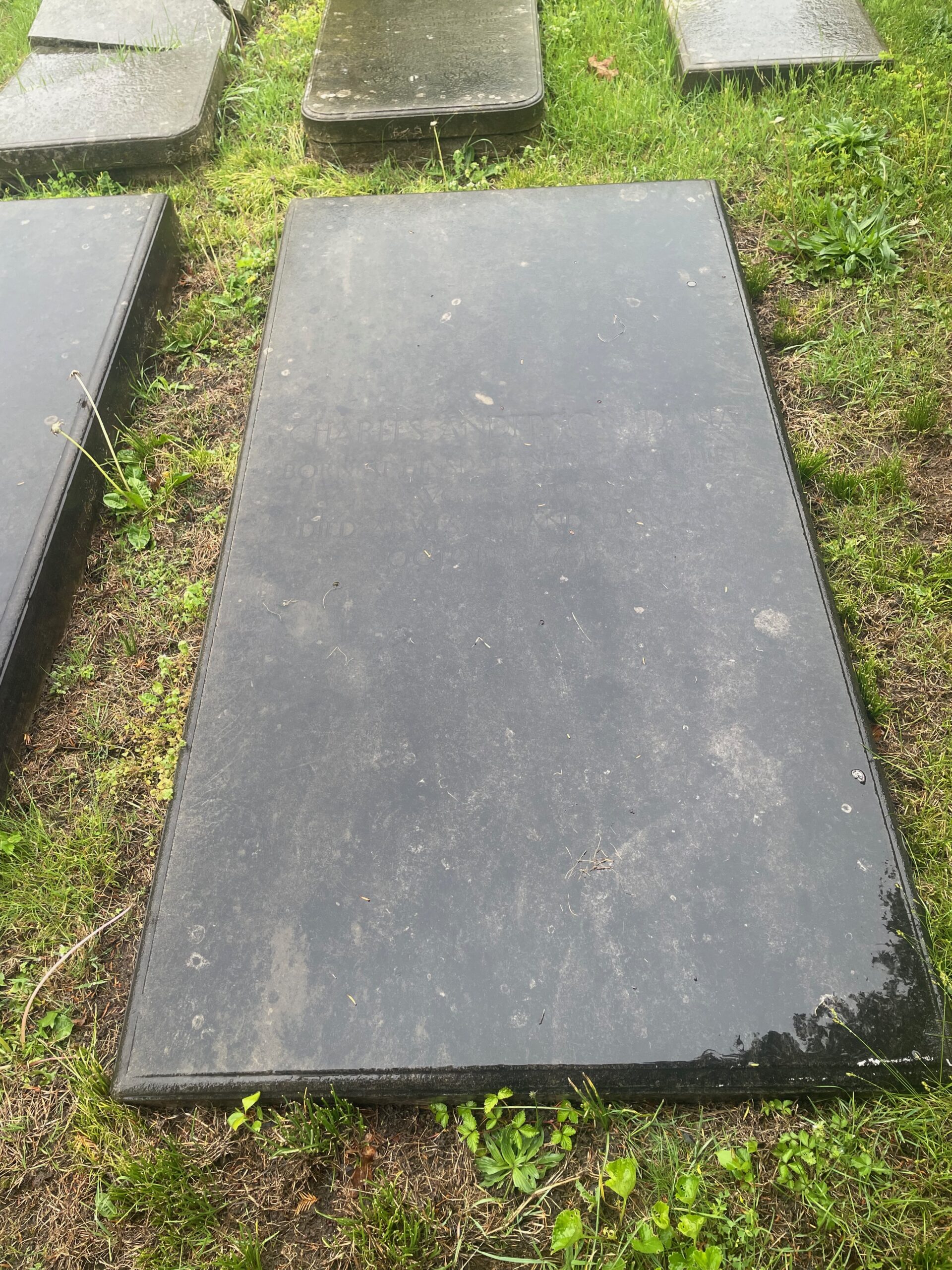
By This is the grave of Charles Anderson Dana.
Born in Hinsdale, New Hampshire in 1819, Dana grew up not crazy rich but well off enough. The family was very old Puritan, but they had to work and things. In fact, before Dana went to Harvard in 1839, he worked as a clerk in his uncle’s general store in Buffalo, so that gives you a sense I think of the type of class the family held. Dana did not finish at Harvard. He had bad eyes and it was too hard for him to do the work. Oddly this did not stop him from a long career with words.
This was now the 1840s and it was a great era for seekers and their weird intentional communities. Dana was at Brook Farm for awhile, where he edited their publication. He went to Europe and met Karl Marx. He then came back to the U.S. and got involved in anti-slavery. In 1849, he became the editor of the New York Tribune, owned by Horace Greeley but largely operated by Dana. It was Dana who made Marx a correspondent for the paper, commenting on American matters from Europe, during much of the 1850s. Marx always needed money so he gladly accepted work like this. Now, Greeley wasn’t always the most antislavery guy. Dana changed the paper and made it a leading anti-slavery journal, giving Greeley some backbone on it. Then the Republican Party started and the Tribune soon became one of its leading journals.
In 1861, Dana went to Albany to try and get Greeley placed into the Senate. He nearly succeeded but it ended up being Ira Harris instead, and who doesn’t remember that Titan of the Senate? But him and Greeley were beginning to split. Part of it had to do with disagreements over the military performance in the war, a subject on which everyone was a self-appointed expert and some of it personal. So Dana was effectively fired in 1862. But as a powerful Republican, Dana got brought into the government to work in the War Department. Dana didn’t know anything about war, but neither did anyone else basically, very much including Edwin Stanton, who was Secretary of War, though he turned out to be quite good at the job. Dana’s job was to investigate corruption in the department and its contractors and there was so, so much of it. He busted up a bunch of it.
This endeared Dana very much to Abraham Lincoln, who then used Dana as what he called “the eyes of the administration.” He was basically a spy for Lincoln on his own men. One of his assignments was to go to hang out with Grant’s army and report back on just how much the general drank anyway. Dana said it wasn’t really a problem. Had he, who knows if Grant would have risen. In fact, Dana became a huge supporter of Grant, was with him during key campaigns, including at Vicksburg, and urged Lincoln to promote him to top commander of the Army.
Dana left the government in 1865. He briefly ran a paper in Chicago that didn’t succeed. In 1868, Dana started a new paper–the New York Sun. At first, he was a big Grant guy. But then like his former mentor Greeley, he turned sharply against the president. There were two sides to this whole thing, including with Greeley. The first was that there was legitimately horrible corruption in the administration. Not with Grant personally–he was the mark–but everyone around him. The Grant years are like the Trump years when it comes to corruption, if Donald Trump was not himself personally corrupt but was too stupid to see what was going on around him. The second was that for a lot of former anti-slavery whites, the North had done enough for the ex-slaves and now it was time to bring the nation back together again. Grant actually cared about the fate of the freedpeople and increasingly people such as Greeley and Dana began to think that he was favoring blacks over whites and that was just outrageous to them. Dana reunited with Greeley, since they both now had turned on Grant, to support the Liberal Republican challenge to the General and then Greeley’s ill-fated run as the Democratic candidate in 1872.
By this time, his move toward the Democratic Party was getting pretty complete. At first, his schtick was that this would be a paper for the working man–and the urban working class has largely been Democratic for most of the nation’s history. But Dana was getting old and conservative and he liked his money. So this one-time radical just became a Gilded Age plutocratic hack with the Sun in his later years. He also became a stone cold racist. He went crazy with the rise of Jack Johnson in boxing, writing, “The black man is rapidly forging to the front ranks in athletics, especially in the field of fisticuffs. We are in the midst of a black rise against white supremacy.” This from one of the leading newspapermen in the anti-slavery cause.
Really, it became very, very gross. Dana had become a cynic. He thought the labor movement was evil. Despite his dislike over the Grant-era corruption, he opposed civil service reform. He was a huge supporter of Samuel Tilden’s campaign in 1876 and referred to Rutherford B. Hayes in the paper as “the fraud president.” But really, he was just hater. He turned the Sun into a paper that hated everything except the defense of the rich privileged over anything else. So despite being a Democratic paper in the theory, Dana loathed Grover Cleveland except for one thing–calling in the Army to bust the Pullman strike in 1894. The thing between Dana and Cleveland seems to have been personal. Back in 1884, when Cleveland ran his first campaign, Dana supported Benjamin Butler’s third party campaign with the Greenbackers–a platform the editor did not support–because he could not support Republicans anymore and wouldn’t support Cleveland under any circumstances. Of course the entire idea of William Jennings Bryan made this now old crank shudder with horror.
Dana was also just laughable later in life. He hated the rise of the new popular newspapers led by people such as William Randolph Hearst and Joseph Pulitzer. But it wasn’t just the so-called yellow journalism. It was the Linotype and the rise of advertising. The idea that the new fangled papers are bad because of the type of printing they use, what could sum up an old and out of touch man more than this?
Dana finally died in 1897, at the age of 78. He seemed 128 based on his attitudes toward the world.
Charles Anderson Dana is buried in Saint Paul’s Episcopal Church Cemetery, Glen Cove, New York.
If you would like this series to visit other newspaper barons, you can donate to cover the required expenses here. Benjamin Henry Day is in The Bronx and Adolph Ochs is in Hastings-on-Hudson, New York. Previous posts in this series are archived here and here.