
Billionaire Derangement or Elective Affinity
 By
By 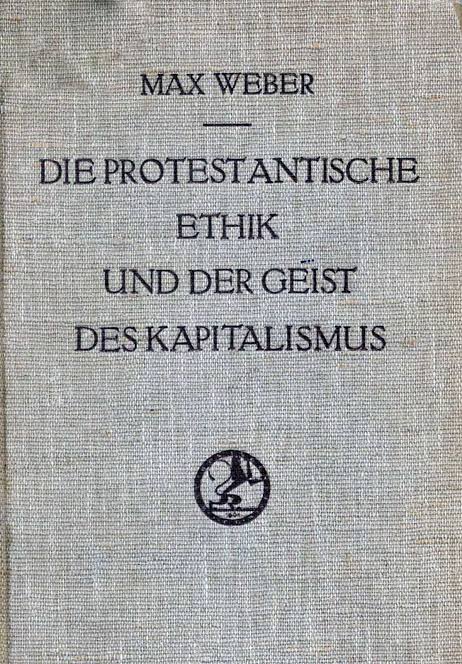
Henry Farrell’s blog Substack is always worth reading. If you don’t follow it, you should. But if you aren’t a regular reader, I wanted to call your attention to his recent essay on “The Political Economy of Billionaire Derangement Syndrome.” He starts by contrasting a piece by Tyler Cowen, in which Cowen bemoans rising political animosity toward our natural betters, with one by Tim O’Reilly. Both are ostensibly “classical liberals,” but only one recognizes that technology venture capitalists have become dangerous enemies of market capitalism.
Tyler’s riff [on “Trump Derangement Syndrome”1insinuates that you likely have a screw loose if you oppose the political influence of billionaires. But what if you turned this phrase against itself, and instead asked why some tech billionaires seem to be deranged?
Then, I think that you could weld it together with Tim’s basic argument [link] to reach some plausible conclusions about how this happened. Under the wrong conditions, undisciplined princely appetites can transform into madness.
Henry provides a helpful summary of his own “theory”:
…Thiel’s lectures and book provide good, if incomplete evidence that the princely passions described by Hirschman didn’t disappear, but went underground. Commerce and power were fused into a new ideology of entrepreneurial virtù that became highly influential among the founder community in Silicon Valley. This combined with Silicon Valley’s (and popular culture’s) tendency to connect genius with eccentricity, not simply selecting people who seemed strange, but compounding their strangeness through self-reinforcing feedback loops. Finally, this all happened in an intimate social environment of founders and funders. Billionaires know each other and measure themselves and their success against those they consider peers, in a dense entangled clique that commingles high degrees of mutual influence with rivalries and jealousies.
O’Reilly’s piece, which I can’t read because paywall, centers Adam Smith. I assume this is why Henry doesn’t himself invoke Smith’s observation that “People of the same trade seldom meet together, even for merriment and diversion, but the conversation ends in a conspiracy against the public, or in some contrivance to raise prices.”
Henry’s focus is on ideology — or, rather, the social and cultural conditions among tech elites that have facilitated their embrace of authoritarianism and fascism. The drawback of this focus is straightforward: it can sideline the more prosaic reason why corrupt oligarchs might form alliances with the reactionary right.
In a post published on the same day as Henry’s, Dean Blundell points out that:
So follow the bouncing ball. The man facing a French criminal investigation that touches on child sexual abuse material has thrown his rhetorical weight behind the French politician who campaigns against the very judiciary investigating him — a politician who frames her own conviction, like his own legal problems, as elite persecution. Musk has spent years boosting Europe’s hard right — Germany’s AfD, “Make Europe Great Again,” the whole catalogue. Now it’s not ideology. It’s a legal strategy. A National Rally government in the Élysée is worth more to Elon Musk than any law firm on the planet.
Is that provable intent? No. Is the incentive structure staring us all directly in the face? Absolutely. When your legal exposure in a country is existential, and your political project in that country happens to be replacing the government prosecuting you, the word for that isn’t “coincidence.” The word is “motive.”
And:
Britain, meanwhile, moved faster than anyone. On January 12, 2026, Ofcom opened a formal investigation into X under the Online Safety Act over Grok’s deepfakes — including images that may amount to child sexual abuse material. Penalties on the table: fines up to 10% of global revenue, and in an extreme case, courts ordering British internet providers to block X entirely. Prime Minister Keir Starmer called the images “disgusting” and “unlawful,” said all options including a ban were on the table, and his business secretary confirmed — on the record — that yes, X could be banned. In February, the UK’s Information Commissioner’s Office opened a secondinvestigation, into whether X and xAI unlawfully processed people’s personal data to build the deepfake machine in the first place. The European Commission piled on January 26. Malaysia and Indonesia just straight-up blocked Grok.
Musk’s response to a government threatening to unplug his platform? He’s called the UK government “fascist.” He’s spent two years torching Starmer with “TwoTierKeir” posts and — per Financial Times reporting — has held private discussions about how to oust Starmer before the next election. And of course there’s Nigel Farage and Reform UK, where reports of a potential Musk mega-donation of up to $100 million kicked off in late 2024 and spooked Westminster so badly that the government is right now passing legislation specifically to close the “Musk loophole” — the ability of a foreign billionaire to route political money through a UK subsidiary of X. Farage himself has bragged that Musk has “already given me considerable help.”
Musk’s investment in Trump certainly paid off. Musk used DOGE to shut down multiple government investigations against his businesses. And the Trump administration is currently trying to block an NAACP lawsuit against xAI for illegally poisoning its neighbors.
The term we’re looking for here is “elective affinity.”
