
Economic anxiety does not explain the neo-Nazi win in Germany
 By
By 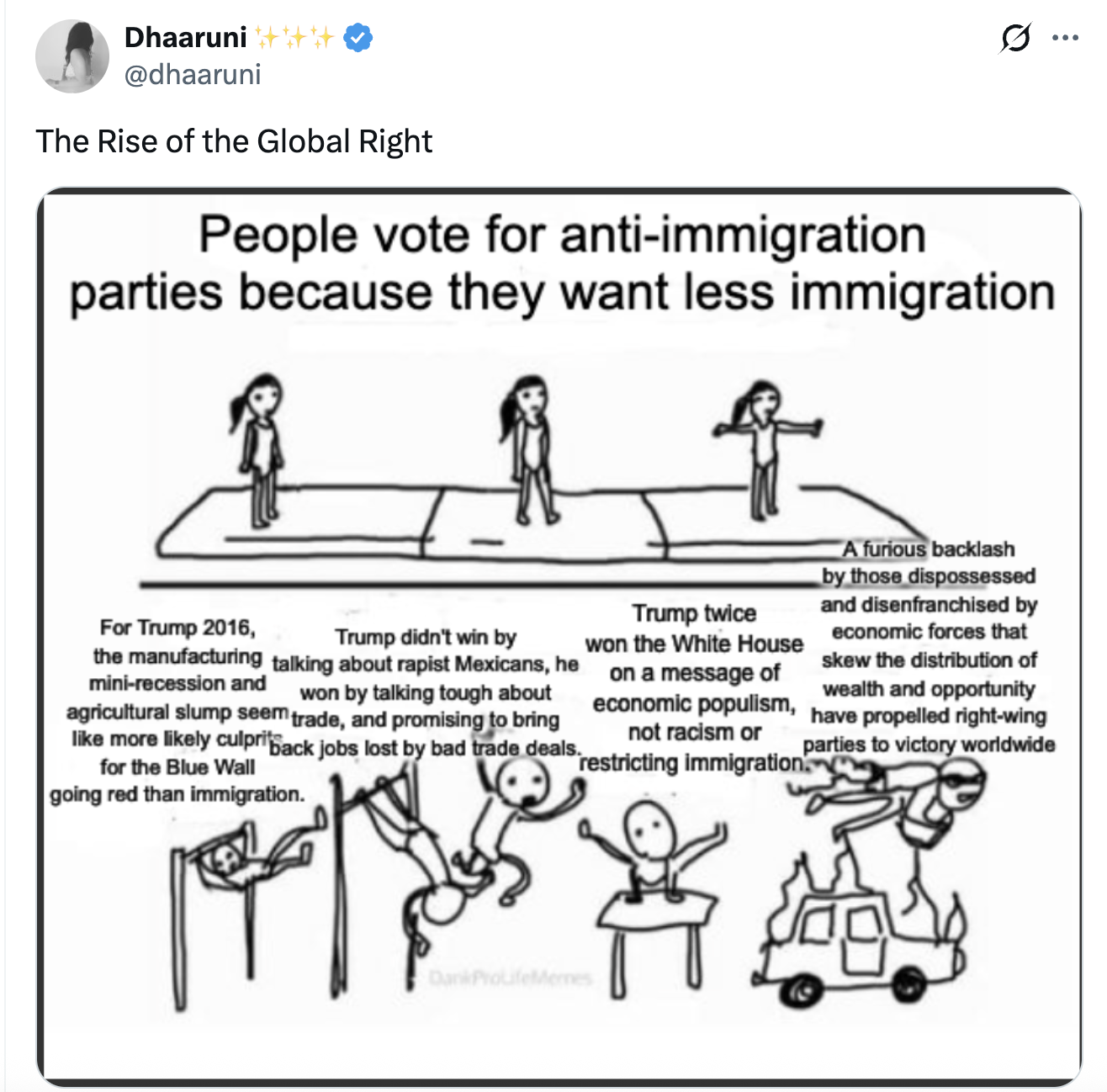
Krugman observes that the AfD win in Germany occurred despite Germany running trade surpluses and having a disproportionately high share of MANLY MAN manufacturing jobs:
Neo-Nazis — no point in euphemisms — just won big in the rough equivalent of a state-level election in Germany. America’s leading neo-Nazi — again, no point in euphemisms — congratulated the AfD (in German) on the result, and in return received “thanks for your support” from the AfD’s lead candidate.
In the days and weeks ahead there will be many analyses of the results and its implications from people who, unlike me, know something about German politics. For now, let me do something more parochial, and write about what the Sachsen-Anhalt election might teach us about U.S. political economy.
So, about America: Make America Great Again meant different things to different people — racism, of course, being a key component. But in Donald Trump’s mind it also clearly meant trying to bring back “manly” jobs. He would do this by imposing tariffs to eliminate trade deficits, which, in his garbled version of economics, would end huge U.S. “giveaways” to surplus nations. And this would, in turn, lead to a huge revival of U.S. manufacturing employment.
Why is Germany relevant to this story? Because in terms of both trade balances and manufacturing Germany is, in effect, the anti-America. Where we do indeed run large trade deficits, Germany runs huge surpluses. And while Germany, like every other advanced economy, has seen the manufacturing share of employment decline over time, it remains a more industrial nation than the U.S. has been since the 1980s.
Indeed, relative to the size of its economy, Germany runs trade surpluses and retains large-scale manufacturing employment to an extent that lies far beyond the wildest dreams of Trumponomics.
And none of this appears to make a bit of difference to the resentment that underlies right-wing extremism on both sides of the Atlantic.
And more directly, as Adam Tooze explains “if you ask [AfD voters] what they think about the AfD and why they voted for it, economic issues are barely mentioned. What comes first is security, foreigners, woke politics, remoteness etc.” Which makes sense, since the AfD is also right-wing on economics.
It’s a nice story that the left can beat the global xenophobic, authoritarian right by providing more material benefits to voters, but it’s also at least 95% fiction. That’s no reason not to enact good ecomoomic policy, but let’s not kid ourselves about what’s driving the opposition.