
Erik Visits a (Latin) American Grave, Part 2,226
 By
By This is the grave of Emiliano Figueroa.
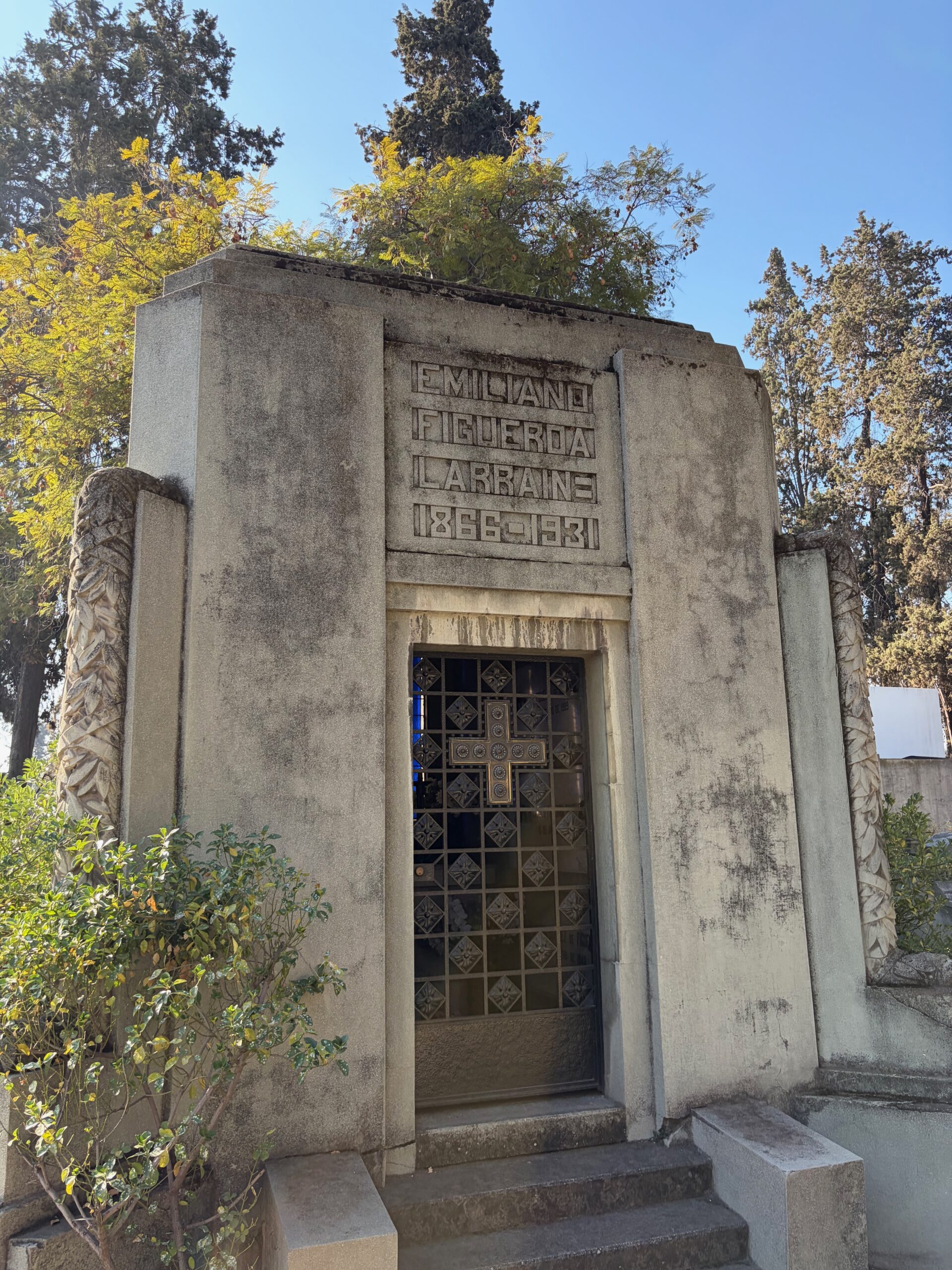
Born in 1866 in Santiago, Chile, Figueroa grew up wealthy and went into the law and politics. He studied law at what is today the University of Chile, finishing that in 1889. He immediately got a job as the secretary for a government official in Santiago and he was off on a path of success. He became a member of the Liberal Democrats, better known as the Balmacedists, named after José Manuel Balmaceda, the liberal president who killed himself in 1891 during a coup against his government. This was a classic liberal versus conservative civil war, the type that happened over and over again in Latin America during these years. The Balmacedists were good classic liberals–separation of church and state, freedom of elections, and the domination of business interests under a classic liberal economy. They also believed in a strong central executive and as Figueroa rose in the party, this was a position he felt more and more. Figueroa was sent to the Chamber of Deputies repeatedly in the first decade of the twentieth century, from various constituencies as the party made sure to find a place for him.
In 1910, Chile faced a crisis. Its president, Pedro Montt, died. There doesn’t seem to have been a clear succession of office in Chile. So the Deputies named the minister of the interior Elias Fernandez Albano the new president. He died three weeks later. So now what? The answer was to push Figueroa, who was the new minister of the interior, as the president until the nation could figure out what to do. He kept the job until almost the end of the year, when a permanent replacement, Ramon Barros Luco, was named. Luco then sent Figueroa to Spain as ambassador, possibly as repayment, possibly to get an ambitious challenger out of the way. He was ambassador to Spain from 1911 to 1914 and then was switched to ambassador to Argentina.
Now, Figueroa was the kind of guy who people found useful, but was not exactly taken seriously. He was competent enough, but non-threatening to the leaders of any of Chile’s political parties. So he served in various positions, fairly forgettably. But Chile was a political mess in the 1920s. There were fears that serious campaigning could lead to civil war. So the three major political parties came together and chose a consensus candidate for president that they could all live with. That was Figueroa. One workers party didn’t go along with the scheme. But it didn’t really matter. Figueroa became president.
It will not surprise you in this scenario that Figueroa was a super weak president. The real power player in Chilean politics at that point was Carlos Ibañez. He was a colonel in the army who had been involved in coups before this 1925 deal. Part of the agreement was that Ibañez would remain as Interior Secretary. So Ibañez had no intention of listening to Figueroa. He tried to tell Figueroa was to do and when Ibañez ordered the arrest of Figueroa’s brother, who was head of the nation’s Supreme Court, Figueroa resigned. Ibañez then became president.
It’s not as if Ibañez moved against Figueroa after this. In fact, he named Figueroa ambassador to Peru in 1928. He stayed only for a year and returned to Santiago to run the nation’s central bank,
Figueroa was in a car accident in 1931 and he died. He was 64 years old.
Emiliano Figueroa is buried in Santiago General Cemetery, Santiago, Chile.
If you would like this series to visit some American ambassadors to Chile, you can donate to cover the required expenses here. John Pendleton is in Culpepper, Virginia and Balie Peyton is in Gallatin, Tennessee. Previous posts in this series are archived here and here.