
Erik Visits an American Grave, Part 2,177
 By
By This is the grave of Henry Laurens Pinckney,
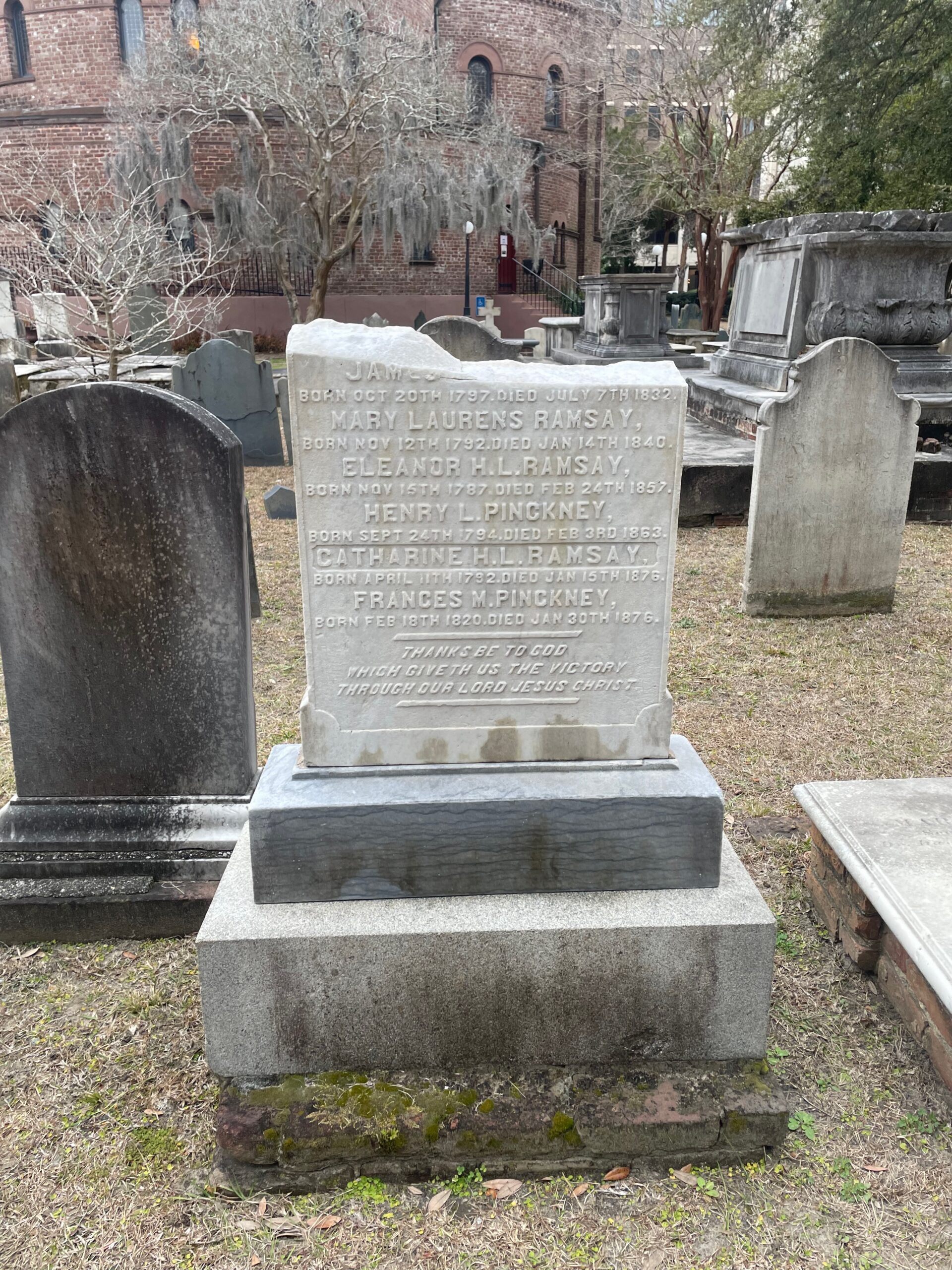
Born in 1794 in Charleston, South Carolina, Pinckney was in the most elite family of early South Carolina politics. The Pinckney’s dominated the region in the Early Republic. His father was Charles Pinckney, signer of the Constitution, governor, and senator, and other Pinckney’s were in high places from the signing of the Declaration of Independence through the 1830s. In some ways, the story of Henry Laurens Pinckney, named after their ally Henry Laurens, is that of South Carolina going nuts over slavery in the early 19th century.
Of course South Carolina was always going to be pro-slavery. That was the case in 1776, when it and Georgia forced the other colonies to step back on the anti-slavery rhetoric when devising the Declaration of Independence if they wanted these southern colonies to join. That continued into the Constitutional period, when difficult negotiations took place that eventually led to the end of the transatlantic slave trade in 1808, but gave a long offramp from 1787 at least. Slavery was never in doubt in South Carolina, not until that state led the movement to commit treason in defense of slavery. But boy did the South Carolina ruling class make mountains out of molehills.
Anyhow, Pinckney went to the good schools in South Carolina like other members of the elite did. That included South Carolina College in Columbia, which is today the University of South Carolina. There’s really nothing about Columbia today that makes anyone think that this was the real home of the state’s elite, but it was back then since it was less hot than Charleston. Pinckney then read for the law and passed the bar. Like expected, he ran for the legislature in 1816. He would stay there for the next 16 years, which was kind of unusual for someone of this family, since higher office would have been expected.
But then the Nullification Crisis happened. To review, in 1828, Congress passed a new tariff that raised rates on imported raw material. This was a response of northern manufacturers to competition and it fell mostly on the agricultural interests of the nation. Well, people could reasonably disagree on things, but the South Carolina elite around John C. Calhoun were not reasonable about anything. Turning against the democratic tide of the nation that empowered white males, these elites wanted to maintain control of their state and nation for themselves. So they responded without reason. Fearing that a tariff that helped the northern states presaged a northern attack on the institution of slavery (which was on no one’s mind in 1828), Calhoun called it the Tariff of Abominations. Then when Andrew Jackson, a southerner himself, did not improve on it much with the 1832 revisions, Calhoun claimed that states could nullify federal law. This led Jackson to threaten to hang Calhoun during a toast at a dinner that Calhoun himself attended. So that scared Calhoun enough for him to back down. But the elites of South Carolina were really serious about nullification. The issue began to dominate the state’s politics. By 1830, the Nullifiers were winning elections in South Carolina, with particular strength among younger voters and those in the lowcountry.
Pinckney joined the Nullifiers and this gave him the boost his stalled political career needed. He was elected to Congress in 1832 as a Nullifier and he won reelection in 1834. But he wasn’t enough of a true believer for the real radicals. In 1836, Pinckney proposed what became known as the Gag Rule. Antislavery groups were a small minority of northerners at this time, but they were flooding Congress with petitions that got read during sessions, slowing the body to a near halt. So Pinckney proposed to table all of them. They would be entered into the Congressional Record but with no reading, debate, or discussion, basically killing the entire point. So why did being the man behind the Gag Rule upset the radical Nullifiers? Pinckney’s idea was shifting the petitions to a committee instead of rejecting them entirely, which would have forced Congress to become an explicitly pro-slavery institution.
This infuriated Calhoun. See, the particular petition that led to this bill and the Gag Rule was about abolishing slavery in Washington. For Calhoun, by not rejecting it entirely, it left on the table the constitutional right to in fact do that very thing. Thus for Calhoun, Pinckney had betrayed his class and race and he pulled his support of the congressman. Pinckney worked with Martin Van Buren here and by this time, Van Buren was seen as a traitor to pro-southern causes, which is insane if you aren’t totally out to lunch, but this was South Carolina. Calhoun also wanted to destroy Van Buren, who he loathed. So Pinckney working with Van Buren was double treason. In conclusion, Pinckney, again, the guy who actually moved the Gag Rule through Congress, which became a major rallying point for anti-slavery forces and gained an important enemy in John Quincy Adams, who would spend the remainder of his career fighting for its repeal, was far too soft for South Carolinians. Crazy stuff.
Pinckney was a true believer in all this stuff too, even if he was too grounded in reality to remain in Congress. Don’t let Calhoun destroying Pinckney’s political career fool you. Shortly before returning home, in 1837. Adams attempted to read a petition from slaves in Congress. Pinckney replied that this was just ridiculous. He stated, he would “just as soon would have supposed that the gentleman from Massachusetts would have offered a memorial from a cow or horse–for he might as well be the organ of one species of property as another.” Classy! This is Pinckney’s most famous quote and where he usually gets mentioned in the history books. I guess it does sum up a certain way of thinking.
Also, for example, Pinckney was a committed Congregationalist as well. There was long debate in the slaveholding community about teaching Christianity to slaves. As proslavery sentiment hardened, Pinckney and others began to turn against it. He stated to other visting Congregationalists that he felt that religious instruction tended to increase slave resistance and that slaves were not able to have the kind of moderate Christianity he felt was appropriate; after all, what if they didn’t take the story of the Israelites escaping slavery in Egypt as saying that they should stay in slavery in South Carolina? And in fact, while in the state legislature, he had served for a bit as Speaker of the House, where he saw through a bill not making it illegal to teach slaves to read, but free blacks as well. That came in the wake of the Nat Turner revolt. The bill also made it illegal for free blacks to drink liquor or share it with slaves. Evidently, these whites couldn’t imagine a slave rebellion unless the slaves were drunk.
Later, Pinckney was named collector of the Port of Charleston in 1841, when John Tyler decided to staff the government with far-right pro-slavery figures. He did that for about a year. The rest of his life, he was just a local tax collector, mostly staying out of state politics. He did live to see his nullification politics come to fruition, when South Carolina led the march to commit treason in defense of slavery in late 1860. He did not live to see the state be crushed and burned by Sherman however. He died in 1863, at the age of 68.
Henry Laurens Pinckney is buried in Circular Congregational Church Burying Ground, Charleston, South Carolina.
If you would like this series to visit other leading slavers, you can donate to cover the required expenses here. George Fitzhugh is in Huntsville, Texas and Stephen Decatur Miller is in Decatur, Mississippi. Previous posts in this series are archived here and here.