
The return of Judeo-Bolshevism
 By
By 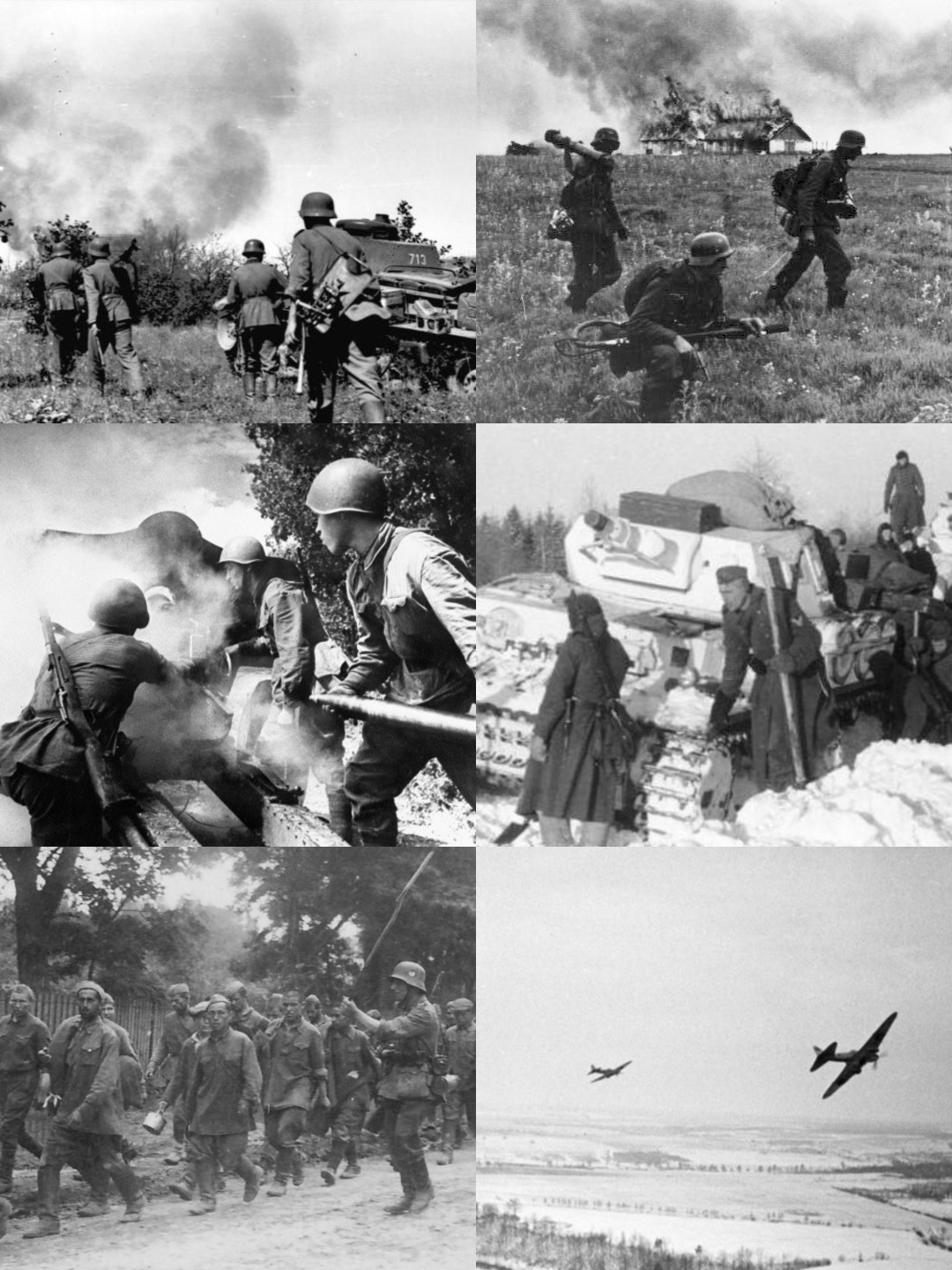
Donald Trump is now talking a lot about “godless communism,” and by “godless communism” he means “illegal aliens,” and by “illegal aliens” he means “Democrats,” and by “Democrats” he means ultimately what his distinguished predecessors referred to as “the Jewish-Bolshevik bacillus.”
I highly recommend this NYRB essay by the historian Omer Bartov about how, in the Nazi imagination, “Jew” and “Bolshevik” were two sides of the same coin, which needed to be destroyed:
The Nazi identification of Jews with Bolsheviks only intensified as the Soviet counterattack took a devastating toll on the German army. Joseph Goebbels, Hitler’s minister of propaganda, delivered his notorious “total war” speech in February 1943, reiterating that the “goal of Bolshevism is Jewish world revolution” and announcing that the country would “take the most radical measures.”
The speech was made after the German debacle at the Battle of Stalingrad, which heralded the Red Army’s long and bloody march to the West that culminated in the capture of Berlin. In Europe and North America we tend to remember D-Day as a turning point in the war. In fact, it was Stalingrad. Even after the Western Allies landed in Normandy, between June and December 1944 the Wehrmacht lost ten times as many troops fighting the Red Army as it did fighting the Anglo-American forces in Western Europe. Long before that, the Nazi leadership had warned the Germans of the fate they could expect in case of defeat. “Behind the onrushing Soviet divisions,” screamed Goebbels in his speech, “we already see the Jewish death squads, and behind them, complete anarchy and famine for millions.” Nazi propaganda had perfected the art of projection: the retreating Wehrmacht pursued a scorched earth policy that ravaged vast stretches of Soviet territory. Soviet troops never engaged in a policy of genocide and enslavement in Germany remotely like that of the Germans in the USSR. However, brutalized by years of war and the ruin of their own land, they did commit mass violence against German citizens, especially mass rapes on an unprecedented scale. . .
At a meeting in the summer of 1941, Hitler told Heinrich Himmler to treat the Jews “like partisans,” making precisely the analogy that appeared in the orders for Barbarossa. This was a drastic shift from violent persecution, ghettoization, and forced labor to the outright extermination of men, women, and children. By the end of 1941 the Germans had murdered nearly 100 percent of the Jews detained in areas that had previously been under Soviet rule, and 15 to 25 percent of the Jews—most of them men—in areas previously under Polish rule. As Hellbeck puts it, “The mass murder of all Jews—young and old, male and female—began with the murder of Soviet Jews” and then “radiated out,” first to the “occupied Western peripheries of the Soviet state, then spreading farther west.” We cannot say what would have happened had Hitler decided not to invade his erstwhile ally, but we can say that the war in the East and the increasing ferocity of the Holocaust were inextricably linked.
Popular memory tends to separate the Holocaust and the German war against the Soviet Union, but for the Nazi regime they were two faces of the same undertaking. General Erich von Manstein, commander of the Eleventh Army, instructed his troops on November 20, 1941, that “the German Volk is in the midst of a battle for life and death against the Bolshevik system.” “This battle,” he stressed, is conducted “not only in a conventional manner according to the rules of European warfare.” The troops should understand that “Judaism is the mediator between the enemy in the rear and the still fighting remnants of the Red Army and the Red leadership.” Hence, “the Jewish-Bolshevik system must be eradicated once and for all.”
Manstein was hardly alone. General Walter von Reichenau, commander of the Sixth Army, appealed to his troops on October 10, 1941, reminding them that “the essential goal of the campaign against the Jewish-Bolshevik system is the complete destruction of its power instruments and the eradication of the Asiatic influence on the European cultural sphere.” The task of the troops, he insisted, must “go beyond the conventional unilateral soldierly tradition,” since in the East the soldier is “a carrier of an inexorable racial conception and the avenger of all the bestialities which have been committed against the Germans and related races.” Soldiers must have “complete understanding for the necessity of the harsh, but just atonement of Jewish subhumanity.” Indeed, as the commander of the XLVII Panzer Corps reminded his troops on the eve of the invasion, “We have never forgotten that it was Bolshevism which had stabbed our army in the back during the [First] World War and which bears the guilt for all the misfortunes our people has suffered.” Now, as General Erich Hoepner, commander of Panzer Group 4, told his troops, it was time to engage in “the defense of European culture against the Muscovite-Asiatic flood, the warding off of Jewish Bolshevism.”
These citations come from German documents I used for my dissertation and were later printed in my book Hitler’s Army, published thirty-five years ago. What was new at the time came to be an accepted historical fact in the following two decades. But scholarly history is one thing, public perceptions another, and the connection between Germany’s war in the East and the launching of the Holocaust remains unknown in much of the West.
There is much more to say about this, but the central point here is that for the fascist there is only the Enemy, and while the Enemy has many names — alien, communist, socialist, Jew, feminist, atheist, colored, Asiatic, gay, trans, etc etc etc –it is always the same Other, that must somehow be annihilated in order to purify the state, and return it to a lost golden age. And that is the real meaning of Make America Great Again.