
Erik Visits a (Non) American Grave, Part 2,209
 By
By This is the grave of Edward Poynter.
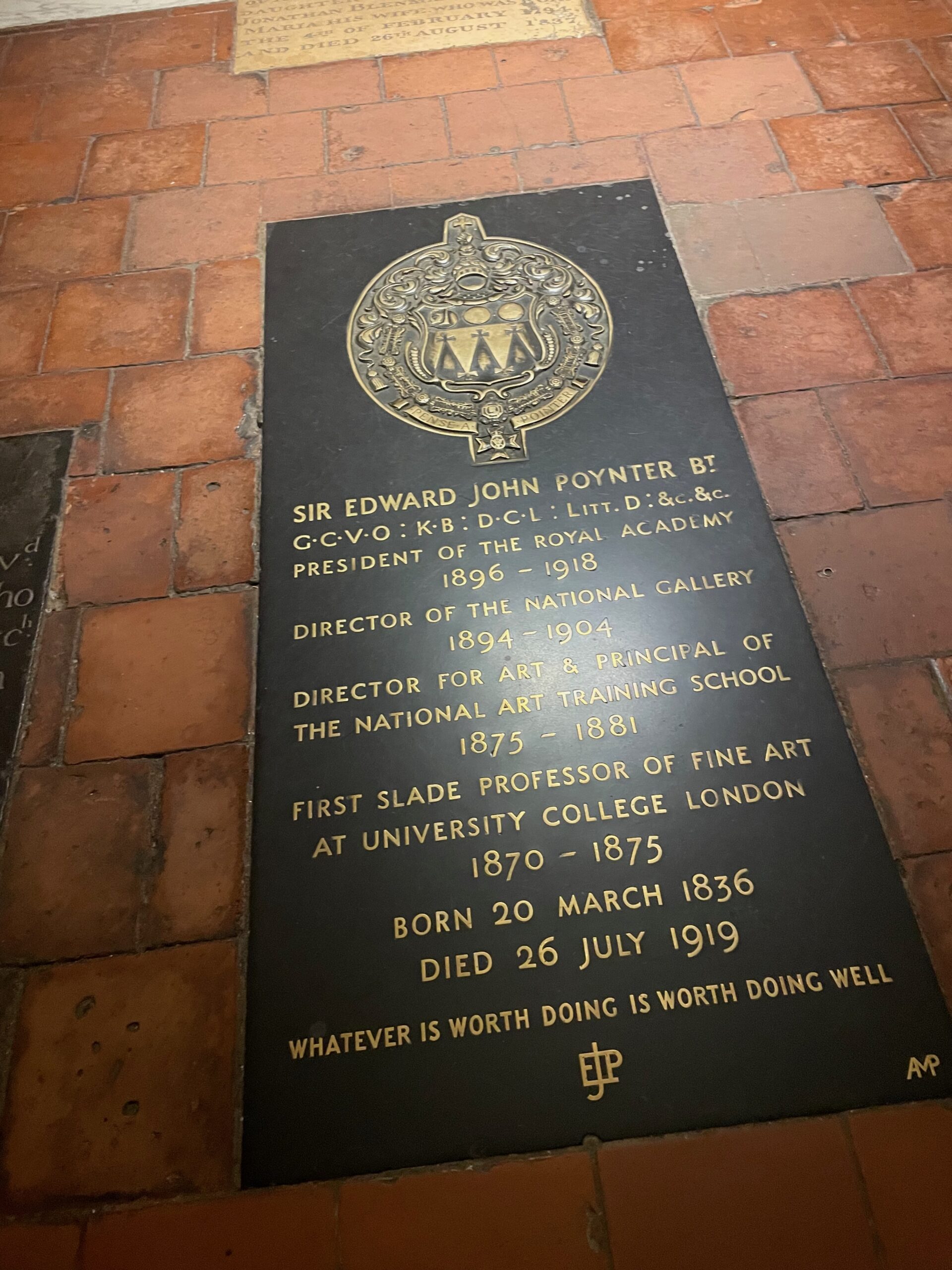
Born in 1836 in Paris, Poynter was a rich kid, as one might suspect of an Englishmen born on the Continent. His father was a major architect named Ambrose Poynter. So it was all the fancy schools–Brighton College, Ipswich School. However, his health wasn’t great and of course the family was loaded. The kid was interested in art so they sent him to Italy and Madeira for his winters. Hard living. While in Rome, he met the artist Frederick Leighton, at that time just beginning to reach his own artistic heights. Leighton became something of a mentor to Poynter. That just recommited him to his artistic study. He went back to London, studied at the best art schools, and then went to Paris and worked under Charles Gleyre, at the same time that James McNeill Whistler and George du Maurier was also that guy’s students.
By the 1860s, Poynter was a rising artistic star in Britain. He specialized in the type of subject popular then and sure to get commissions but which has no play today–big biblical scenes. 1867’s Israel in Egypt was an early example of this and continued working in this vein for most of his career. History painting, though this wasn’t exactly history but religious without per se religious themes. For example, his 1890 painting The Visit of the Queen of Sheba to King Solomon, whether you want to call it history or biblical, was certainly biblical in size. This is one of those very large canvases with a lot of detail about an envisioned time from very long ago. 93 by 138 inches in size, it was almost immediately bought and ended up in Australia, where it hangs (or maybe is in storage) at the Gallery of New South Wales in Sydney. The broader point though is that this is the kind of thing that Poynter became known for and was praised for its “archaeological detail” at the time, though how accurate the painting was to the archaeology of that era, I don’t really know.
Poynter also rose to the top of the British official art world in these years. Today of course this is not seen as prestigious as the French art world. No one is paying a lot of extra money for a Poynter exhibit like they are with Monet or Degas or Manet. And the paintings from late 19th century Britain are less experimental and thus less beloved today than the French because they simply aren’t as influential on the development of modern art. On the other hand, while there are people out who are legitimate art fans who do the work to study and read and know what they are like, when we are talking about Monet or Frida or Warhol or Pollock or etc, a lot of the people paying top dollar for that are doing so based on the principle of This is Someone I’ve Heard Of and Can Recognize One Painting From. None of that is to disparage the people’s art (except Warhol, who is bullshit and honestly Pollock kind of is too), but rather to note that the modern consumption of art has happened in a certain way and that none of these British guys like Poynter are even close to remembered in that. I’d think you’d have to go from Turner to Bacon and then Freud to get to people even remotely reaching that level. And that skips over Poynter’s entire life and style.
But hey, whatever, he certainly made plenty of money in his day. In 1869, Felix Slade, a rich Brit, endowed the Slade Professorship, an early endowed chair at Oxford, Cambridge, or University College London. Poynter was the first recipient of this money at UCL and held that position from 1871 to 1875. Then he became the principal of the National Art Training School from 1875 to 1881. This is today the Royal College of Art in London. In 1894, he was named the head of the National Gallery. As part of that role, he oversaw the opening of the Tate, one of the world’s most important museums. I only went to the Tate Modern when I was in London. I needed more time there, it was great, but I was dealing with Impatient Spouse Syndrome, who was less interested in spending a couple of hours looking at modern art pieces from the Middle East than I was. I wish I had gone to the regular Tate, but I only had so much time, especially given the necessity of grave visits.
In 1896, John Millais died. That opened up the position of the president of the Royal Academy. Poynter was named to replace him. He was knighted the same year. He became a baron in 1902. So there’s no question that the man was beloved in the British establishment, even if by the early 20th century, the art world had pretty much passed his generation of English artists by. Mostly by this time, Poynter himself wasn’t painting all that much anymore. When he did paint, he tended to focus on genre scenes, with a lot of classical stuff still.
Poynter lived forever. He saw all of World War I and only died in 1919. He was 83 years old. He seemed older because he was a lot more popularly relevant as an older man and the art world had really, really moved past him by the World War I era.
Let’s look at some of Poynter’s work:
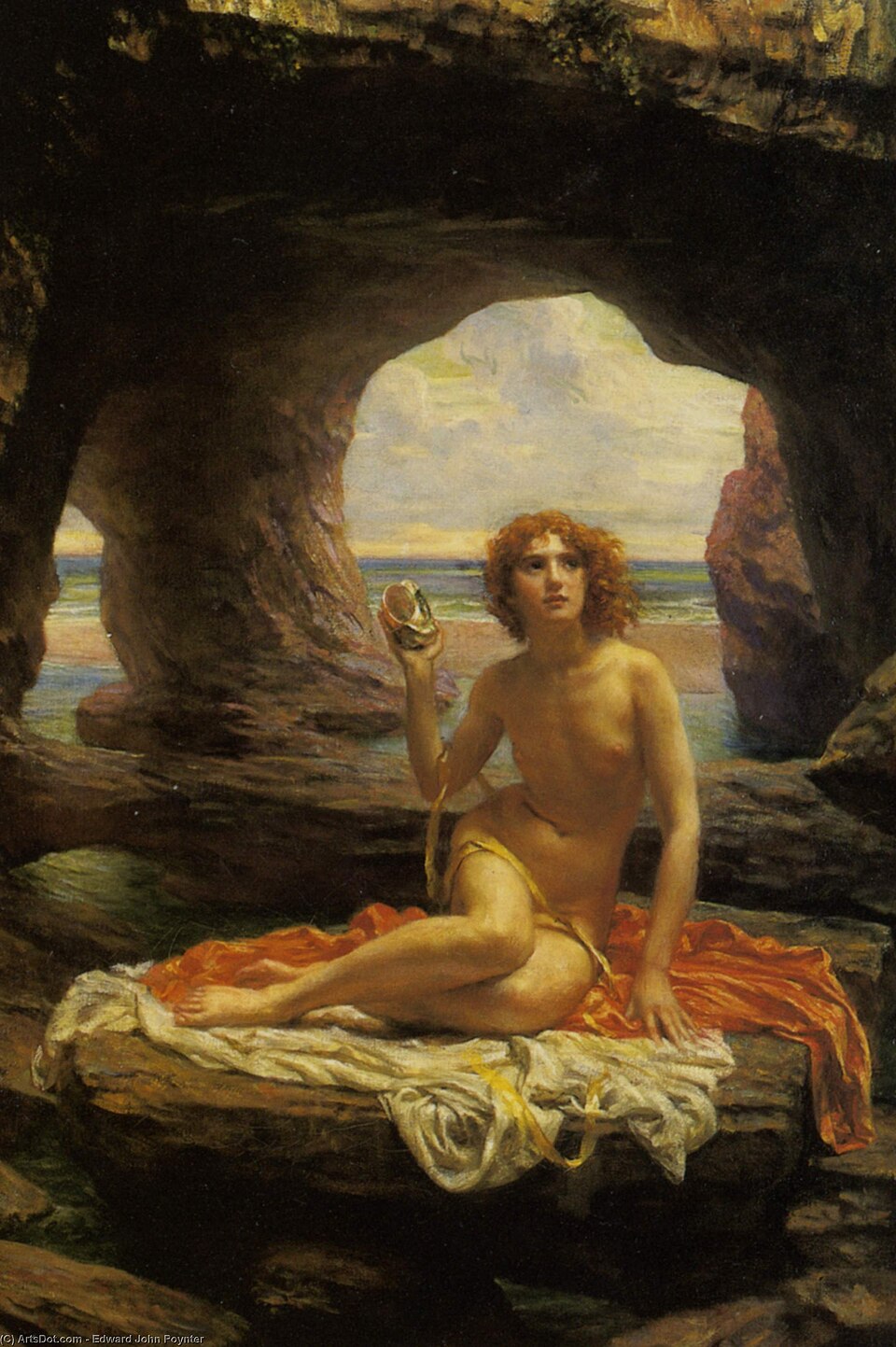
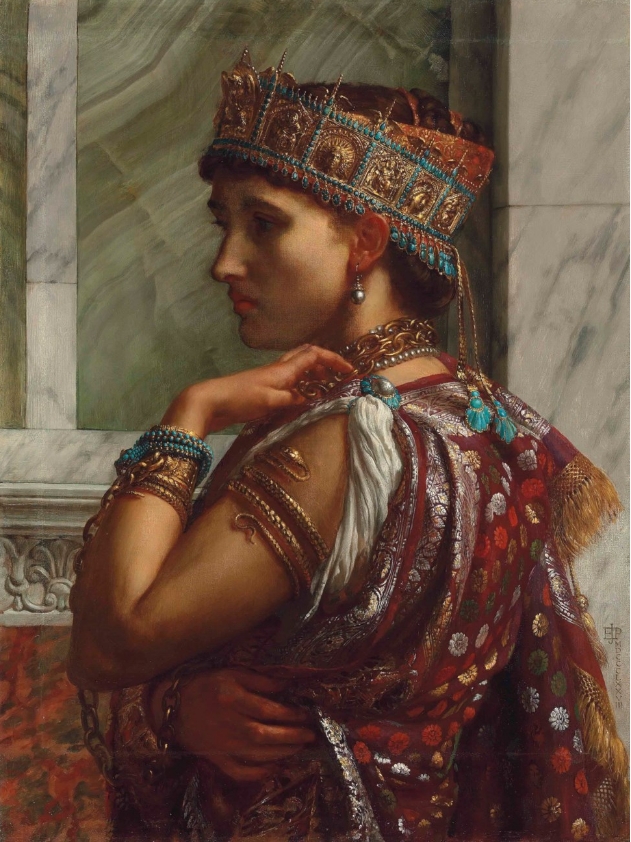
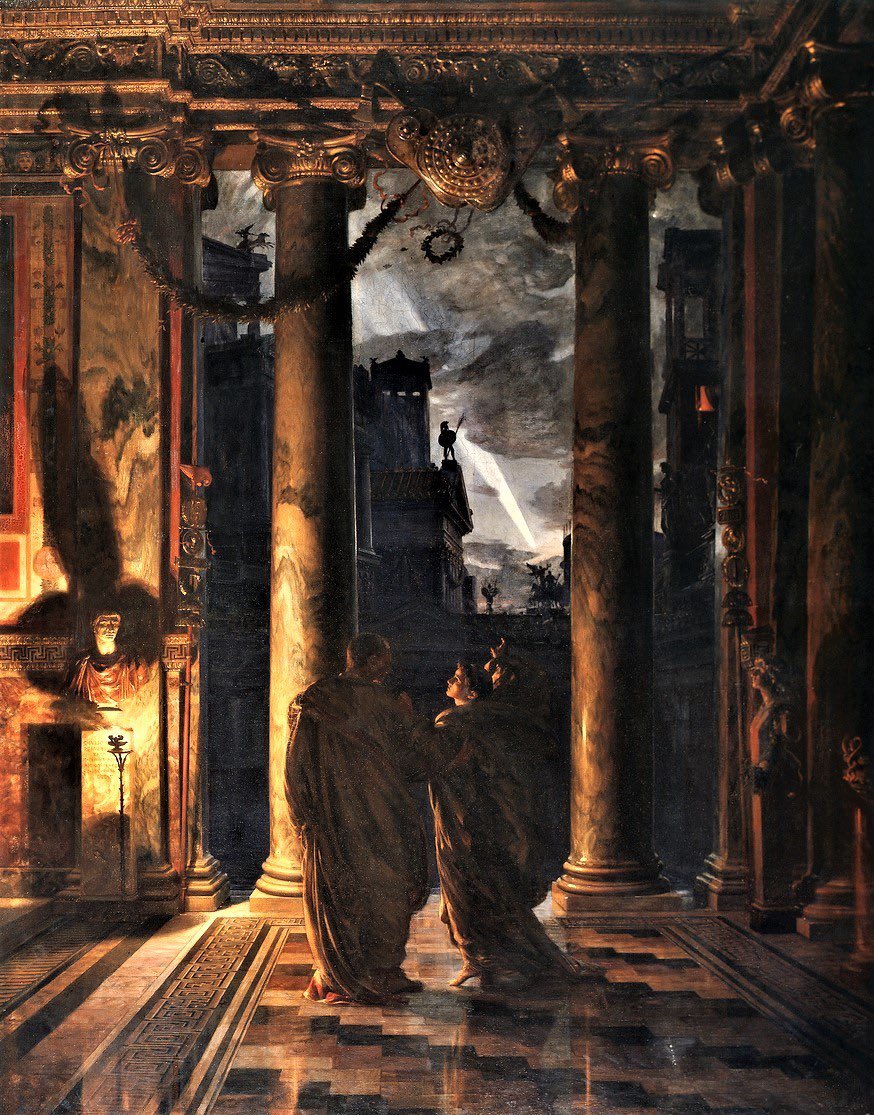


Edward Poynter is buried in Saint Paul’s Cathedral, London, England.
If you would like this series to visit American painters of the late 19th century, you can donate to cover the required expenses here. John Singer Sargent and James McNeill Whistler both ended up being buried in England, so you should send me back for more incredibly high quality art criticism like you can only get in the grave series. Within the U.S. The Civil War landscape painter Edwin Forbes is in Brooklyn and Otto Stark is in Indianapolis. Previous posts in this series are archived here and here.