
Home runs and fascism
 By
By 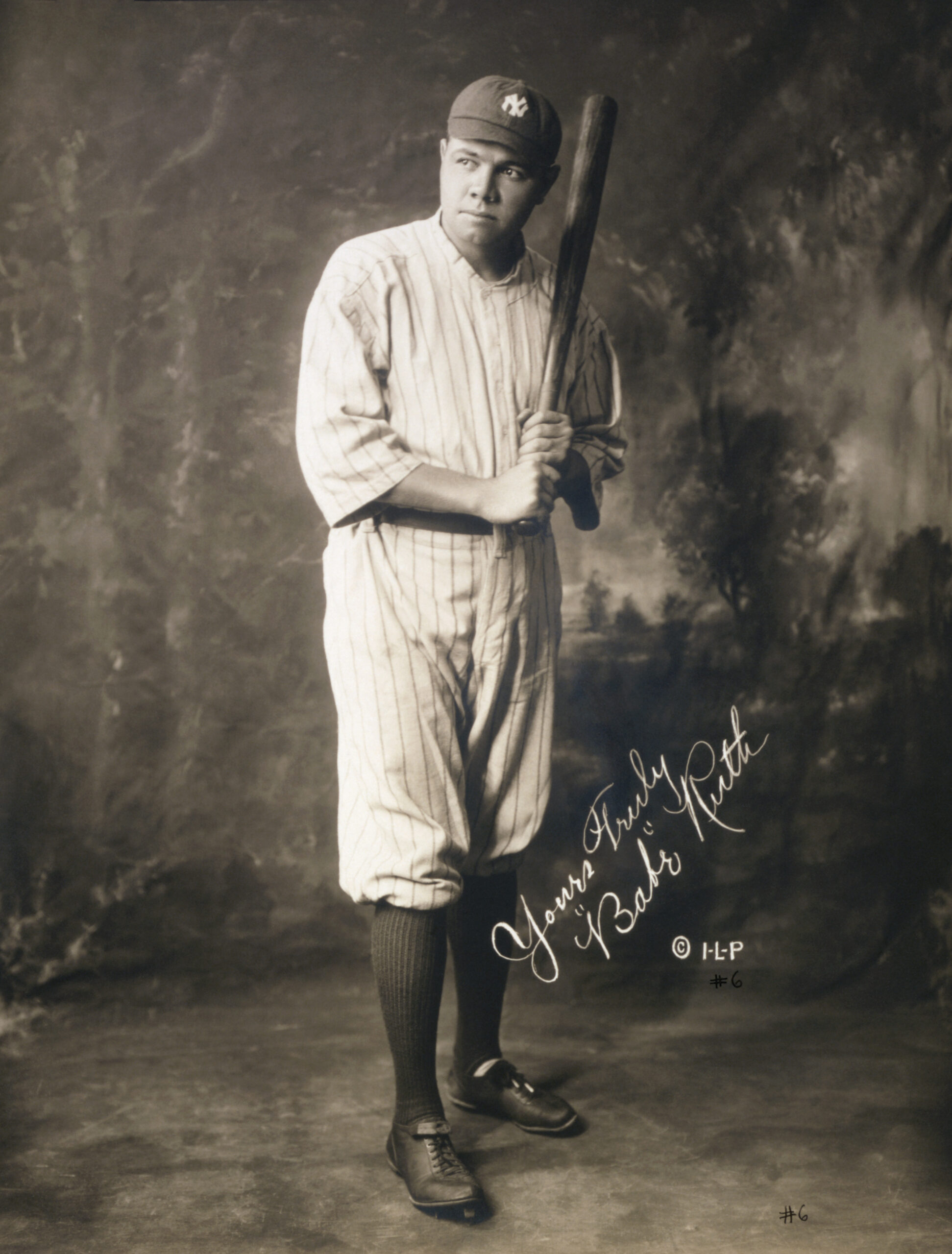
In Scott’s post below about Trump’s increasingly overt statements that he’s planning to run for a third term, I suggest the following analogy: In baseball, the standard way to project a player’s future performance is to look at the performance of similar players at similar ages (age is a bigly important predictor of future performance which is very ageist but that’s biology for you), and extrapolate accordingly. This generally works pretty well, but you do run into the problem of outliers, such as for example Nolan Ryan striking out 309 batters when he was 42. In other words, occasionally a player will put up stats that have no real precedent, in which case you can’t extrapolate readily from similar previous performances obviously.
Commenter El Munenco makes the following observation about this:
The baseball analogy is tough because it’s in two parts:
– The freaks. Nolan Ryan and Randy Johnson lasting forever without really adjusting (and Johnson after back injuries that would have derailed the careers of most of us office workers!). Ichiro Suzuki succeeding with a hitting style from literally a century earlier.
– Conditions changing. Babe Ruth hit 59 HR and freaked everyone out, but someone would have by 1925. Gavvy Cravath was right with him until 1919 or so. Someone taking PEDs would have gone from 55 HR to 65 HR in the mid-90s, it didn’t have to be the guys who we remember. Mantle would have had 61 HR before Maris if his knees hadn’t exploded – a lefty in Yankee Stadium in 1961 or so was due to break “Ruthsrecord”.That’s the question. Is he a freak, or has the situation changed beneath us to enable someone like him?
This is a good question, and I want to rephrase it a bit via the specific example of Babe Ruth’s single-season home run record. For the first half century or so of major league baseball’s existence, home runs were fairly rare for various reasons. The league leader would generally have a total of in the teens, and sometimes less. Thus Ty Cobb led the majors in home runs in 1909 with just nine, and Ruth himself tied for the MLB lead in 1918 (when he was still mostly a pitcher) with eleven. Sam Williamson had hit 27 back in 1884 as I’m sure many of you remember, but that was an outlier: only one other player had hit more than 20 in a season. And again this is over a half century of performance. So it raised some eyebrows in 1919, when Ruth became a full-time outfielder, and hit 29, which was more than most of the other teams in the league hit collectively. But the real explosion came in 1920, when he shattered his own new record with 54 home runs: a total that would have been practically unimaginable a year earlier. He proceeded to hit 59 in 1921, and then 60 in 1927, which was a record that would stand until 1961.
So from this description Ruth simply sounds like some sort of freak of nature, which in some ways he no doubt was (he set all sorts of records, some of which would last into the steroid era eighty years later). But the story turns out to be more complicated.
After Ruth’s off the charts performances in 1920 and 1921, some other players started hitting home runs at prodigious rates, far beyond anything anyone had seen prior to Ruth’s performance. Rogers Hornsby hit 42 home runs in 1922, Cy Williams, who frankly even baseball geek me doesn’t remember, tied with Ruth for the major league lead in 1923 with 41. Hack Wilson hit 56 in 1930, while Jimmy Foxx and Hank Greenberg each hit 58 in a season later in the same decade.
Seen in this context, Ruth’s performance seems not so much freakish, but rather the initiation of a new era in baseball history, in which home runs would be in general far more common than they had been previously.
So what happened? The historical explanation, it would seem, has both individual and structural elements.
Ruth was a brand new kind of player, a freak if you like, who did things that nobody had done before because to some extent nobody before had been capable of doing them. However, once he did these things, a number of other players started doing similar things, for two reasons:
(1) Simply because Ruth did do them — who would have thought you could hit fifty home runs in a season? — other players altered their own personal strategies and expectations. I don’t think it’s coincidental that Hornsby hit a home run total the very next year after Ruth’s two epic 1920 and 1921 seasons that itself would have shattered all previous records prior to Ruth’s sudden emergence.
(2) Closely related to (1), the conditions of the game changed in ways that made the new performance benchmarks easier to achieve. In the 1920s, the baseballs used in games became significantly different than those used prior to then. The spitball was outlawed, fresh baseballs were kept in play much more regularly than previously, and some other factors were introduced at the structural level, that made home runs easier to hit than they had been previously, such as relatively short fences down the foul lines at various parks.
Now let’s pivot from baseball in the 1920s to the revenant fascism of the 2020s, in American and elsewhere.
Donald Trump, I suggest is the Babe Ruth of neo-fascism, in all three of the ways I describe above.
(1) He is in some significant way a freakish outlier, who has changed the game because of his highly unusual talent for exploiting weaknesses in the contemporary structure of American politics and law. He has found the short fences in liberal democracy and is blasting balls over them at a previously unprecedented rate. However:
(2) Other demagogues are learning from his example — J.D. Vance is the most significant at this moment but there will be many more — and are altering their own strategies and expectations of what it’s possible to do accordingly. And, crucially,
(3) Structural conditions have changed in various ways to make it both easier for someone like Trump to arise in the first place, and to be then imitated successfully going forward. American society in all sorts of ways is much more receptive to successful demagoguery and crypto-fascism than it was a generation or two earlier, which in retrospect could be considered the dead ball era in regard to those things.
In these ways, Trump is both cause and symptom: both a unique historical outlier, as Babe Ruth was at dawn of the Roaring Twenties, and an avatar of a new era or order in American political and legal life.