
In too deep
 By
By 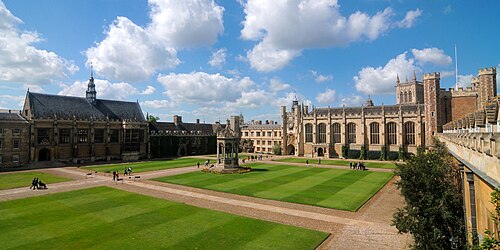
The NYT was doing an in-depth look at the Jason Arday story at the time he apparently killed himself yesterday. They published it this morning. (gift link)
Some thoughts:
(1) This whole saga is an illustration of the contemporary bullshit machine at work, in its peculiar academic form, which is this: As academia gets increasingly turned into a profit and publicity maximizing exercise, it becomes more and more vulnerable to the distortions created by the related incentive structures. In particular, we see a constant search for academic “superstars,” who are people who will produce lots of publicity for institutions in the broader world, where all the money and fame is lurking. The parallels in this regard between Arday’s story and the Alice Goffman fiasco are striking: In both cases, an ambitious young person whose academic work was actually bullshit (in Arday’s case, rampant plagiarism; in Goffman’s fabricated pseudo-data) managed to leverage that bullshit into a highly desirable academic job, in part by generating lots of external publicity for themselves. Goffman, like Arday, got called on this in a remarkably similar way: Somebody sent a long critique of her work to Wisconsin, which purported to investigate the criticism — if the institution had actually done a real investigation she would have been fired so it obviously avoided doing so — which investigation supposedly exonerated her. But the cat was out of the bag and she was eventually going to get caught, which did happen, but in a much quieter and more subdued way than what happened with Arday, because nobody was using the gradual revelation of Goffman’s individual transgressions and pathologies to prove the inherent superiority of the white race.
Another parallel that struck me was that Goffman got a prestigious visiting professorship at Pomona College over two other finalists who were Black women, and who almost certainly were actual scholars as opposed to a fraudulent “superstar” on the make. As for Arday’s Cambridge professorship:
The panel selected four finalists, inviting them to Cambridge for two days of interviews. Dr. Arday was up against three more senior scholars, including two women of color, according to a person familiar with the hiring process.
(2) Another thing this whole fiasco reminds me of is Donald Trump, partially because everything reminds me of Donald Trump, but in all seriousness: Cambridge stood behind Arday long after any objective observer would have concluded his life story was largely bullshit — remarkably, lots of people seem not to grasp how this might be related to his rampant plagiarizing — because the institution was in too deep at that point. It had done this extremely stupid and reckless thing, and admitting to itself what it had actually done was too much of an indictment of various institutional pathologies, so it didn’t for as long as possible. On a much grander and almost infinitely more socially significant scale, the entire Republican party has done a similar thing with Donald Trump. Admitting to itself what Donald Trump actually is — a malevolently narcissistic psychopathic career criminal, without a single redeeming personal quality — is obviously impossible, given the incredibly stupid and reckless thing The Party has done by allowing the American electoral system to put such a person into the presidency. This is among other things the iron law of institutions at work: people care more about defending their own power and status within institutions, than protecting the institution itself. It’s also, of course, a tribute to the immense power denial, wishful thinking, laziness, and cowardice have over human affairs.
(3) A particularly disturbing aspect of the Arday narrative is that when Times Higher Education — more or less the UK equivalent of the Chronicle of Higher Education — was going to run an expose of Arday a year ago, lawyers killed the story via pre-publication threats. This illustrates how British libel law, which is vastly more plaintiff friendly than its American counterpart — can so readily be weaponized to crush investigative journalism, in a way that New York Times v. Sullivan makes it much harder, for now, for the rich and powerful in America to do. (This of course is why the hardcore reactionaries on the SCOTUS are so eager to reverse that precedent). When I wrote my Goffman expose for the Chronicle, the publication gave her every opportunity to refute my allegations. If she had done so, even in regard to one or two of them, that would have killed the story (She didn’t because the allegations were true). But despite this it would have been, if US libel law was similar in this regard to the UK’s, all too easy for the various parties implicated in her fraud to quash the story, simply by threatening potentially very costly litigation.
(4) As to the tragic ending of Arday’s story, suicide is a complex topic in its own right, that makes this entire saga a particularly stark cautionary tale.
This is a passage from the sixth chapter of James Joyce’s Ulyssess:
White horses with white frontlet plumes came round the Rotunda corner, galloping. A tiny coffin flashed by. In a hurry to bury. A mourning coach. Unmarried. Black for the married. Piebald for bachelors. Dun for a nun.
—Sad, Martin Cunningham said. A child.
A dwarf’s face, mauve and wrinkled like little Rudy’s was. Dwarf’s body, weak as putty, in a whitelined deal box. Burial friendly society pays. Penny a week for a sod of turf. Our. Little. Beggar. Baby. Meant nothing. Mistake of nature. If it’s healthy it’s from the mother. If not from the man. Better luck next time.
—Poor little thing, Mr Dedalus said. It’s well out of it.
The carriage climbed more slowly the hill of Rutland square. Rattle his bones. Over the stones. Only a pauper. Nobody owns.
—In the midst of life, Martin Cunningham said.
—But the worst of all, Mr Power said, is the man who takes his own life.
Martin Cunningham drew out his watch briskly, coughed and put it back.
—The greatest disgrace to have in the family, Mr Power added.
—Temporary insanity, of course, Martin Cunningham said decisively. We must take a charitable view of it.
—They say a man who does it is a coward, Mr Dedalus said.
—It is not for us to judge, Martin Cunningham said.
Mr Bloom, about to speak, closed his lips again. Martin Cunningham’s large eyes. Looking away now. Sympathetic human man he is. Intelligent. Like Shakespeare’s face. Always a good word to say. They have no mercy on that here or infanticide. Refuse christian burial. They used to drive a stake of wood through his heart in the grave. As if it wasn’t broken already.