
Sam Ailto is extremely offended that someone is telling the truth about him again
 By
By 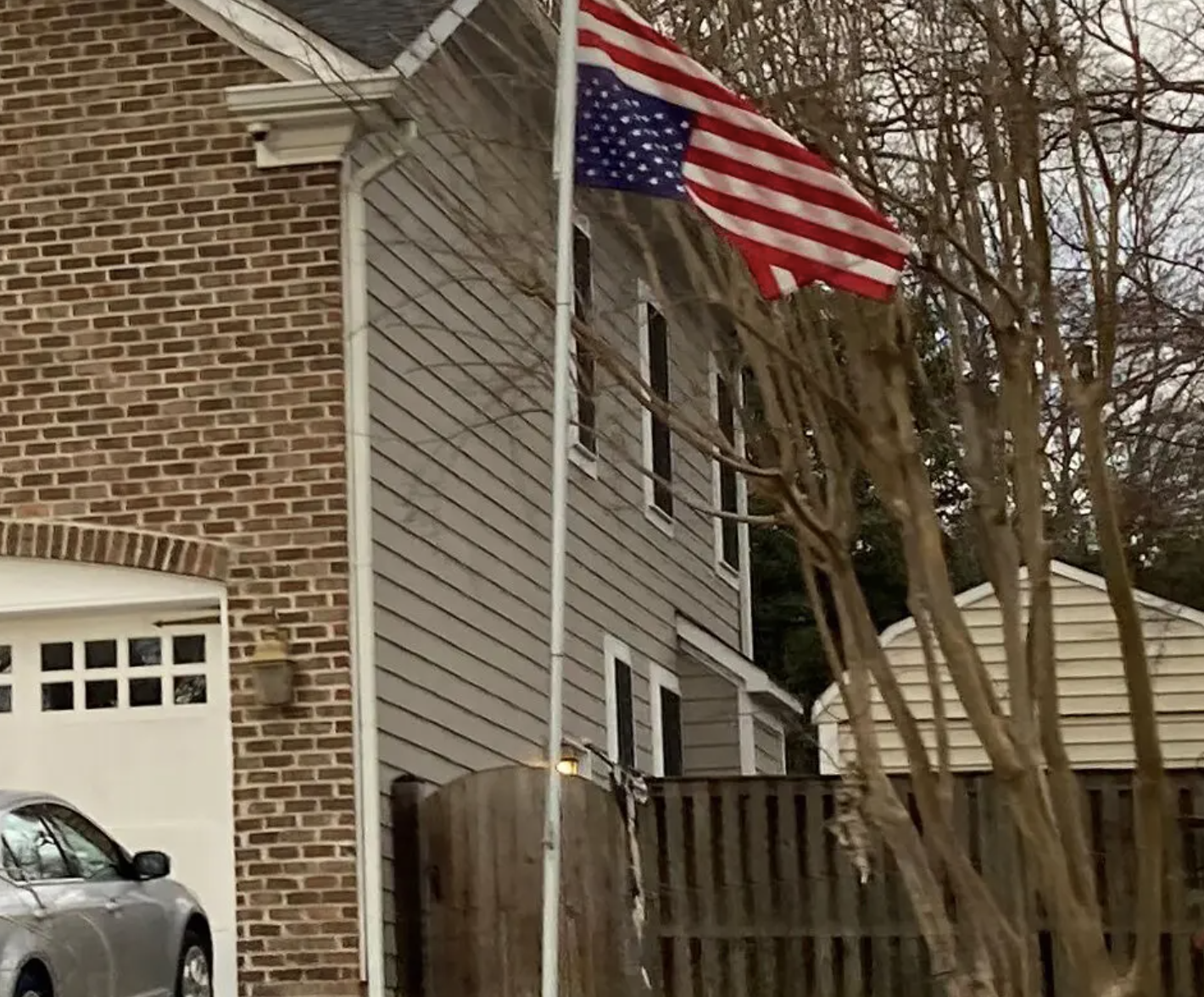
The Supreme Court took the unusual step of fast-tracking its nullification of the Voting Rights Act so that Louisiana could be sure it could disenfranchise the maximum number of voters before the midterms. This led to a dissent from Jackson and an extremely petulant response from Alito (joined by Thomas and Gorsuch.) Alito’s defense of his partisan hackery rests on a superficially persuasive point: “The dissent would require that the 2026 congressional elections in Louisiana be held under a map that has been held to be unconstitutional.” (Incidentally, Alito then adds a footnote pointing out that oral arguments and conference were seven months ago, suggesting that the majority is upset that the dissenters delayed their urgency about rolling back Reconstruction.) If you knew nothing about how the Supreme Court operates, or how silly the holding that Louisiana’s map is unconstitutional is, this argument would make sense. The problem, as Steve Vladeck points out, is that the same Republican majority has allowed elections to be conducted with maps that have been determined to be unconstitutional all the time. And you’ll never guess which party has benefitted in every one of these prior cases:
But to me, the inconsistency here is far more specific—and far more galling. Alito defends the Court’s willingness to move quickly here on the ground that “[t]he dissent would require that the 2026 congressional elections in Louisiana be held under a map that has been held to be unconstitutional.” This is the same argument Alito made in his concurring opinion in the Malliotakis case in March—that the Court just can’t abide the specter of voters using a map that might be unlawful.
Here’s the problem: In 2022, after two different district courts held that Alabama’s post-2020 Census congressional district map was unlawful, the Supreme Court stayed those rulings—allowing Alabama to use that map in the midterms (Justice Alito was in the majority in that order). But when the Court reached the merits the following year, it agreed with the district courts. Thus, the Court intervened in 2022 in order to allow Alabama to use maps that district courts had blocked in rulings the justices later affirmed. Nor was the Alabama case a one-off; as I’ve noted before, one can draw a straight line from the Court’s unsigned, unexplained February 2022 intervention in Alabama to at least five congressional districts that should have been redrawn before the 2022 midterms but weren’t. Republicans won all five of those seats—giving Republicans their exact margin of control in the House in the 118th Congress.
Perhaps one of the Court’s defenders will come up with some explanation for why the Court correctly intervened to allow Alabama to use an unlawful map in 2022, and yet it’s been justified in intervening to prevent New York and Louisiana from using unlawful maps in 2026. Suffice it to say, Justice Alito didn’t provide one. And given that this inconsistency has the remarkably coincidental effect of benefitting Republicans in all three contexts, it strikes me as a heck of a lot more than “foolish.”
A remarkable series of coincidences!
Jackson points out yet another obvious inconsistency in her dissent:
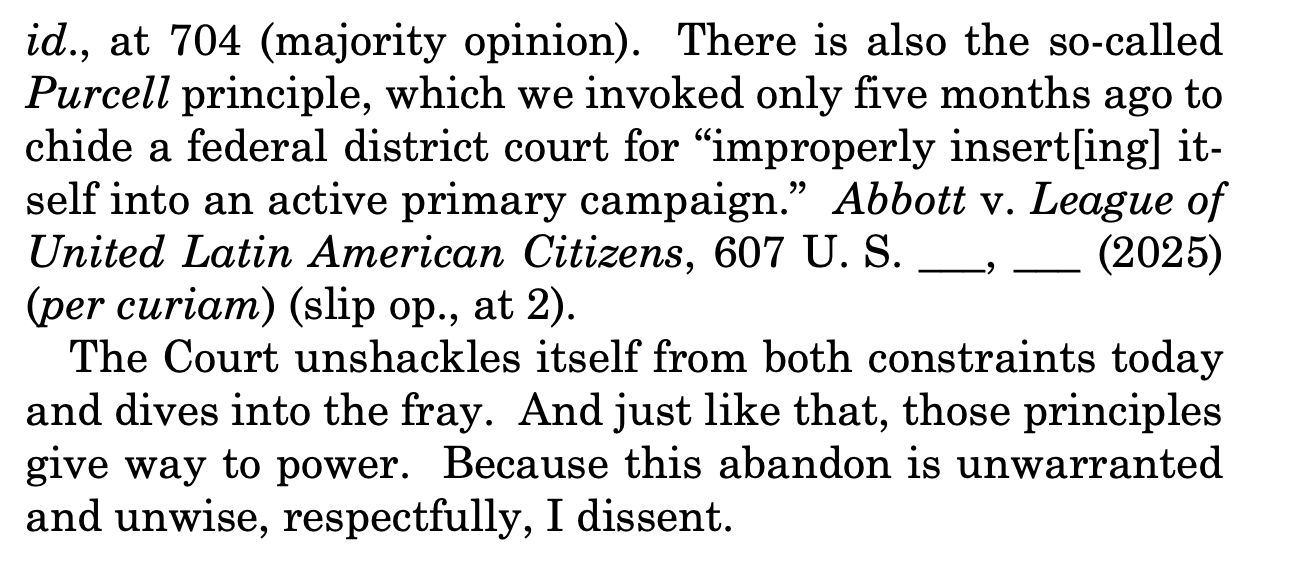
If you’re wondering how Alito responds to the point about the Purcell “principle ;););););),” he…just doesn’t, because Jackson’s point is unanswerable. Alito being in high dudgeon mode is always a tell that the argument is going very badly for him.