
Some further thoughts on affordability
 By
By 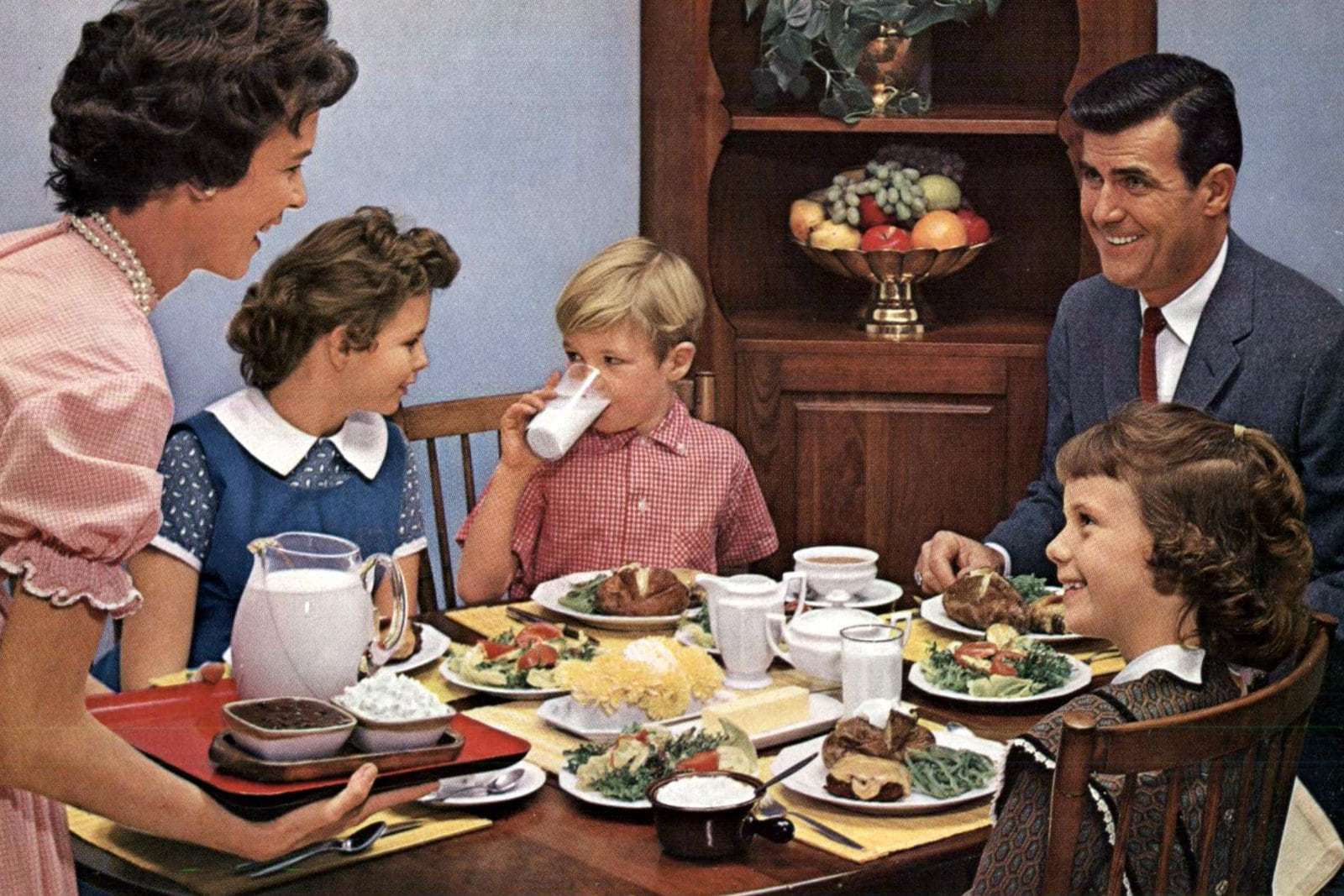
I hadn’t realized Paul Krugman was writing on this same topic when I wrote about it yesterday. He makes some compelling points about why economic sentiment is at the lowest level it’s been in the last half century, despite the fact that classic economic indicators at the moment aren’t nearly as bad as they were in say 2009 or 1980, as well as some other times over that span.
I want to focus for a moment here on a factor which I think is particularly crucial when it comes to general economic unhappiness and dissatisfaction, which is precarity. There’s a highly exaggerated standard story about this, that goes back in the Good Old Days you could get a well paying job for life with one employer, that also featured a generous pension, and that allowed you to live a solid middle class lifestyle or better on one income, yours, with the modal “you” here being a man needless to say, whose wife would stay at home with the kids, hence no childcare costs — of course this means childcare costs were internalized to the family unit as those annoying feminists were always pointing out — while college was very cheap and health care didn’t cost much either.
The exaggerations and distortions here are multiple, including that relatively few people had such jobs, the period when this paradigm existed was quite short historically speaking, the relevant people tended to be overwhelmingly white and male, very few people went to college or ever got advanced medical treatments, which were vastly inferior to those available today, the patriarchy wasn’t actually all the awesome for all those women being supported by the Men With The Well Paying Lifetime Jobs, and so forth.
Despite all this the story does still have some grounding in historical reality. In particular, economic and social life in America has become more precarious in various ways. For one thing, the gospel of neoliberalism has completely destroyed whatever paternalistic culture might have existed at profit-maximizing corporations. Relatedly, defined benefit pensions have disappeared outside of government jobs. The culture of hyper-consumerism; the universalization of the idea that people should go to college, and the corporatization of higher education that this expectation has produced when it’s been combined with the ubiquity of neoliberal ideas; the similar dynamic that has played out in regard to health care; the rise of the beginnings of some sort of gender egalitarianism when it comes to the economics of the family unit: all these things have undermined the old order, such as it was, in ways that have created a myth of a falling away from a (again, greatly exaggerated) post-WWII economic Eden.
What matters as a political and sociological matter is not the extent to which that myth is a myth, but rather the extent to which it has become the conventional wisdom, which is obviously considerable. People believe things were really much better in the Good Old Days, and that belief has some striking political consequences. The politics of nostalgia are inherently reactionary and potentially fascistic, as we’ve seen so vividly over the course of the last decade.
A few other considerations: Economic precarity is made worse by the breakdown of traditional norms surrounding the obligations of immediate families and extended kin groups toward people who suffer major economic reversals. The Robert Frost line about home being the place that when you have to go there, they have to take you in, is a lot less accurate than it used to be, for all sorts of complicated reasons.
Consumer capitalism works by making people constantly dissatisfied, and it does this in party by creating an endless parade of positional goods, that have value precisely because possession of them signals one’s place in the social hierarchy. To say “people should be less materialistic” in this kind of overwhelmingly pervasive culture is to levy an individualist critique against an almost completely structural problem. It’s tantamount to saying people should not be as they are, which is a viewpoint that has a remarkably unsuccessful track record as a matter of political strategy.
The information revolution has, over the course of the last couple of decades in particular, been weaponized to extract every possible bit of surplus value out of every economic interaction, in a way that creates a vague general sensation that one is either being ripped off, or on the verge of being ripped off, just by existing in this economy and culture.
There’s a lot more to say about this, but it’s good that lots of people like Krugman are bringing an increasingly critical eye to the whole concept and phenomenon of the affordability crisis, especially since Donald Trump’s constant lying about this topic is one of the few of his lies that actually appears to be catching up with him at the moment.