
Erik Visits an American Grave, Part 2,155
 By
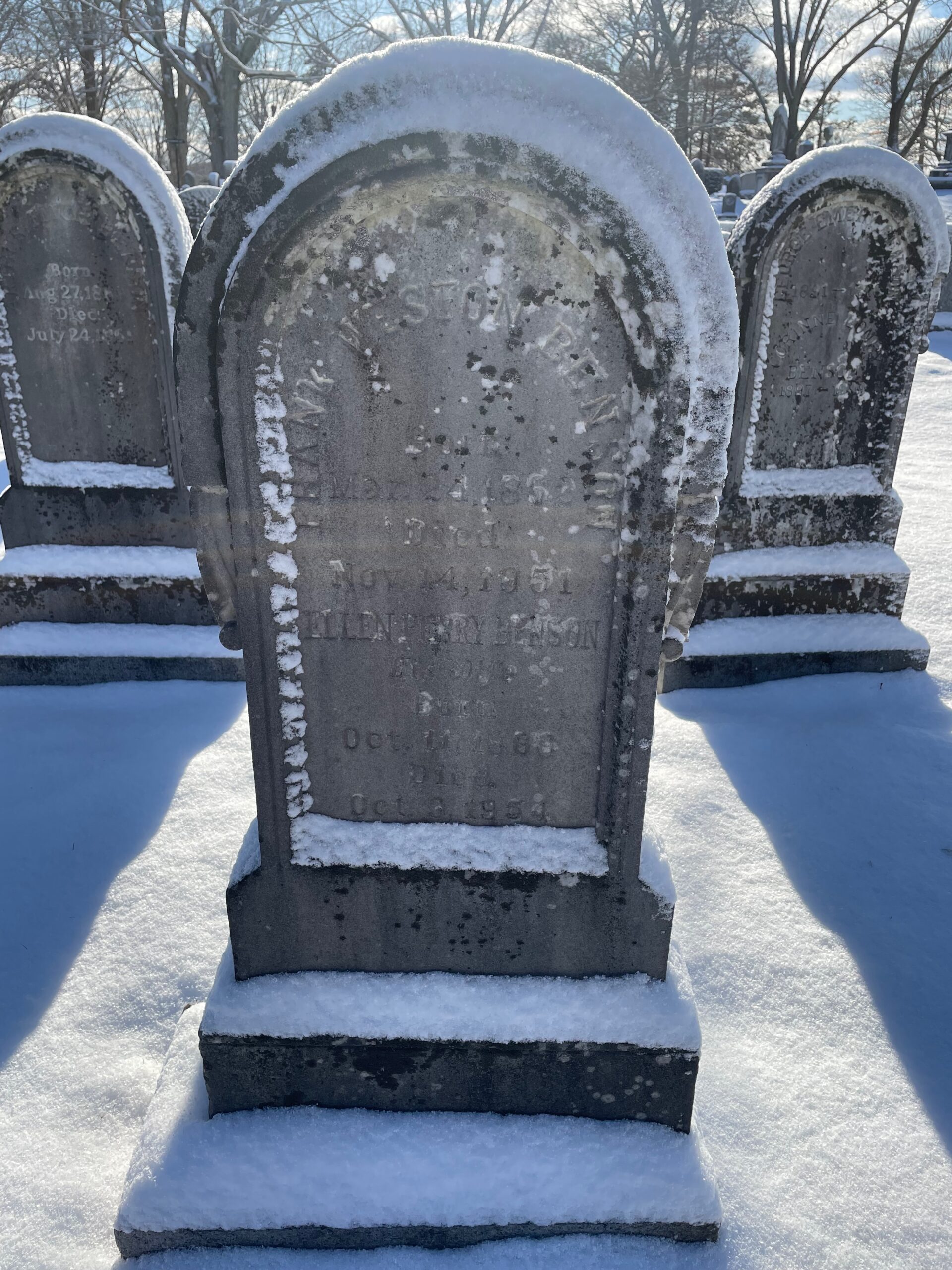
By This is the grave of Frank Benson.
Born in 1862 in Salem, Massachusetts, Benson grew up wealthy. His father was a cotton broker with a good business, as was so common in that first port of American capitalism and globalization. The parents were very big on making the kids well-rounded instead of just assuming they’d be another generation of boring capitalists, something you rarely see from the intellectually dull wealthy class of the present. Well, this led to a lot of boating and hunting and languages and art and all that stuff–and both Frank and his brother John would become important American artists of their era.
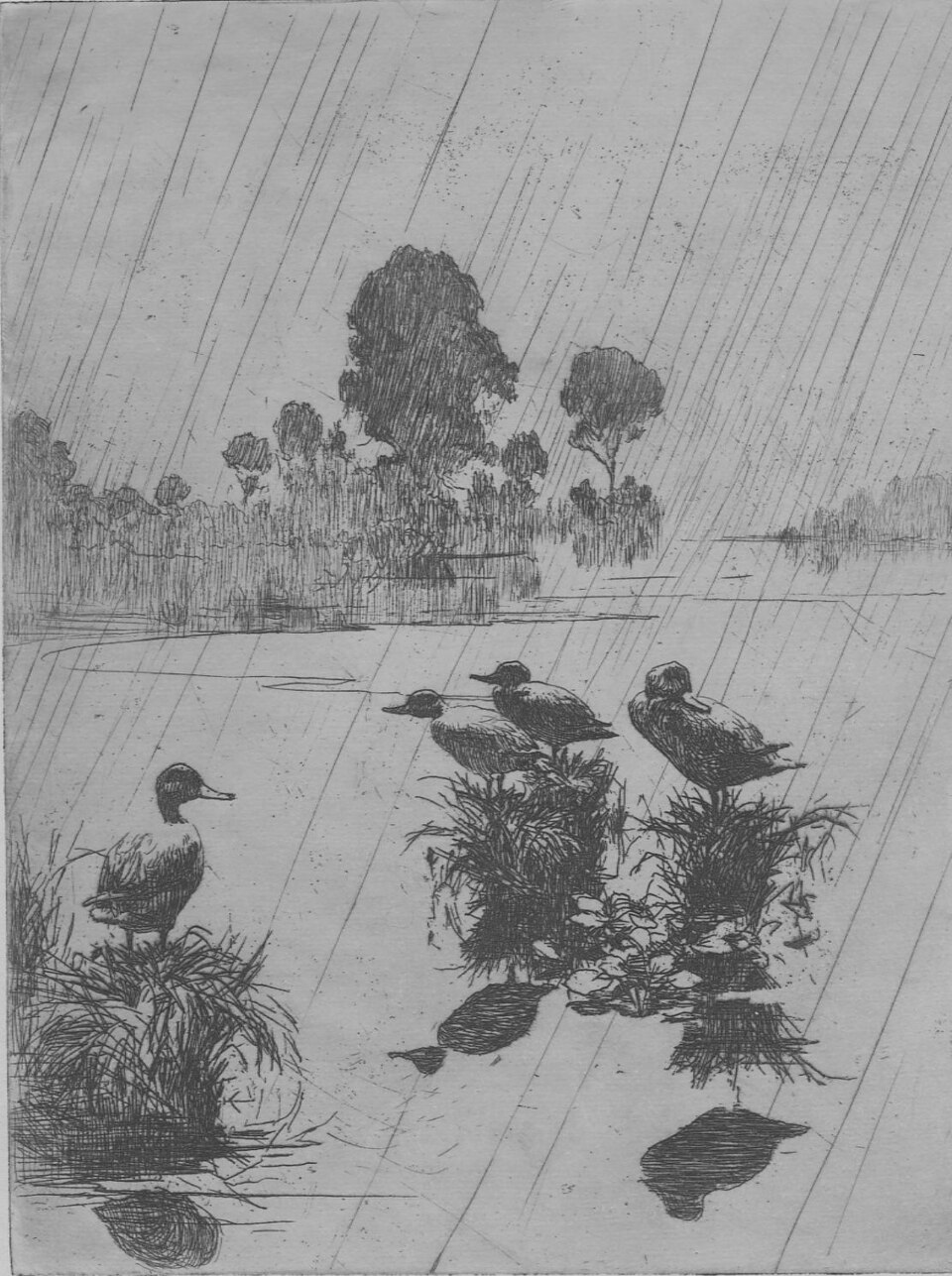
Benson initially had his sights set a bit lower–he just wanted to draw birds. So he did, but then that led to art school so he could do it better and then that led to higher goals. Being rich never hurts, so his parents sent him to Europe for a couple of years when he turned 21. So he studied in Paris and traveled around to look at the great art of the continent. This being the 1880s, the art world was starting to change mighty fast. Impressionism was the new gospel and Benson became a fan. Now, he was not a real experimental guy. He was fundamentally a conservative New England man and a conservative New England artist. So as art continued to transform into the abstractions of the 20th century, Benson had no tuck for it. But he was still young when exposed to Monet and so was open to it.
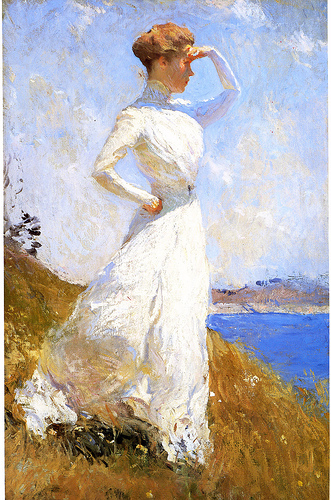
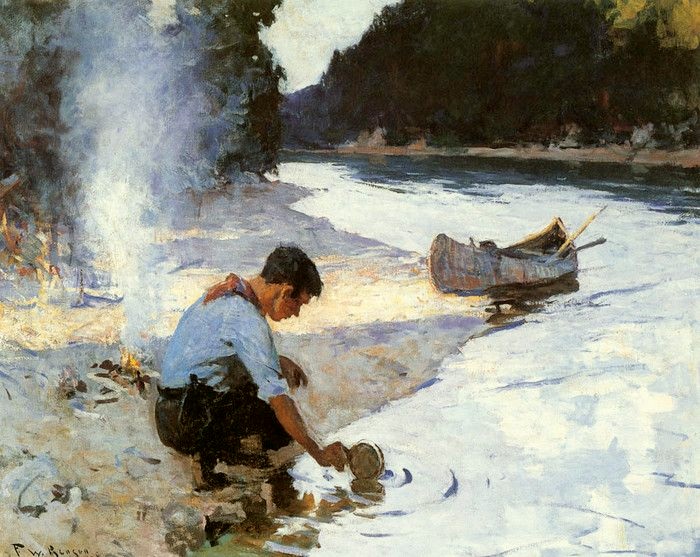
Benson returned to the U.S. in 1884 and painted and got married. He took a teaching job in Maine for awhile before going to Boston for a better teaching job. By 1890, he was head of painting at the School of the Museum of Fine Arts, which today is associated with Tufts. By most accounts, he was a popular teacher. He and Edward Tarbell started their own art studio in Boston in 1888. Like so many New Englanders, he left Boston in the summer for bucolic, rural landscapes. He owned a home in New Hampshire and then later in Maine and also spent a lot of time in Ireland in the 1890s. That meant he could think about the use of light that had influenced Monet and the other French impressionists. He became one of the most prominent American painters in using light. Said one critic: “It is impossible to believe that mere paint, however clearly laid on, can glow and shimmer and sparkle as does that golden light on his canvas.”
In 1898, Benson was part of the Ten American Artists movement. This was started by John Henry Twachtman, J. Alden Weir, and Childe Hassam as a rejection of the conservatism of the American art establishment. They recruited seven other artists, Benson among them, to show together once a year to demonstrate the new thing in American art. None of these artists are exactly legendary in historical memory, but one can certainly respect what they were up to here. Interestingly, Winslow Homer rejected their invitation. But mostly these were people influenced by impressionism and taken together, they are many of the biggest names from the turn of the century American art scene.
Later in his career, Benson got super into etching, which required an entirely different skill set. Here, he went back to his first love of portraying game birds, mostly waterfowl. He did a big exhibition of this stuff in 1915 and it was quite popular. He is credited with making wildlife prints a popular genre in the U.S. I’m going to guess–and OK, I am at best engaging in a half-educated guess–that this claim is overstated, since plenty of people have enjoyed drawing animals in different ways and Benson was hardly the first. But sure, he was good at it and made it cool within critical circles.
Beginning in 1921, Benson moved heavily into watercolors and again portrayed Benson’s passions of birds, hunting, fishing, and the rural northeast and Canada. Benson lived forever and continued to show occasionally. He wasn’t exactly a fashionable artist by the 20s and I don’t know how much he cared. He was content to work in the style and with the subjects that mattered to him. He didn’t like Picasso and Duchamp and any of the new stuff anyway.
Benson died in 1951. He was 89 years old.
In 2006, someone donated a Benson to Goodwill without knowing who painted it. Goodwill evidently has some sort of auction site. Someone figured out who had painted it. The auction started at $10. It ended at $165,002.
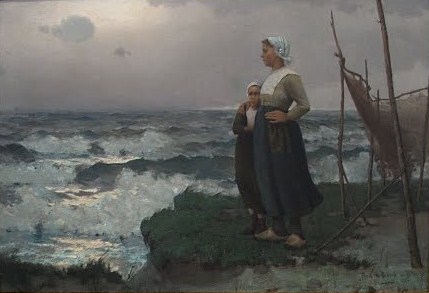
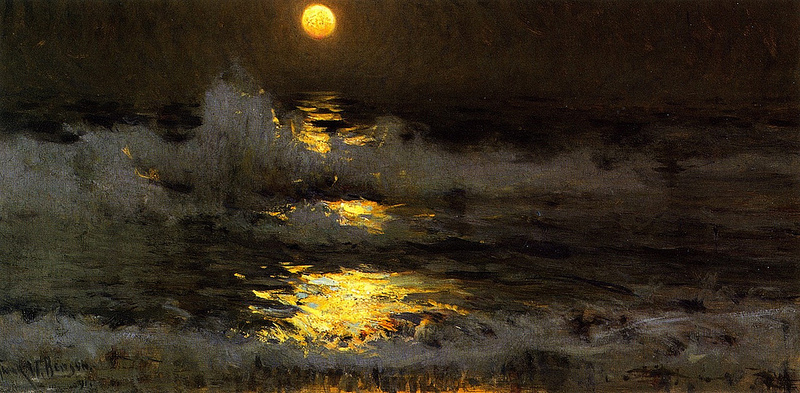
Let’s look at some of Benson’s work:
Frank Benson is buried in Harmony Grove Cemetery, Salem, Massachusetts.
If you would like this series to visit other of the Ten American Painters, you can donate to cover the required expenses here. John Henry Twatchman is in Gloucester, Massachusetts and J. Alden Weir is in Windham, Connecticut. Previous posts in this series are archived here and here.