
The paranoid style and American college football
 By
By 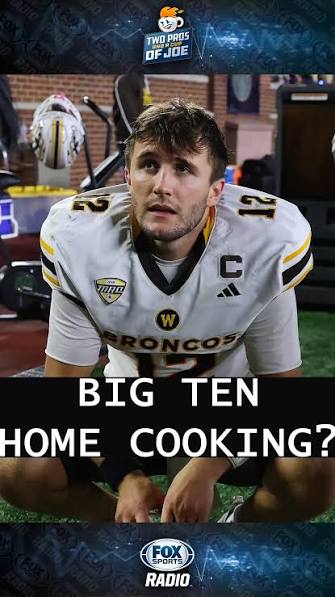
I’ve been asked to write about this by several people, so here you go.
Nine days ago, the University of Michigan’s college football team won a game against Western Michigan in dramatic fashion. People watching on TV were certain the clock had expired on the previous play, but replay officials determined there was one second left on the clock, so Michigan got another play, and won. This led to much outcry, because Michigan losing to 25-point underdog Western Michigan would have been much more emotionally satisfying to everyone except Michigan fans, and everyone had “seen on TV’ that the clock had apparently expired on the previous play. This in turn led to a bunch of hysterical nonsense, still going on even now nine days later, about how the win shouldn’t count, the game should be treated as a loss for Michigan by the playoff committee, it was all rigged by the Big Ten conference, etc. Very Trumpy stuff in other words.
Which is really the only reason I’m bothering to write this post, because who won the Michigan-WMU game is a trivial issue in the grander scheme, even to someone like me who is a diehard Michigan fan, who nevertheless had mixed feelings at the end of the game, because my mother used to teach at WMU, one of my brothers has been on the faculty there for thirty years, most of my family still lives in Kalamazoo etc., plus Michigan sort of deserved to lose given how badly they played, and in this melodrama even a Michigan fan can recognized that Michigan was the heel and WMU was the babyface, to use the kayfabe jargon.
Melodrama is indeed the key to understanding all this, which is why it has wider significance.
As to what should be the merits, the facts are that the replay review system worked as it was supposed to, which is to say that under the rules the decision to put one second back on the clock was the correct one, and there actually isn’t any controversy about this if you understand the rules, which most people opining about it never did and still don’t, not that this is stopping them from having an opinion. (Again the parallels to politics in the age of Trump are strong here).
What are the relevant rules?
(1) The initial confusion arose here because people don’t understand that the game clock they saw on the NBC broadcast was not the actual game clock. The actual game clock is the scoreboard in the stadium. What people saw on the broadcast is a graphic that NBC’s producers insert onto the screen, not a camera shot of the actual clock. This is crucial because the game clock and the graphic are not synchronized.
(2) The game clock is supposed to stop when the ball is dead. WMU caught a bad break here, which was this: The WMU DB who batted the ball away on what appeared to be the last play had stepped out of bounds just before he did so. This turned out to be crucial, because the fact he was out of bounds when he touched the ball meant that the play was dead as soon as he did. If he hadn’t touched it, or if he had been in bounds when he did, the replay may well have shown that the clock had expired before the pass hit the ground, which is when the play would have been dead under those circumstances.
(3) The replay official looked at the program feed, which is not the TV broadcast. The program feed includes lots of different camera angles, including one that is on the scoreboard clock, which again is the actual game clock, as opposed to the graphic embedded on the TV broadcast, which itself is a curated version of the program feed (you are getting just one camera shot during the live broadcast). The program feed showed that at the moment the WMU DB touched the ball there was still one second on the scoreboard clock, which is the official time. This was not a judgment call in any real sense, since the program feed makes it possible to see exactly what the scoreboard clock was displaying at the moment the ball touched the WMU DB, and the play was therefore dead. So there isn’t any actual controversy about whether Michigan should have gotten one more play, or there shouldn’t be among people who know the rules. This, in other words, had nothing to do with officiating incompetence, because the replay official got the call right, and again there’s no doubt about this if you know the rules and how they applied to this particular play.
It’s possible of course to hate the replay system and think it’s bad, and that we should all enjoy the catharsis provided by the apparent outcome of what we apparently saw on TV, at the moment we saw it. That’s certainly a legitimate aesthetic judgment — I half argue for this in a chapter in my book A Fan’s Life — but it doesn’t have anything to do with whether Michigan legitimately won the game under the the rules as they exist, which it did.
The interesting thing here beyond this trivial issue — the thing that has larger cultural resonance — is this: Immediately after the game, the Big 10 issued an announcement that if you read it carefully laid out everything I’ve noted above, and both Western Michigan and the conference that WMU is a member of, the MAC, issued statements acknowledging that the call was correct, because it was.
But in the days that followed a bunch of clickbait artists plus people who should know better, such as for example Will Leitch of The Athletic, kept issuing hysterical pronouncements about how Michigan had stolen the game, with some of these people adding on bizarro conspiracy theories about how the Big 10 had given Michigan an extra second because they didn’t want Michigan to lose. The latter were all textbook examples of contemporary conspiracism — that is, conspiracy theory without any theory — since of course there was never any explanation about how exactly such a conspiracy could exist or would work. It was just something that “a lot of people are saying.” This in turn led Western Michigan and the MAC to reverse their public position, and start complaining about how they had been robbed of a deserved win.
And here we get to the larger cultural issue. Team sports are a form of psychological melodrama, so it makes sense that “a lot of people” don’t really care about the rules or who actually won — they just want the bad guy to lose and the good guy to win, and they don’t really care how it happens. That’s fine in the context of a trivial issue of who won a college football game, but it’s definitely not fine in the context of something like, for example, who won the 2020 election. The question of who won the 2020 election is also not controversial if you know the facts and the rules, but Donald Trump and his followers don’t care about the facts and the rules, they just want the good guys to win and the bad guys to lose, so they don’t look at the facts and the rules, they just “feel” as if the wrong team won, so they claim there was a successful conspiracy to rob the good guys of their deserved victory.
It’s analysis by vibes, in other words, which again is sort of OK, although pretty annoying, in the context of a sportsball outcome, but very much not OK when it comes to something like who is legitimately president of the United States. And the larger point here is that the melodramatic fact-free partisanship of sports fans has now become the standard psychological model for interpreting political events in this country. Which is why this whole stupid issue was worth writing a whole post about, unfortunately.