
Election of the day: Bangsamoro
 By
By 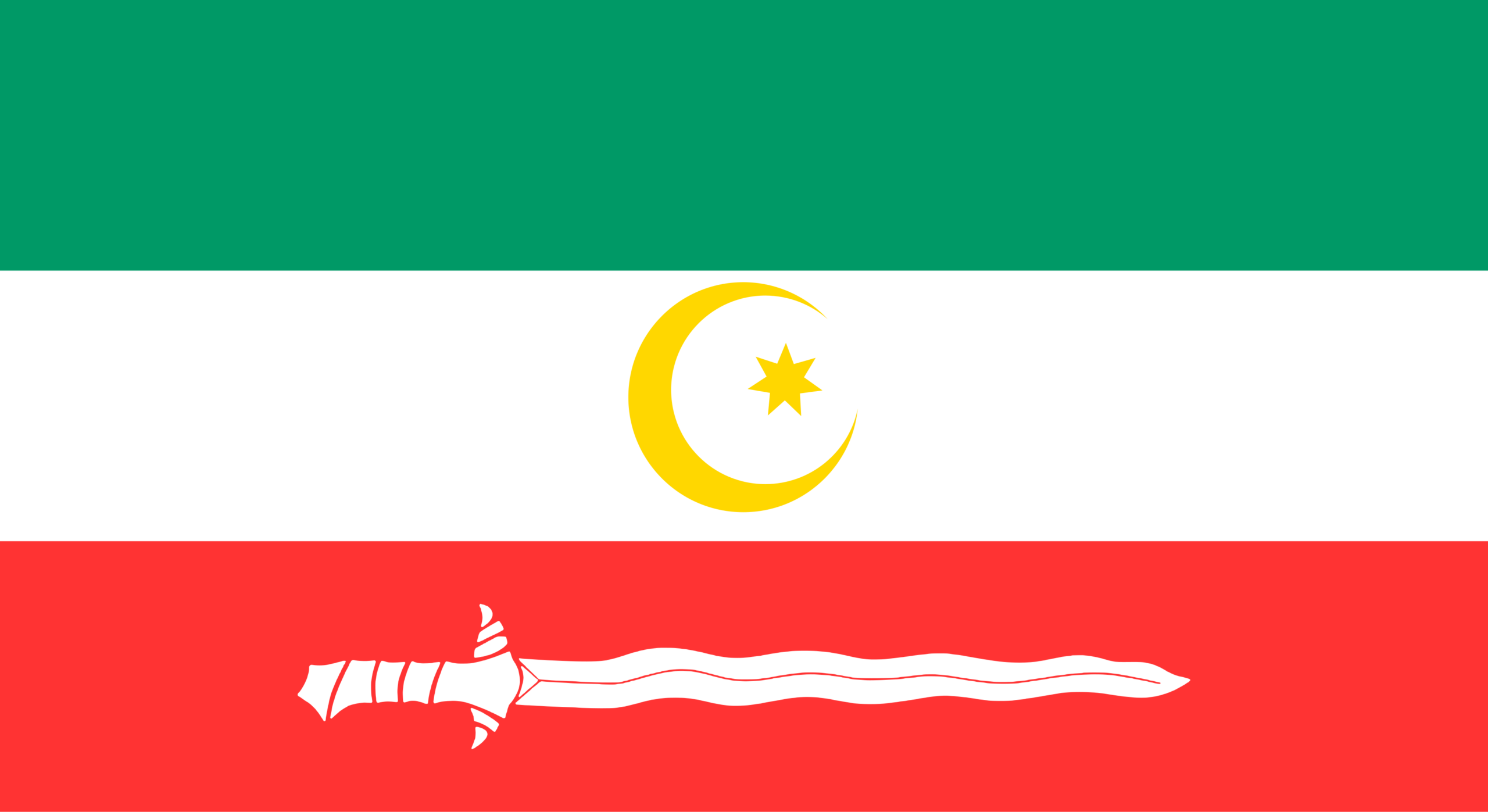
On Monday, assuming the rather substantial peacekeeping efforts are largely successful, three million or so voters will elect the first ever parliament of Bangsamoro. I’m guessing some of you have probably never heard of Bangsamoro, so a bit of history is probably in order.
In 1898, The United States of America relieved the Kingdom of Spain of several of their colonial possessions, including The Philippines. The Southern regions of this vast archipelago contained a number of Sultanates, concentrated on the Western half of Mindanao and the Sulu islands (a string of Islands between Mindanao and the northeastern Borneo) that the Spanish claimed sovereignty over, but had never been able to manage to turn that claim into de facto sovereignty. These Sultanates were largely successful functional, independent polities with a long history of successfully resisting Spanish control. While there is no reliable census of the Filipino population in 1898, it is quite likely a majority of the Muslim population of the Philippines resided in, and was ruled by, these Sultanates. They contained a significant amount of ethnolinguistic diversity, within and across the various polities, but the Spanish took to calling these people “Moro” (derived from Moor) and it stuck.
By the time the US took possession of the Philippines, the Spanish had been trying, and failing, to bring these regions under their control for centuries. Undeterred by Spanish failures, the American imperialists decided almost immediately to give the old college try. At first the US sought to make a deal. In exchange for formal recognition of US sovereignty and assurance they’d remain neutral in the US efforts to defeat the Philippine nationalist forces in the rest of the country, substantial non-interference was promised. This held for a bit, but in 1902, the war in the North was wrapping up nicely, American officials were getting impatient with indirect rule, and a Polish-American anarchist from Detroit decided replacing the level 5 imperialist in the White House with a level 8 imperialist was an objective worth throwing his life away for. The agreements with the Sultanates were torn up and a brutal 10+ year of conquest began. By its conclusion in 1913, the American military objectives in the Moro wars were largely obtained. While the Moro political institutions were destroyed, and American administration of the region established, hearts and minds were not particularly close to being won over. (At risk of complicating the anti-Imperialist tone of this post so far, it should be noted that the Moro wars also effectively ended slavery in these territories, which was quite widespread in the Sultanate of Sulu in particular.) Moro resistance did not cease in the final decades of American rule, but it was more sporadic and localized, and nothing like the decade of war. During these years, there was a slow but significant personnel shift from American administrators to Christian Filipino ones from the North, priming them to see rule from Washington and rule from Manila as two sides of the same coin. After a brief interregnum of (partially successful) resistance to Japanese rule during WWII, the American era swiftly ended and Manila became the focus of their frustration.
The early years of Philippine independence were relatively peaceful in the South, as some Moro elites were successfully incorporated into the Philippine political order. Tensions started to ramp up again in the 1950’s for a variety of reasons, one of which was land. Christians from the North were migrating to Mindanao and successfully acquiring land. (The formal-legal land tenure system rendered a good deal of customary, largely undocumented land tenure rules used in Moro societies illegible to and unrecognized in the new modern formal-legal orders.) These tensions led to sporadic resistance the turning point came in the late 60’s. A young new president named Ferdinand Marcos came up with a plan that, in hindsight was pretty ill-advised. Keeping with a recurring theme of this power, ill-advised scheme can find its origins in Imperialist ambition. One of the defeated Moro Sultanates, the Sultanate or Sulu, had in the past claimed (and sometimes, incompletely, exercised) sovereignty of much of the Eastern portion of the now-Malaysian state of Sabah. Marcos, deploying some twisted version of the transitive property theory of imperialism, that meant The Philippines should possess this territory. The plan was to train Moro soldiers for a secret mission in Sabah, where they would destabilize and foment resistance and rebellion in Sabah somehow, making the Malaysian claim appear weaker and strengthening Manila’s rival claim. A number of young Muslim soldiers were transported to Corregidor Island near Manila for training. Exactly what happened is unknown, as the Marcos regime suppressed any coverage or even acknowledgement of the event for the remainder of his time in office. But for some reason or another, the recruits were massacred by Filipino soldiers. One leading theory is that they attempted some sort of mutiny, either because they learned something upsetting about their mission that had been kept from them or because conditions they were living under were intolerable.
Rumors/news of the massacre spread in the South, and the reaction was angry and swift, providing a shot in the arm for the regional separatist movement. The violent insurgent arm of that movement, the Moro National Liberation Front, was founded in 1972 and a new period of violence was inaugurated, that continued through the 1970’s and into the 80’s. A peace agreement between the MNLF and Marcos was brokered in Tripoli in 1976 (mediated by Mr. Qaddafi himself!) but early in 1977 the Marcos government started unilaterally changing the terms of the agreement, and the violence resumed. MNLF came to an agreement with the Philippine government on a semi-autonomous arrangement, which was formally created in 1990, known as the Autonomous REgion of Muslim Mindanao (ARMM). This turned out to be a pretty farcical arrangement, and as that became clearer, the independence-minded people began to shift from the MNLF to a more radical offshoot known as the Mindanao Islamic Liberation Front (MILF). The ARMM project began to fall apart in 1996 and was fully defunct by 2001, with MILF now the most consequential armed resistance to Philippine rule. The election of Benigno “Noynoy” Aquino III, who adopted a more conciliatory approach to the Southern separatists, in 2010 provided an opportunity to return to the negotiating table. The talks went reasonably well, and a comprehensive agreement on a new, this time for real, autonomous region was reached in 2014. In 2018 the Bangsamoro Organic Law was passed by parliament, and in 2019 the new BARMM transitional government replaced the technically still existing on paper ARMM. A plebiscite was held that year approving the creation of BARMM passed 89-11 (88% turnout), and a handful of neighboring cities and territories were then given the opportunity to vote to join BARMM. Most notable were Cotabato City (which voted to join, 60-40) and Isabela City (which rejected joining BARMM 55-45).
BARMM is, unsurprisingly, dominated by MILF, per the terms of the peace agreement. But MILF would eventually have to win an election to retain that power. This election was supposed to happen over four years ago, but after multiple postponements, here we are. The Bangsamoro parliament will have 80 members. 32 of them will be elected in first past the post single member district elections, and another 40 will be elected via one-constituency PR (completely separate from the SMD results, no German-style levelling or compensatory calculations). The remaining eight seats are sectoral. Two of them are reserved for NMIP (non-Muslim indigenous peoples) communities. There are six recognized groups, and they’ve agreed to a rotation system where each will get to appoint a legislator every third election. The remaining sectoral seats include two for the “Mindanao settler” community (residents of the territory who moved, or are descended from those who moved from the North to this region, primarily Tagalog Filipinos from Luzon, Visayan Filipinos from the central islands, and Chinese-Filipinos). One each will represent women, the youth, the Ulama (traditional religious leaders), and traditional political elites. The Umala and traditional political elite seats will be filled by a vote at a convention of the recognized members of those communities. The remaining four sectoral seats will be elected universally, not just (as with the NMIP seats) the groups in question. So each voter will vote in 6 different elections for parliament–for their local seat, nationwide PR, and four sectoral seats. Candidates for the sectoral seats are put forward by recognized organizations representing those interests. The PR seats have a 2.5%/”qualify for two seats” threshold. (I’ve found conflicting reports on the selection process for the Umala and traditional political elite seats, so this may not be entirely correct)
There are 12 parties competing in the election. (It was 13 but Mono Ako was disqualified for technical reasons just a few days ago). A few parties to pay particular attention to include the United Bangsamoro Justice Party (UBJP), which is the closest to a continuation of MILF rule party there is. (I would be reluctant to straightforwardly state this is simply a rebranding of MILF for a new era, as MILF has fractured electorally. The other party representing a substantial MILF faction is the Bangsamoro Federalist Party (BFP). From what I can gather, the primary way they differentiate themselves is through a more unifying, inclusive, pluralist message. While UBJP is a bit more Islamist (this was part of the story of MILF’s initial split from MNLF in the 1970’s and 80’s; MNLF was, surprisingly-to-me, pretty secularist), BFP recognizes the equal status of Christians and other religions. They still engage in some Islamist rhetoric (their leader has talked about promoting “Islamic consciousness” in public administration) but stress that they, and not UBJP, are the MILF faction ready to transition from “permanent revolutionary organization” to “political party in a pluralist, democratic polity.” There are two parties that represent MNLF factions, but the failure of that organization’s regional agreement makes it likely they will not be serious contenders. A third contender to watch is the BARMM grand coalition (BGC), a loose coalition that is skeptical of the idea of a strong BARMM government and would like to see limited powers exercised centrally and a return to localized, decentralized, traditional forms of political power.
I am aware of no polling, and most coverage of this election is understandably reluctant to make even provisional predictions, although there seems to be an expectation that UBJP will be at least a plurality winner. Assuming things go reasonably smoothly, which is far from guaranteed, we’ll know soon enough.