
The indestructible illusions of legal formalism as anti-democratic roadblocks
 By
By 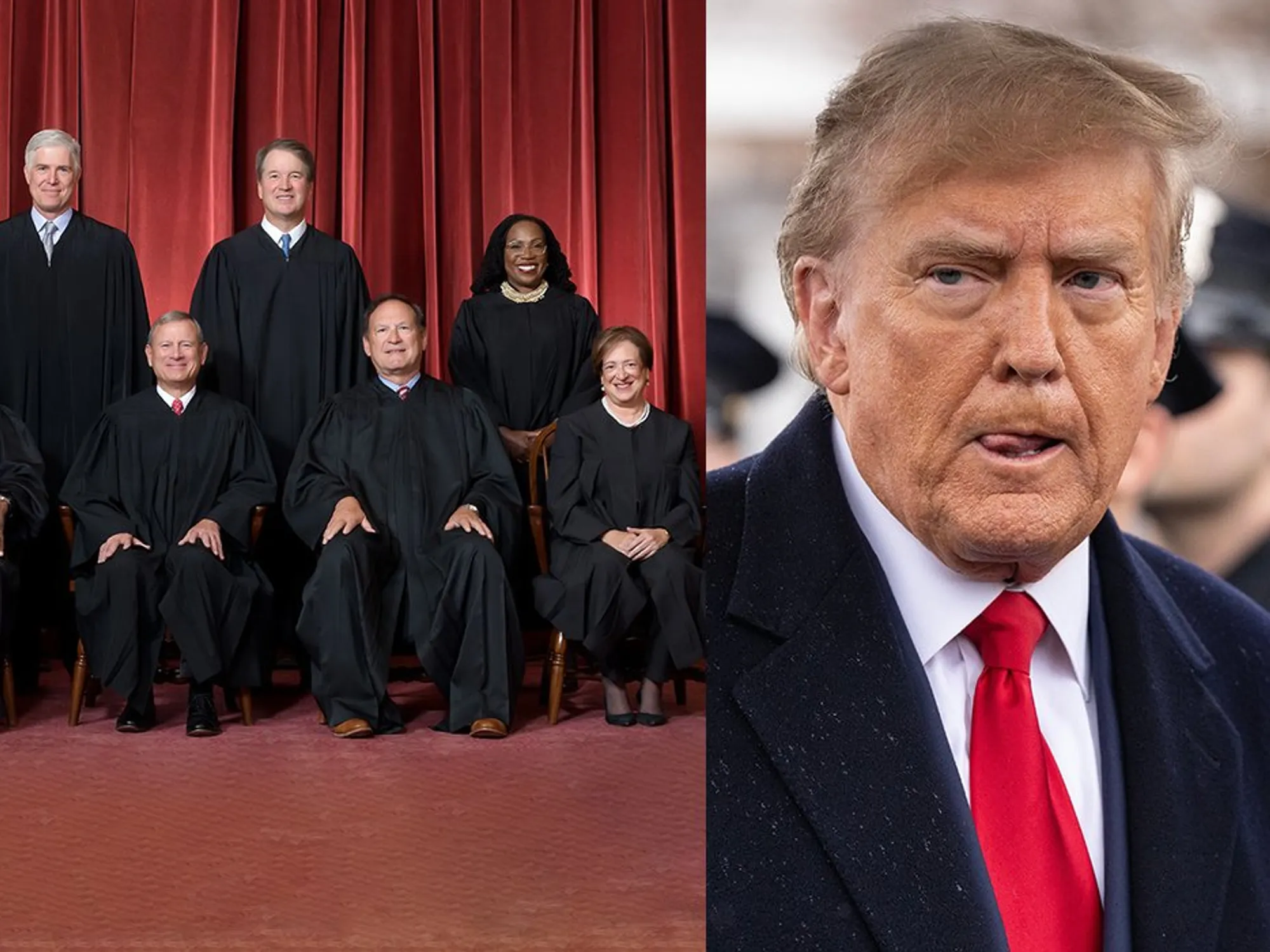
Imagine if there were a debate between people who thought income taxes should be paid via mandatory employer deductions from payroll, versus those who advocated an honor system, in which there would be no such deductions. After awhile it becomes crystal clear that the latter system doesn’t work: if you want to collect anything like taxes actually owed, you need mandatory deductions. Now suppose the response to all this from the honor system advocates was, our system would work if people followed the rules. That would be pretty dumb wouldn’t it?
Something like this exists in the American legal system, in the form of the endless debate between people who point out that the SCOTUS functions as a kind of fundamentally anti-democratic super legislature, and those who argue that it wouldn’t if it would just follow their preferred formalistic theory of legal decision making.
Here’s Jamelle Bouie on the SCOTUS essentially re-writing the VRA, and for that matter the 14th and 15th amendments:
If the Supreme Court is going to act as a partisan institution — as a super-legislature whose judgments override the decisions of voters on the thin basis of ideology — then the only path worth taking is to discipline and transform the court with all the tools Congress has at its disposal under the Constitution.
Beyond court reform, Americans have to reacquaint themselves with constitutional thinking — with the idea that we, the people, make constitutional meaning. To the extent that the Supreme Court claims broad authority to say what our Constitution means, it is in large part because we have given this authority to them through our indifference.
I agree with that completely, but what a lot of left-liberal types don’t like to admit even to themselves is that this is how the SCOTUSalways operates, and is always going to operate, given the nature of strong judicial review in a system in which formally amending the Constitution is nearly impossible, and in which there are enormous structural barriers to enacting significant federal legislation. That happens to be our system, so arguing that it wouldn’t have to be that way if things were different makes exactly as much sense as saying mandatory deductions for federal income taxes wouldn’t be necessary if people would just voluntarily pay their taxes, like they’re supposed to.
Let me say this in the most straightforward way I know how: The only difference between cases like Callais and Shelby County on the one hand, and Brown v. Board and Roe and Obergefell on the other, is that in the former cases the SCOTUS was acting like a super-legislature with bad politics, while in the latter it was acting like one with good politics. That’s it. That’s the way it is, and that’s the way it has to be, given the nature of the SCOTUS as an institution, in the context of our constitutional and legislative system.
What follows from this is equally straightforward: Having a super-legislature that is constituted in the way the SCOTUS is constituted, which is to say via a largely random and wildly un-democratic process, that has resulted in it being under majority Republican control for 57 years now and counting, is utterly indefensible. And the key point I’m trying to make here is that the utterly indefensible nature of this increasingly absurd and frankly immoral institution is continually disguised by the apparently irresistible impulse to put forward some kind of fantasy formalist narrative, about how having nine randomly appointed lawyers with lifetime tenure decide the things they decide would be OK if they just Did It Right, instead of “legislating from the bench.”
Shelby County and Callais are “correctly decided” if you start from the assumption that the United States legal system is at bottom dedicated to protecting white supremacy, and they’re “bad law” if you assume it isn’t. And the answer to the question of whether the United States legal system, both historically speaking and in 2026, is fundamentally dedicated to protecting white supremacy, or to opposing it, is “yes.”
Law is politics, and anyone who says it should not be is speaking words that have no meaning.