
Author of Dow 36,000 wants staffers punished for publishing banal economic facts
 By
By 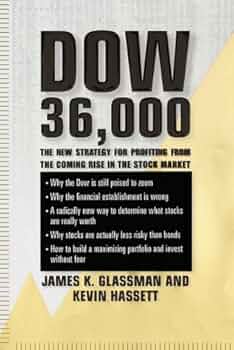
If there’s anyone who knows about embarassment:
White House economic adviser Kevin Hassett on Wednesday said staffers at the New York Federal Reserve should be punished for producing research that found most of President Donald Trump’s tariffs are being paid by U.S. firms and consumers.
Hassett on CNBC called the paper, co-authored by four people including the New York Fed’s head of labor and product markets, “an embarrassment” and “the worst paper I’ve ever seen in the history of the Federal Reserve System.”
“The people associated with this paper should presumably be disciplined,” he added.
Hassett, the director of the National Economic Council, was previously on Trump’s short list to be the next chair of the Fed, but the president ultimately selected former Fed board member Kevin Warsh.
“Prices have gone down. Inflation is down over time,” Hassett said. “Import prices dropped a lot in the first half of the year and then leveled off, and [inflation-adjusted] wages were up $1,400 on average last year, which means that consumers were made better off by the tariffs. And consumers couldn’t have been made better off by the tariffs if this New York Fed analysis was correct.”
In a post on the NY Fed’s Liberty Street Economics blog, the researchers said 90 percent of the economic burden of Trump’s tariff regime has fallen on domestic buyers.
Other reputable sources have produced similar findings, including Harvard Business School; Yale’s Budget Lab; the Kiel Institute for the World Economy, a German think tank; and the Congressional Budget Office.
I can’t believe economics professionals weren’t persuaded by that laundry list of non-sequiturs!
1. What is the Glassman-Hassett argument?
Imagine the whole U.S. corporate sector as if it were a single company. And imagine that this company – and the economy – will grow steadily forever, say at 5 percent nominal (3 percent real plus 2 percent inflation). Suppose also that the interest rate is 6 percent. What is this company worth?
The answer should be that it is worth 100 times dividends. A dividend that grows at 5 percent per year, discounted at 6 percent, has a present value of 100 times this year’s level.
The G-H argument is that historically people have discounted dividends at a much greater rate than warranted, because they perceived a lot of risk, which wasn’t actually there; so in reality stocks should be valued much more highly than anyone now thinks – and the claim is that the right number is something like 36,000.
2. What is the glaring error?
In the original WSJ articles, that number – Dow 36,000 – was calculated as 100 times earnings. Now earnings are not the same as dividends, by a long shot; and what a stock is worth is the present discounted value of the dividends on that stock – period, end of story.
Glassman and Hassett have repeatedly – and vituperatively, in Glassman’s case – insisted that they are not confused about this point. But it is hard to get away from the fact that their number corresponded at the time of writing to a P/E of 100, which makes it hard to believe that they did not think that earnings were the right thing to discount.
Now their book does offer an alternative calculation, in which they discount dividends plus repurchases of stock (which do return cash to investors, and increase the value of the shares remaining by allowing dividends per share to grow faster than total dividends). This leads them to an estimate of Dow 18,000. So why didn’t they retitle the book?
Aside from what one suspects to be the likely explanation – that it would have been too embarassing – they claim that the free cash flow of companies is larger than the cash they actually return to investors. I have to admit that I don’t understand this. If it is really free, that is, is not needed for the expansion of the business, where is it going? And anyway, in the end a stock is worth the discounted value of the cash the investor actually receives – not what he hypothetically might have received. So the supposed free cash flow does, somehow, someday, have to show up in actual cash flow to investors somewhere.
The authors offer what they claim is a counterexample: companies like Microsoft, that do not pay dividends. But this is, I think, silly: what makes Microsoft worth so much is the expectation that stockholders will at some future date either receive large dividends or have their stock bought back by the company at high prices. Or to put it differently, in the case of Microsoft the expectation is that dividends will grow more rapidly than profits in the future (easy when they start from zero). There are other stocks that pay large dividends but do not have high prices (utilities), because those dividends are not expected to grow rapidly.
To claim that the right valuation, even accepting the rest of the G-H argument, is 100 times something more than dividends plus repurchases, you must claim that the cash flow to investors from the corporate sector as a whole will grow faster than profits. Maybe – but that is an argument they do not make explicitly, and it also undermines the steady-state assumptions that are the basis of the calculation.
I have to admit that despite numerous belligerent explanations from Glassman, and my own conversation with Hassett, what I still think is that they simply made a mistake in their original argument, and have since tried to throw up a smoke screen to cover up that mistake.
Why haven’t more commentators picked up on this mistake? My other uncharitable suspicion is that it never occurred to them that the authors might be confused about such a simple point; and in the book the authors claim to be taking it into account – before suddenly jumping back to a valuation of 100 times earnings, after all.
The Trump administration is one giant failing upwards collective.