
November Reading List
 By
By 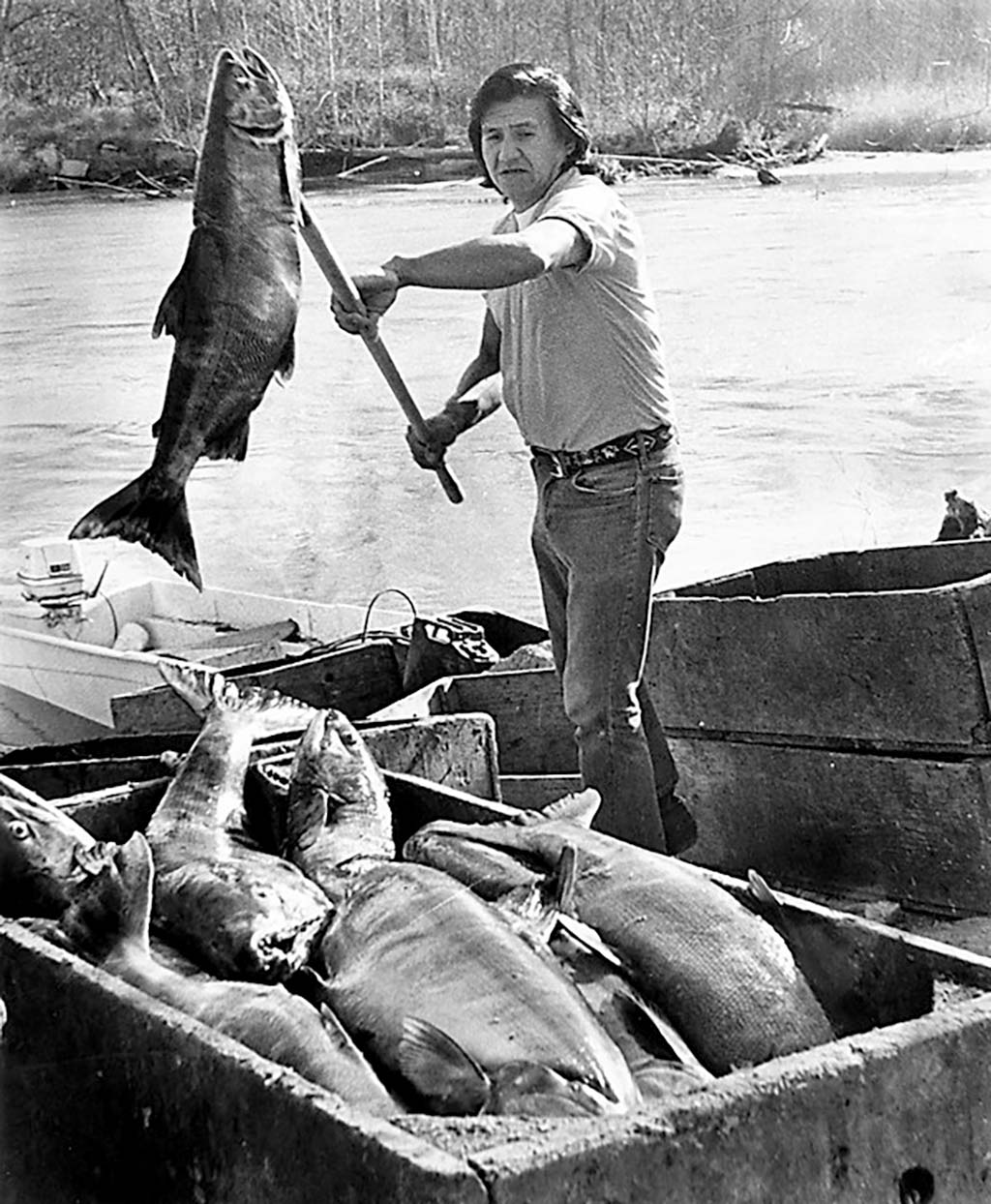
Here is my reading list for November. Here’s the link for October and you can follow it back from there.
Professional Reading:
- Charles Wilkinson, Treaty Justice: The Northwest Tribes, the Boldt Decision, and the Recognition of Fishing Rights (University of Washington Press, 2024). Wilkinson wrote for a long time about Native fishing rights. This is kind of a general overview of the issue, I believe his last book, as he died in 2023. It’s moderately satisfying, with more value if you don’t know the story of how the state of Washington did not respect the treaties signed with the Tribes back in the 1850s. Having read much of his work, it felt like I’d read this before and he did have a tendency to repeat himself in his books. But if you aren’t familiar with the story, this would have a lot of value for you. It did get reviewed positively in the New York Review of Books though and it is probably better for the educated reader than for the specialist in Northwest history who has read about this case so many times.
- Mike Davis and Jon Wiener, Set the Night on Fire: L.A. in the Sixties (Verso, 2020). Davis is of course one of the beloved figures of the literary left, with his critical observations of California and its past. I still assign some of his work in my classes, including his famed essay “The Case for Letting Malibu Burn.” But this book is the less successful side of Davis–the good vs. evil vision of history that shows The People As Good. It’s a story of protest and resistance in Los Angeles in the 60s. There are a lot of amazing stories here and it’s easy for modern people to forget how reactionary Los Angeles used to be, a horrible city for decades. But also, there’s not much critical examination of the people involved in these protest movements. They are simply presented as Good. This is a Verso thing too–they love a leftist hack and Davis had some hack in him when it fit his notions of The People. Maybe I should be a good labor historian and just root for The People. But I do not have it in me. I’m not a good hack. Weiner is another activist writer who is most known for spending 25 years in court to get the FBI to release the surveillance files on John Lennon. So he’s that kind of guy. Well-written of course. Gender-based movements are just kind of thrown in at the end, made me wonder if an early draft got some criticism so they tossed a chapter together.
- Edward Ayers, Southern Journey: The Migrations of the American South, 1790-2020 (Louisiana State University Press, 2020). Ayers has been a major historians of the 19th century South, especially the postwar South, for decades now. Looking for something new, he commissioned some mapmakers to do a computer-based mapping project about migration through southern history. Although the book is physically difficult to handle–it’s literally hard to hold because of its size and shape–and although the historical narrative itself doesn’t add a lot to what other historians know, even for me, looking at the visualizing of migration by race (forced before 1865), transportation networks, and cotton production over the decades is really valuable. And for the regular reader, the history would be helpful too.
- Hugh Wilford, The CIA: An Imperial History (Basic Books, 2024). Wilford provides a history of the CIA through five of its major agents, demonstrating the deep connections between the Agency and the dreams of British imperialism that these guys had, such as Edward Lansdale and Kim Roosevelt, men who had deeply imbibed T.E. Lawrence and Rudyard Kipling. Obviously this does not cover the entirety of the CIA, but the connections are plain as day and Wilford lays them out entertainingly.
- Susan Juster, Disorderly Women: Sexual Politics and Evangelicalism in Revolutionary New England (Cornell University Press, 1994). I don’t often read older books like this anymore, but it’s a reminder of the great flowering of social history from the 1970s through the early 2000s and how much of it was focused on gender, religion, and early America. Juster shows that the Great Awakening was interpreted by many as imbibing a feminine side of religion because it overturned hierarchical order and how the move back toward masculine order during and after the American Revolution created new versions of patriarchy among Baptists.
- Robert J. Dillard, Two Counties in Crisis: Measuring Political Change in Reconstruction Texas (University of North Texas Press, 2023). This is a minor book by a political science that looks at Reconstruction Texas. It sort of focuses on two counties, one quite pro-secession and one anti-secession and shows how both counties, like the rest of Texas, became aggressively Democratic and white supremacist during Reconstruction, but honestly, it feels like more of a discussion of Texas overall. That’s fine though, it has value in reviewing those issues. Dillard is a political scientist and some of his questions don’t particularly interest me, but then they don’t have to, that part of the book isn’t really for me.
- Jonathan M. Weber, Death is All around Us: Corpses, Chaos, and Public Health in Porfirian Mexico City (University of Nebraska Press, 2019). There’s a huge literature on modernization in the Porfiriato and a huge literature on managing the environmental disaster of building a giant city on a drained lake bed and Weber does a good job adding to both literatures by thinking about how the cientificos considered the dead (racialized class divisions being key here) and how the poor had their own ideas about death and resisted the top down effort to tell them not only how to live but how to die.
- Thomas Blake Earle, The Liberty to Take Fish: Atlantic Fisheries and Federal Power in Nineteenth-Century America (Cornell University Press, 2023). It can be hard for modern Americans to understand how central the fisheries were to early American diplomacy. Earle provides the best overview I’ve read on the topic, including the decline of their importance by the Civil War, as after all, most of the fish were gone by then anyway.
- Billy Coleman, Harnessing Harmony: Music, Power, and Politics in the United States, 1788-1865 (University of North Carolina Press, 2020). I enjoyed this book about how the early political parties mobilized around music. What I didn’t really expect is that the real thread here went through the Federalists-Whigs-Republicans more than the Democrats. That surprised me given the general populist nature of the Democrats. The most famous example of course is the Tippeacanoe and Tyler Too campaign of 1840 that elected Harrison, but it goes back to how Francis Scott Key was a staunch Federalist, how the Jeffersonians and then Democrats thought all this singing was unseemly, and other interesting topics.
- Ethan Blue, The Deportation Express: A History of America through Forced Removal (University of California Press, 2021). Newly relevant, Blue explores the deportation trains of the 1910s. He inventively uses these to note various stops and tell stories of the deported from these cities, which allows him to get into labor conditions, sex work, radicalism, immigration, and all sorts of issues. Writing in this style makes the book more episodic than encyclopedic, but there’s no real downside to that unless you don’t like interesting stories surrounded by good and accessible context.
Fiction/Literary Non-Fiction–I had a light couple of months, but I sure made it up in November, a combination of finishing some books that were almost done in October, a long flight (I always read on flights unless I’m sleeping), and some shorter books. It’s kind of fun to have read this much in a month, making it a better month than some. Amazing what you can do when you don’t watch a bunch of shitty Netflix shows or doomscroll.
- Robert Christgau, Any Old Way You Choose It: Rock and Other Pop Music, 1967-1973. I mentioned reading Christgau’s book in a Music Notes and how much I enjoyed it. I wrote: I have to say, I enjoyed the hell out of it. I know people give Christgau shit and I largely disagree anyway, I think he’s great. But what I really loved about this was reading rock criticism become a thing in real time and how many of his takes from all the way back then really hold up today. He’s also funnier than I realized. His pieces on Grand Funk Railroad’s amazing ability to have band mates sue each other made me laugh. Talking about bands that were just starting at the time and are legends today is interesting to read. His dismissals of people who I find intolerably boring today–James Taylor, everything associated with Laurel Canyon, etc–are highly enjoyable to me today. And then bands that are totally forgotten today, well, that’s also interesting in thinking about why and how that happens.
- Alejandro Zambra, My Documents. I enjoyed this collection of short stories as I often do with Chilean writers. I wonder why that is. I think it is a combination of the domination of the 1973 coup and its aftermath with the conscious discussion of the artistic life that so many of these writers explore. “I Smoked Very Well” is perhaps the best thing I’ve ever read about smoking, or maybe about addiction entirely. Not everyone here in this collection is a hero, there’s some domestic violence for example. Zamora can be unsparing, but he can also be very funny.
- Robert Stone, Dog Soldiers. This modern day classic about a busted up heroin deal from a journalist lost in Vietnam and his wife lost in the counterculture and into drugs back home is one I read every few years. I did find it more dated this time though. The overaching story is that Vietnam destroyed everyone’s life, even those not fighting in it, and brought home broken, violent, nihilistic people. And maybe that’s true, but it feels as dated as the Gilded Age to me. Still an excellent read of course. Also, I lived in Santa Fe for two years in the mid 2000s. The first place I rented was an apartment behind someone’s house (common in New Mexico). The previous occupant: Robert Stone. My dissertation did not imbibe his style. Or any style, really.
- Sjon, The Blue Fox. This odd little book by the Icelandic writer known as Sjon, who also writes lyrics for Bjork (this seems predetermined, does everyone in Iceland work for Bjork?) is a late 19th century story that has two parts. One is about a minister who goes fox hunting and whose shot lets off an avalanche that buries him. The second is about a scientist who brings in a poor girl abandoned because she has Down syndrome. It’s a metaphor for cruelty and transformation. I didn’t find it as compelling as the reviews, but it’s short enough that multiple reads that will allow it to grow on me without the kind of investment a longer book might require.
- John McPhee, Assembling California. I love rereading McPhee’s classic books about American geology, this one focusing on California and its fascinating geology. By the time of this book, the 4th in his series, plate tectonics had become universally accepted as the story of the Earth, so this book naturally has less of the new science than the early ones. McPhee is such an entertaining writer and so good at explaining complex science to the everyday person that it is always worth engaging.
- Richard Koloda, Holy Ghost: The Life & Death of Free Jazz Pioneer Albert Ayler. I wrote about this in a recent Music Notes. As I said then, Ayler remains a kind of unknowable figure, due to his early death and mental illness and because he seems to have arrived from almost nowhere, going from a no one to a huge influence on John Coltrane in about a year. What this book really drove home to me–and I think this makes a lot of sense–is that what Ayler was doing was bringing the speaking in tongues from the Holiness tradition he came out of. I’ve always wondered what would have happened had Ayler lived, but in truth, in his later recordings, desperate to sell albums, he was already moving toward the cheese that would come to dominate the fusion guy in the 70s. That doesn’t mean he would have ended there. He was clearly on his own trajectory, to say the least. But still, there’s a reason no one listens to those late recordings today.
- Stephen Crane, The Red Badge of Courage. It’d been years since I read one of the truly first great American novels. Is this not basically a perfect book? It’s always been interesting to me that the Civil War produced so little lasting art and the best novel written in the lifetime of any Civil War veteran was by a guy born in 1871. But boy does it nail the issue of fear and courage down perfectly, to the point that so many soldiers thought Crane must have fought in the war before they knew who he was.
- James Baldwin, The Fire Next Time. Is this the most perceptive book in American history? Yeah, probably. Even The Souls of Black Folk doesn’t get to the rot at the heart of America as succinctly as Baldwin does here. I assume I don’t even have to explain it and you’ve all read it multiple times. And if you haven’t, well, you need to take care of this immediately. It sure literally be a rule that to comment here, you need to have read The Fire Next Time.
- Zadie Smith, The Wife of Willesden. This was fun. Smith, in a highly entertaining introduction to her first play, explains that she was part of a team that won an award for her neighborhood in London and somehow it came out that she was going to write a play even though she didn’t intend to say that and she had no idea what to dos. So she decided to rewrite Chaucer’s “The Wife of Bath’s Tale” for a modern audience. Some of the stories are similar, some are very connected to the present. She shortened the original tale and painted the hero as a sexually liberated Jamaican immigrant to England who has been married 5 times, loves sex, and is utterly indifferent to those who condemn her. She deals with domestic violence, the hypocrisy of men, and the lies of thieving ministers. It’s exceedingly entertaining.
- Nettie Jones, Fish Tales. This was published in 1983, brought to publication by an editor named Toni Morrison. Jones was a first time writer and enormous party girl and this pretty crazy book chronicles the parties of rich Black people of the 70s, told from a woman who loves sex with men and women, loves champagne and vodka, and loves cocaine. She’ll do anything and then she meets a new man she really loves–except that he’s a quadriplegic but they manage violence toward each other anyway. Told in dozens of short chapters, it’s easy to put down if you can’t take anymore, but it’s real easy to move forward too. An interesting point here is that Jones was pretty explicit that nearly all the characters are very light-skinned Black people, which was perhaps not necessary for the story but evidently did reflect her scene and she reported that well. The lead character had a lot of mental asylum stays and that reflected Jones too–after she published one more book, she spiraled down and was homeless for some time even. It’s a minor miracle this was republished and we should all be happy it was–it’s truly a remarkable book.
- William Brashler, The Bingo Long Traveling All-Stars & Motor Kings. I read this book I ran across it in a used bookstores and had seen the movie version about a barnstorming Negro League team starring Billy Dee Williams and James Earl Jones. It’s not a great movie. But then it’s not a great book. Brashler is a white writer, which perhaps makes the whole enterprise a little weird, but I guess that shouldn’t matter much. He had interviewed a lot of the old Negro League players and they seem to have liked the book if not the movie for capturing those wild times, but there’s not exactly a lot of narrative tension here. It’s an alright story about a bunch of guys trying to break free of the owner who really does own them and how they eventually succeed. It’s fine for a lark, but this is no great book. Nothing really wrong with that I suppose.
This is your monthly book thread.