
Burn!
 By
By 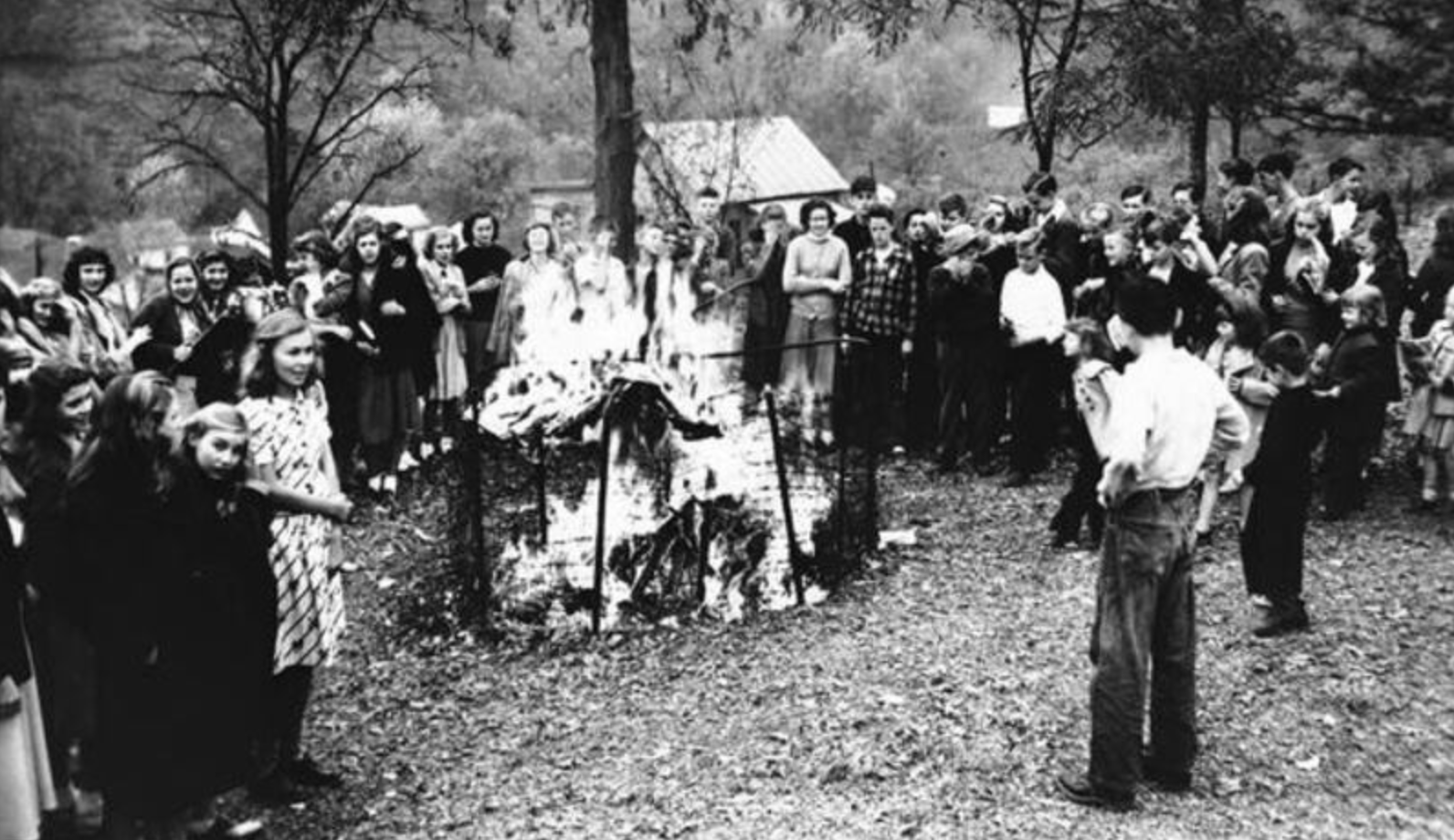
This used to be a decent country.
The 12- and 13-year-old students scowled at the burning pile of comic books outside St. Rita’s Parochial School in Louisville. Several leaned over to toss more comics onto the fire. Behind them, in a traditional nun’s habit, seventh grade teacher Sister Clarice watched with a grim smile. It was February 1954. Many Americans had decided comic books corrupted their children’s minds. A perceived rise in juvenile delinquency could be blamed on kids getting dangerous ideas from the colorfully violent images in horror, crime and superhero comics, according to a chorus of critics. The children at the Louisville bonfire echoed that message. “It’s surprising how willingly kids stop reading bad comics when they realize what it’s doing to them,” 12-year-old Richard Chadwell, vice president of his seventh grade’s Civics In Action Club, told a visiting newspaper reporter. “They show you 50 pictures on how to commit a crime and only one showing it doesn’t pay,” added 12-year-old Jean McAdams.
A few errant students who tried to sneak away with some of the collected comics were caught and held up to public ridicule by their peers, according to an account the next day in The Courier Journal. Two years later, the Kentucky legislature — prompted by righteous protests like the one in Louisville — unanimously approved a criminal ban on “the publication, sale and distribution to minors of comic books devoted to crime, horror, physical torture, brutality or illicit sex.” Penalties included fines up to $1,000, a year in jail or both. Kentucky kept its ban until 1975. “I just thought that maybe I should do something about that,” recalled the ban’s sponsor, state Rep. John Isler, a Covington Democrat, in an oral history interview toward the end of his life.
Part of a fascinating project by Brian Puaca.