
Does Ezra Klein Understand Power?
 By
By 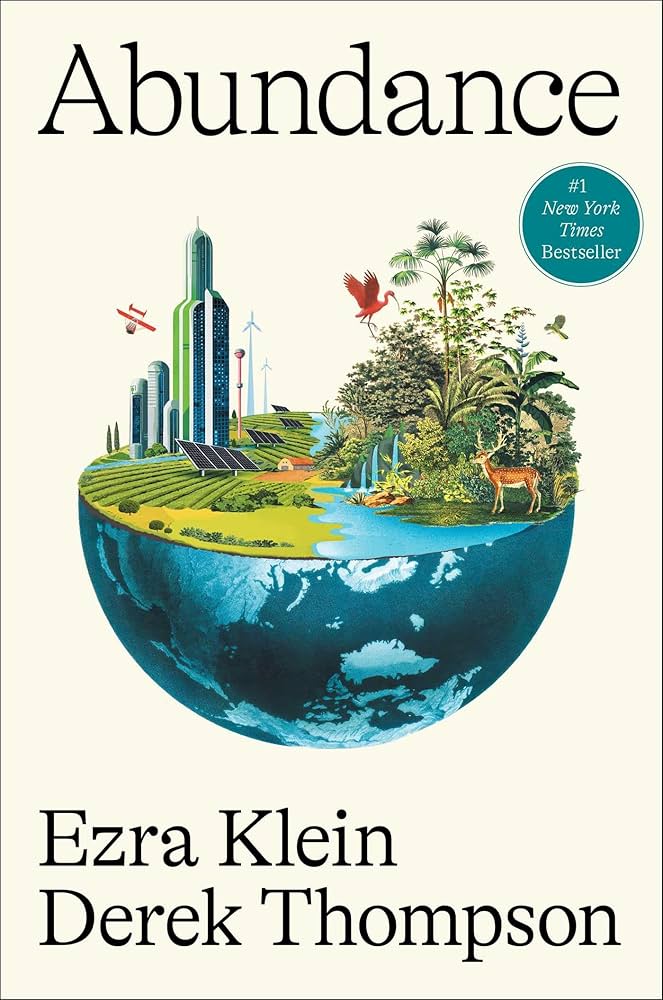
Ezra Klein and Derek Thompson are not stupid guys and their abundance arguments aren’t nonsense. But they are written from a perspective so unquestioning of corporate power and its problems that the blinders really limit what this perspective could offer, both in terms of politics and of policy. Robert Kuttner unloads a bit of Klein especially in the Prospect.
Ezra Klein, in his book with Derek Thompson, has made the case for an economy of “abundance.” He aptly points to several areas where government is badly gummed up. According to Klein and Thompson, ordinary Americans are denied the fruits of a potentially abundant economy because for half a century public policy has created too many opportunities to block. California Gov. Gavin Newsom recently took Klein’s point, by pushing through bipartisan legislation to reform the California Environmental Quality Act to make it easier to win approval for new housing.
Klein has the germ of a valid argument, but he has been widely criticized, including in these pages, for ignoring the broader issue of corporate power in determining what government actually does. For example, the collapse of housing construction after 2008 was not the result of a sudden increase in zoning obstacles. It was the result of Wall Street’s subprime scam.
U.S. GDP per capita is a robust $89,000. That’s almost $360,000 for a family of four—if it were distributed equally. But of course, the economy becomes more unequal every year. On average, there is plenty of abundance. The problem is maldistribution, financialization, and oligarchy.
Klein has fervently embraced YIMBY—Yes In My Backyard—and the movement for zoning reform as something close to a panacea for the housing shortage. But the far bigger problem is the national failure to invest in social housing. As this comprehensive and deeply reported article in Shelterforce makes clear, a great deal of the YIMBY movement is friends of more housing but not more affordable housing. You might think that local advocates of more social housing and YIMBYs would be political allies. But in practice, a lot of YIMBYs tend to be affluent professionals and developers who resist demands for affordable housing, or want to build cheaper housing by avoiding unions.
New York City mayoral candidate Zohran Mamdani, in contrast, has defined a version of abundance that serves working-class Americans. He has found a framing that has resonance far beyond New York City: The cost of living is killing ordinary people.
What goes into the cost of living? Housing costs, child care, food, higher education, transportation. Mamdani’s program addresses these directly. Addressing the scarcity of affordable housing will require everything from new construction to rent control and other forms of regulation, of which zoning reform can be part, but only a part.
Klein has scoffed at Mamdani’s idea of publicly owned supermarkets in food deserts, pointing out that supermarket chains operate on very low margins. But Klein misses the fact that Mamdani is proposing grocery pilots in places where the chains don’t find it profitable to operate at all. Several small towns in red-state America that have lost chain stores already have municipally owned food markets.
Klein also misses the fact that high retail food prices are substantially the result not of excessive markups by chains, but extreme consolidation and price-gouging by producers, for which the remedy is antitrust. In addition, if smaller stores could get the same pricing from food wholesalers as the big-box chains—something that is required by law under the Robinson-Patman Act—they could compete in these food deserts. A city-owned grocery in New York would have the resources to bring Robinson-Patman cases and create a level playing field.
Mamdani also demonstrates the power of narrative. To change policy, you have to get elected. To get elected, you need to be persuasive to an electoral majority. Mamdani has figured out how to do that, even by adapting a message of creating more efficient government to make it more resonant.
By contrast, consider Mamdani’s now-famous video in which he interviews several New York halal street vendors. He learns that they charge about $10 for a plate of chicken or lamb and rice, and that a big part of their cost is not food but the money they have to pay fixers to get their permit to operate, averaging about $20,000. The city charges only $400. Why not get the permit directly from the city? Because there is an interminable waiting list. A bill providing more permits, effectively putting fixers out of business, never gets passed. If it did pass, a reform that Mamdani supports, the cost of a plate of halal food would drop to $7 or $8.
Frankly, it’s in Klein’s interests and the circles he runs in to not question any of this too much. What he and Thompson are providing is a balm for the wounded souls of neoliberal Democrats who really want something to be true that is not true. Since that starts with the kind of corporate power of the Clinton years and the distrust of popular movements that personified Obama’s politics, it all feels very nostalgic and also very wistful. But as Kuttner discusses, they just miss the point entirely. They can’t even get what they want without the politics to get it and for guys who spend their whole lives in politics, they seem remarkably clueless on the politics of the moment. Kind of like the Democratic leaders they are speaking to…..