Subscribe via RSS Feed

Tag: "film"

Seapower in Culture Interregnum

[ 8 ] September 16, 2012 | Robert Farley

The Seapower in Culture series continues, although at a much slower pace than I had hoped for. At the Diplomat, James Holmes has thoughts on Battleship and In Harm’s Way. Of the latter:

Apart from Pearl Harbor, the battles shown on screen are amalgams of legendary engagements like Midway, Guadalcanal, and Leyte Gulf. Curiously, the makers also saw fit to fictionalize well-known figures like Admiral Husband Kimmel (“CINCPAC I”), the aforementioned Pacific Fleet commander who had the misfortune to be in charge on December 7, and his successor, Admiral Chester Nimitz (“CINCPAC II”), who oversaw the Central Pacific counteroffensive against Japan.

My favorite part of In Harm’s Way is that it captures a navy at a time of wrenching change. As someone once said, you go to war with the army you have. In 1941 the U.S. Navy went to war with the fleet it had—except that the Pacific Fleet the United States had on December 8 looked radically different than the one moored near Ford Island at dawn on December 7. The maimed navy had to wage war with the implements that remained to it until 1943, when the entirely new fleet Congress had authorized in the 1940 Two-Ocean Navy Act had been fitted out and began arriving in the theater. Battleship engagements were out; unrestricted submarine warfare and aircraft-carrier raids on Japanese outposts were in. Methods changed while the battle line remained ablaze in Pearl Harbor.

See also Jim Emerson’s unsympathetic but fair discussion of the late Tony Scott’s filmmaking.

Kurt Maetzig, RIP

[ 2 ] September 1, 2012 | Erik Loomis

The great German director has died.

If you’ve never seen The Rabbit Is Me, you are missing out on one of the great movies in the history of cinema.

Eastwood

[ 125 ] August 30, 2012 | Erik Loomis

I always thought Clint Eastwood was the genial, George H.W. Bush type of Republican voter. Didn’t care much about the social issue stuff, didn’t much care to pay taxes, bought into his own character, whatever.

Maybe I’m wrong. Maybe he’s actually the type of Republican who buys into the first half of Gran Torino.

Yet another good reason not to watch a single second of either convention.

And just to be snarky, it’s as good as time as any to note that Eastwood is vastly overrated as a director.

As for Romney, he probably wishes he was an Eastwood character, but he’s really just Mr. Morton, the old railroad tycoon from Once Upon a Time in the West.

Marker

[ 0 ] August 24, 2012 | Erik Loomis

Outstanding J. Hoberman essay in The New York Review of Books on Chris Marker and his amazing films. Must read of the morning.

Silent Film Notes

[ 30 ] August 17, 2012 | Erik Loomis

I had a bit of a silent comedy fest last night. I watched Just Neighbors with Harold Lloyd, Hustling for Health with Stan Laurel, and Kid Auto Races at Venice, Calif., with Charlie Chaplin. A few notes:

1. I liked Just Neighbors the least and have always found Lloyd a bit hard to warm up to. On the other hand, I enjoyed Hustling for Health a great deal, even though it’s hardly an excellent movie. But they both remind me of two comedy themes we just don’t see as much anymore–people being sprayed in the face with water and the destruction of people’s hats.

Since people don’t wear hats much anymore, I guess that makes sense. But getting sprayed in the face with water, does that ever get old? Luckily, we still have the theme of people getting shoved into swimming pools going strong.

Also, I think Farley’s Bloggingheads appearances would be a lot funnier if someone came in and stomped on his hat.

2. I know that people wore a lot makeup in silent films. But Stan Laurel looks like a raccoon in Hustling for Health. With his crooked teeth, he just looks really weird in the movie. Also, stealing food out of people’s homes is always good for a laugh or two.

3. Here’s Kid Auto Races:

This is notable for Chaplin’s first appearance as the Tramp. It’s really a strange little film, largely consisting of Chaplin trying to stand in front of a camera. I’ve seen quite a few early Chaplin films though and it’s interesting to watch the development of the character. In its first years, the Tramp was basically a big asshole. A couple of months ago, I spent an evening watching Chaplin’s so-called park films from I think 1914. In these, Chaplin hangs out in a park smoking and drinking and hitting on women. Usually, he tries to take other men’s girlfriends, he throws rocks at cops, and he pushes people into lakes. They range from bad to reasonably funny. But he’s so far away from the sweet and sublime character that really comes into focus by 1921′s The Kid and certainly by The Gold Rush. Since we don’t much watch early Chaplin shorts these days, it’s revealing to watch him create a character over a series of years. Maybe he played the same character in every film, but one can hardly say it was the same character from start to finish.

A Few Film Notes

[ 89 ] August 5, 2012 | Erik Loomis

Of course any post on the top 10 films in history is basically trolling for comments. But they were interesting comments. And here’s a few additional thoughts based upon them:

1. I recognize that there are good movies from the 1980s. But I would say that there are less good movies from that decade than any other. If I counted The Decalogue as a movie, it would be in my top 10 of all time, but it’s really more of a miniseries, as is Scenes from a Marriage, another clear top 10 contender. As is, Raging Bull is probably the decade’s best film.

2. I simply don’t get the love for Fight Club. It’s a good solid movie, but a total cop-out in the end with the two guys being the same person. I guess it serves as a touchstone for modern discussions of masculinity and I think that’s why people love it so much, even if they don’t think of it in those terms. But it’s really not that great. And neither is Children of Men, another recent film that people love more than is justified. Nothing against that film either, which I also liked a good bit. But really.

3. I’m interested, both in the original Sight and Sound list and in comments, of the increasing respect for Mulholland Drive. I’ll be the first to admit that I am not a David Lynch fan. But there’s no question it’s his best movie. His aesthetic is not really for me. But the key to reaching the S&S Top 10 is not to have your votes divided among multiple films. I think Lynch’s are coalescing around Mulholland.

4. I liked SEK bringing up Sunshine. Although I don’t much care for science fiction, the first 2/3 of that were really good. And then it was a complete meltdown. God the last third was garbage. But then I am also not a Danny Boyle fan. I think he jumps from genre to genre without really developing his craft around particular types of storytelling in a way that would deepen his films over time. I also thought Slumdog Millionaire was irritating poverty porn and it reinforced how stupid Oscar voters are.

5. Finally, just to throw another 10 films out that could easily have made my top 10 on a different day, think Wild Strawberries, The Godfather Part I, Pather Panchali, Kings of the Road, The Big Sleep, Raging Bull, The Gold Rush, A Generation, Army of Shadows, and All About Eve.

And just to troll a bit, and because I truly love this film, I’ll add an 11th: The Last Temptation of Christ.

Also, Moonrise Kingdom was really, really great.

Highway

[ 2 ] August 3, 2012 | Erik Loomis

For those Thursday night drivin’ Robert Moses road lovin’ readers out there, here’s Hilary Harris’ 1958 paean to the road, Highway.

Sight and Sound Poll

[ 316 ] August 2, 2012 | Erik Loomis

Sight and Sound released its preliminary poll findings of the top 10 films in history. The big news is that Citizen Kane was finally booted from its 50 year roost at the top by Vertigo. These are both great films, but I wouldn’t vote either of them in the top 10. Here is the overall vote:

1. Vertigo
2. Citizen Kane
3. Tokyo Story
4. Rules of the Game (what is the deal with only not translating French film titles in the film world?)
5. Sunrise
6. 2001
7. The Searchers
8. Man with a Movie Camera
9. The Passion of Joan of Arc
10. 8 1/2

I don’t have any huge problems with this list I guess. I’m not really a huge fan of 2001 but I understand its influence. Man with a Movie Camera is interesting but the 8th best movie ever? And I watched 8 1/2 again recently and was less impressed by it. Side note: has any beloved director 25 years ago seen his stock drop as quickly as Fellini. Really, most of his movies are not very good.

Anyway, here are the director and critics list separated out. Interesting that Vertigo is #1 among critics and #8 among directors and it still is #1 overall. Eventually, Sight and Sound will release everyone’s vote so we’ll see if the directors just split their votes among so many films that it was diluted or whether there was just more critics voting.

Now let’s get to the real issue–my top 10.

1. The Seventh Seal (Bergman)
2. The Seven Samurai (Kurosawa)

To me, these two are far and away the best films in history. The other 8 could change more or less by the day.

3. Tokyo Story (Ozu)
4. Once Upon a Time in the West (Leone)
5. Sullivan’s Travels (Sturges)
6. The Wild Bunch (Peckinpah)
7. The Passion of Joan of Arc (Dreyer)
8. The General (Keaton)
9. Dr. Mabuse the Gambler (Lang)
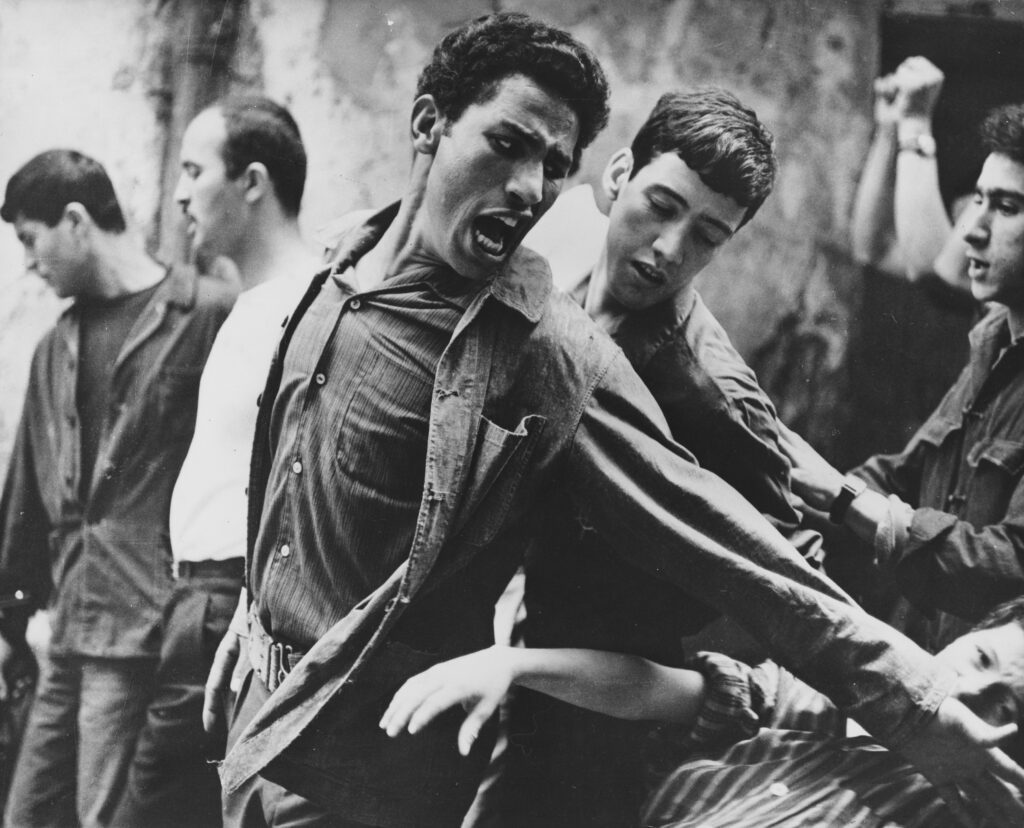
10. The Battle of Algiers (Pontecorvo)

There are at least 20 films that could easily go in those 8 spots, but those are the choices I’m making after this beer.

Richard Brody worried that this poll was becoming ossified with long dead directors. He suggested a secondary poll of films directed by directors born in 1940 or after. I think that’s a great idea. Here’s mine, without thinking too hard about order:

1. Raging Bull (Scorsese)
2. In the Mood for Love (Wong)
3. Yi-Yi (Yang)
4. Talk to Her (Almodovar)
5. Brokeback Mountain (Lee)
6. The Thin Red Line (Malick)
7. Porco Rosso (Miyazaki)
8. Red (Kieslowski)
9. The Big Lebowski (Coen)
10. 4 Months, 3 Weeks, and 2 Days (Mungiu)

Have fun telling me how stupid my opinions are.

Note that Coppola was born in 1939 so The Godfather Part 1 doesn’t make it. And The Godfather Part II is overrated so wouldn’t have made it anyway (can we spend another 13 minutes passing around the golden phone!).

Chris Marker, RIP

[ 57 ] July 30, 2012 | Erik Loomis

Chris Marker, one of the world’s greatest living filmmakers, died today. Best known for his science fiction short La Jetée, in my view the greatest science fiction film ever made*, Marker really should be known as an experimental creator of political films, most notably his opus, Grin Without A Cat, his lengthy 1977 documentary about the hope and collapse of the revolutionary European left in the late 60s and early 70s. What I love about Marker, and I feel this even more strongly about Agnes Varda, is his ability to experiment while creating politically and socially relevant film. He could subvert and play with narrative while not abandoning it entirely. I contrast this with so much experimental American film, which too often tends towards exercises in imagery without even a pretense of storytelling (the descendants of Stan Brakhage). Or if the filmmaker does try to tell a story, the person is afraid to break away from early 21st century faux-ironic posturing and craft a story that not only fits the experiment but moves it forward (basically this is how I sum up the whole mumblecore thing).

A great loss.

* Note that I actually dislike science fiction as a genre. Put something in space, the future or with a monster and I am basically disinterested. This is probably why my two favorite science fiction films are La Jetee and Solaris. Solaris may be in space but basically nothing happens at the same time that everything happens. Anyway, take my science fiction opinions with a grain of salt. And this is real salt that is on Earth. Not some phony space salt.

…[SL] Kenny has a great Marker quote about Vertigo. I will also add that I think Sans Soleil is almost as great as La Jetee.

…[EL] Reading that Marker quote on Vertigo Scott references, I not only think that sums up so much about Marker himself, but it reminds me that his generation of French intellectuals really did some amazing film criticism.

Humpty Dumpty Koch

[ 15 ] July 30, 2012 | Erik Loomis

Who knew that Humpty Dumpty was the secret Koch Brother?

A fantastic class war film from 1936 by the great Dave Fleischer.

Lonely Are The Brave

[ 3 ] July 28, 2012 | Erik Loomis

SEK can talk about current films that make billions of dollars all he wants to; readers of LGM know that the movies that really matter are the ones I like. And thus allow me to recommend Alex Cox’s essay on the superb Lonely Are The Brave.

Mad Men: Nostalgia, forestalled, and “The Wheel”

[ 7 ] June 22, 2012 | SEK

(Being the first of many of these I’ll be producing this summer.)

With summer here and only some online teaching duties to attend to—meaning that I can put the 2½ hours I don’t have to commute to and from campus to better use—I’ve decided to address short scenes from something compelling on a daily basis. This is the first such post, and as the title suggests, I’m not exactly working out of my comfort zone yet. (That will change.)

Before I can discuss Mad Men‘s fifth season finale, “The Phantom,” in any detail, I need to look back to its first season finale, “The Wheel,” because it contains a scene that subtends the most pivotal moment in “The Phantom.” If you recall, in the first season Don’s position in the firm is that of a star employee: trusted, but always expected to perform; necessary, but not irreplaceable. Or it was, before he reimagined Kodak’s “Projector of Poorly Framed Unprofessional Photographs” into a “Carousel” that transformed photographic imperfection into a dead letter office overstuffed with reclaimable memories. Only Matt Weiner, pulling double-duty as both writer and director here, doesn’t seem to believe the power of Don’s pitch, despite its seemingly self-evident efficacy. (That link will take you to the entire scene, in case you want to compare my reading of its constituent parts to the amalgamated whole.) On what am I basing my claim that Weiner’s trying to undermine Draper’s ostensibly successful pitch?

Glad you asked. Let’s start with the context. In “The Wheel,” Betty’s discovered incontrovertible proof of one of Don’s many infidelities, and Don’s decided not to spend Thanksgiving with the in-laws because he recognizes, rightfully, that his family is falling apart. His situation makes the substance of his appeal to Eastman Kodak all the more difficult to deliver, because it consists of images of his formerly happy family interacting in a manner they never will again. In short: Draper pushes the “nostalgia” angle because, at this point, his family consists of the memories he has of what they’ll never be again. He’s lost the right to say that’s “his” wife or “his” children being projected on the wall, but he has to sell the fact that, by virtue of Eastman Kodak’s marvelous new technology, they can always be “his” again, on celluloid if not in life. To wit:

Mad men - carousel00001

Weiner begins with a long shot, center on Don, with his colleagues flanked to his right and his customers to his left. (“Duck,” the firm’s intermediary with the clients, is positioned appropriately enough between the Eastman Kodak cartel and Don.) It’s a well-balanced shot, with the windows frame-left balanced by the painting frame-right, not to mention the diegetic lights emenating both from behind and above Don that signal (in case you somehow missed it) that he’ll be the focal point of this scene. All of which is only to say that this scenes screams of hierarchy—of a controlled environment in which professionals will do what professionals will do. Of course, in this case, what professionals do is manipulate impressionable clients by appealing to the inherent sentimentality of the American people, which is why Don opens with technology, but moves on to:

Read more…

Page 3 of 712345...Last »
  • Switch to our mobile site