
Review: Angel Down by Daniel Kraus
 By
By 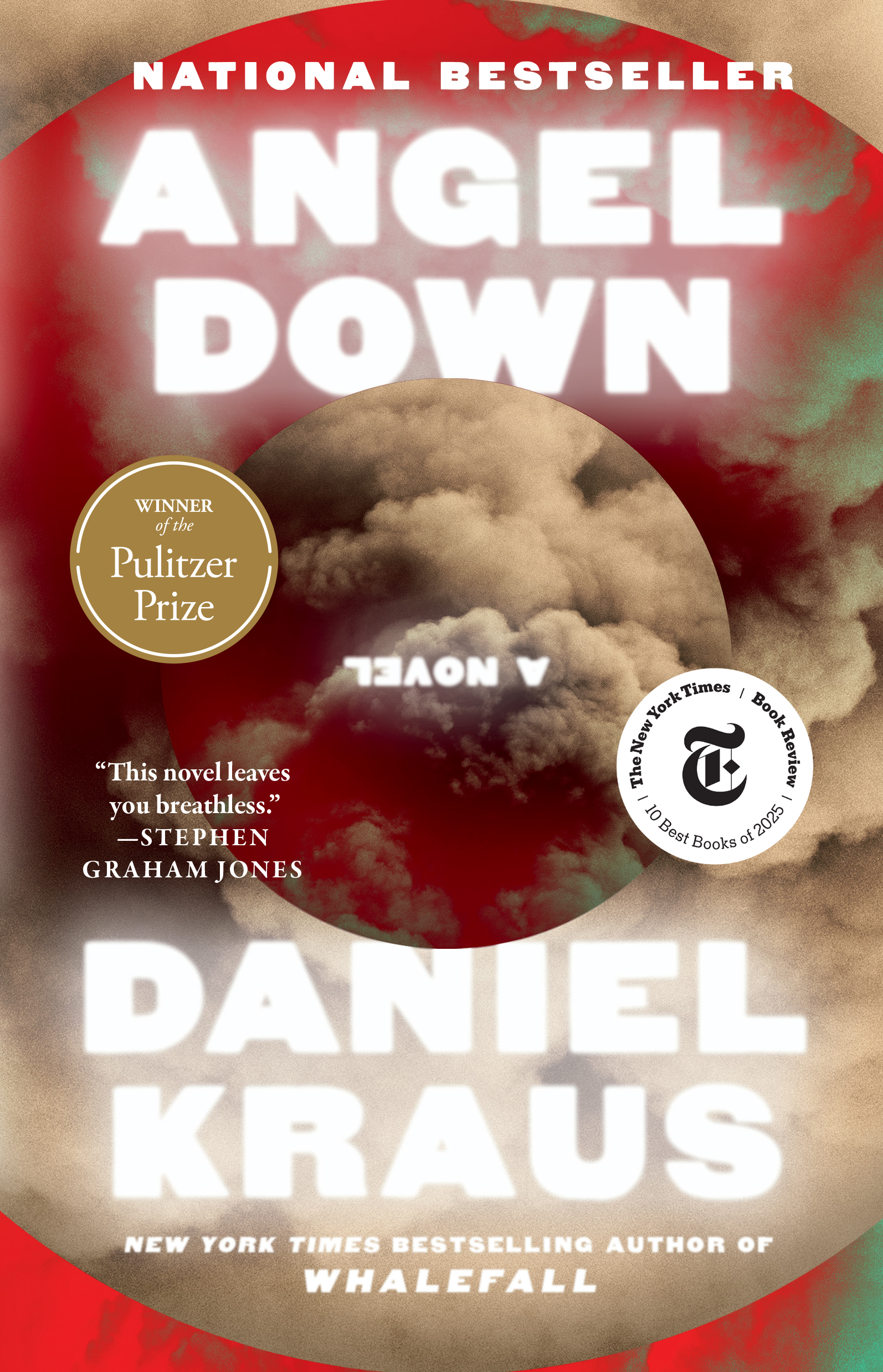
Earlier this year, the literary and genre fiction communities were startled by the announcement that Daniel Kraus’s Angel Down, a fantasy-horror novel in which a squad of WWI soldiers discover an angel on the killing fields of 1918 France, had won the Pulitzer Prize for fiction. This is not the first time that a novel in the fantastical genres had won this award—it is preceded by books like The Underground Railroad, A Visit from the Goon Squad, and The Road—but as I write at the beginning of my review of the book, published today at Strange Horizons, there are different kind of genre fiction, just as there are different kinds of literary fiction. I was surprised that the Pulitzer jury had the kind of genre fiction that Kraus writes on their radar, and even more surprised that the Pulitzer board, when offered a choice between Angel Down and more traditional nominees like Katie Kitamura’ Audition and Torrey Peters’s Stag Dance, would choose to recognize Kraus’s novel.
All of which is to say that when I got a chance to read it last month, I approached Angel Down with curiosity and not a little bit of excitement, and one should take that into account while reading my rather negative review. But as I write there, what I found in Angel Down is, in almost every respect, thin, and it feels almost like an insult to have recognized this genre novel when I could name, off the top of my head, several others that are more formally experimental, more boldly political, and more interested in their fantastical conceit.
Like the picture postcards you might see in a View-Master, there’s a certain posed, ticky-tacky quality to the images that Angel Down presents, which keep reaching for the familiar commonplaces and clichés of its setting. Does Bagger contemplate the Uncle Sam “I want YOU for US Army” poster before being forcibly recruited? Of course he does. Does his disappointed father, eager to revitalize his faith by preaching to the troops, set sail for Europe aboard the doomed Lusitania? Inevitably. Mary Pickford, the Angel of Mons, “The War to End All Wars,” Big Bertha, “lions led by donkeys,” the Spanish flu, the assassination of the archduke Franz Ferdinand, “Over There”: Despite the obvious relish with which the book foregrounds the brutality and depravity of a WWI battlefield, what really seems to power it is this barrage of references that readers can be trusted to recognize. These are the tropes of a WWI story, rather than the story itself.
Perhaps this reveling in the familiar (not to say banal) is meant to foreground what Angel Down adds to its setting that did not exist in actual history, the twist that I have been teasing for paragraphs despite it being right there in the novel’s title, the thing that makes its Pulitzer win of interest to this magazine and this critic. When Bagger and his squad arrive at the source of the shriek that has been rending their already-tenuous peace of mind for hours, what they find is, unaccountably, a woman: “there’s no mistaking the copper sheet of hair, the delicate fingers splayed as if in want of a handhold, the gather of red dress over her hips, the swathe of blue cape off her slender shoulders, the cream skin.” A woman whose face glows like a spotlight. A woman who floats above the ground, and who saves Bagger and Arno from a German artillery shell. Not a woman, then; an angel.
Let’s pause a moment from our discussion of Angel Down, and consider the fusion of real historical atrocity—in some ways mundane, in others not at all—and genre tropes. In A. S. Byatt’s The Children’s Book (2009), a novel that is in many ways about the codification of the fantastic into a genre, and its separation from what we now call literary fiction, two women who grew up among the great fantasists of the late nineteenth century observe soldiers in a hospital just off the French front lines as they put on a play. The drama in question is a precise recreation of the trial and execution of a deserter. Discussing the play, the women wonder whether the choice to depict reality exactly as it was, with no commentary and certainly no fantastical flourishes, is the only way people can face up to the horror of what they have witnessed.
For the rest of the twentieth century and to this day, this approach—strict, uninflected realism—has been one stream in literature about the horrors of which humanity is capable (we shall leave for another day the discussion of whether “realism” is really all that realistic). At the same time, fantasy has grown more codified, more trope-laden, full of conventions which readers can be trusted to recognize and follow along. When authors apply these tropes to real atrocity, it often raises the question of what, between the real and the fantastical, they most want us to pay attention to.
It is with this question of attention that Kraus seems to struggle. On the one hand, we have the angel: smiling enigmatically, placidly enduring any hardship or indignity, performing minor miracles—healing an injury, resurrecting a kitten—at the characters’ request. As the members of the squad take center stage, one after the other, they each reveal that they perceive her as a different person or symbol, and that they believe she can grant them some deeply-held wish: riches, sex, retribution.
On the other hand, the book remains true to the conventions of the war novel. As Bagger and his squad escort the angel back towards their lines, and as the other soldiers try to exert their will over the angel, they predictably—perhaps inevitably, given the novel’s last patrol premise—begin to drop off. This process, instead of intensifying the novel’s horror, ends up revealing its limitations. Kraus, one eventually comes to feel, did not care about these characters except as figures who could take up space between departure and return.
If you enjoyed reading this review, please consider donating to support Strange Horizons, which is in the final week of its annual fund drive. There aren’t a lot of venues that would publish a 3,000-word negative review of a novel published last year, but I knew from the moment I decided to review Angel Down that Strange Horizons, and its stalwart reviews editor Dan Hartland, would understand this piece and want to publish it. If you value that sort of thing, please consider helping to keep the magazine going.