
Tolkien Reread Addendum: The Art of Cor Blok
 By
By 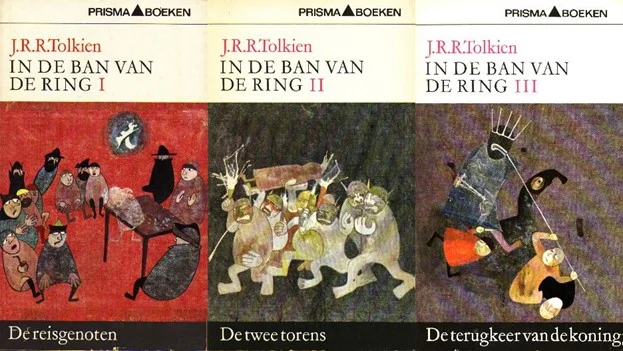
Commenters on the most recent post in my Great Tolkien Reread series seemed divided in their reactions to the essay’s illustration, an extremely minimalistic, almost childish depiction of the Council of Elrond, by the Dutch artist Cor Blok. I am here to say that if Cor Blok’s Tolkien art has one defender, it is I, and if it has no defenders, then I am dead (happily, it has many defenders). In today’s Tolkien Reread Addendum, we will talk about Blok’s art and look at some more of it. Most of the information in this post was taken from Blok’s book, A Tolkien Tapestry: Pictures to Accompany The Lord of the Rings (2011). In most cases I was able to find good online versions of Blok’s art, but a few of the pictures in this post are photographs of my copy of the book.
Cornelis “Cor” Blok (1934 – 2021) was born in The Hague, and studied fine arts in Rotterdam and Antwerp. Upon finishing his studies, he became an educator and cataloguer at the Haags Gemeentemuseum. Already in his student days, Blok was something of a worldbuilder, inventing a country named Barbarusia as the supposed origin of his work. As Blok writes in the essay that opens A Tolkien Tapestry:
Certain artefacts from the past struck me as inviting satirial comment, among them some exuberant examples of Baroque architecture and furniture. I started to draw exaggerated versions of these, which were soon followed by attacks on other periods styles, from Paleolithic cave paintings to Futurism. Finally, it became necessary to invent a country to accommodate these products of an alternative art history, with a geography and political history of its own.
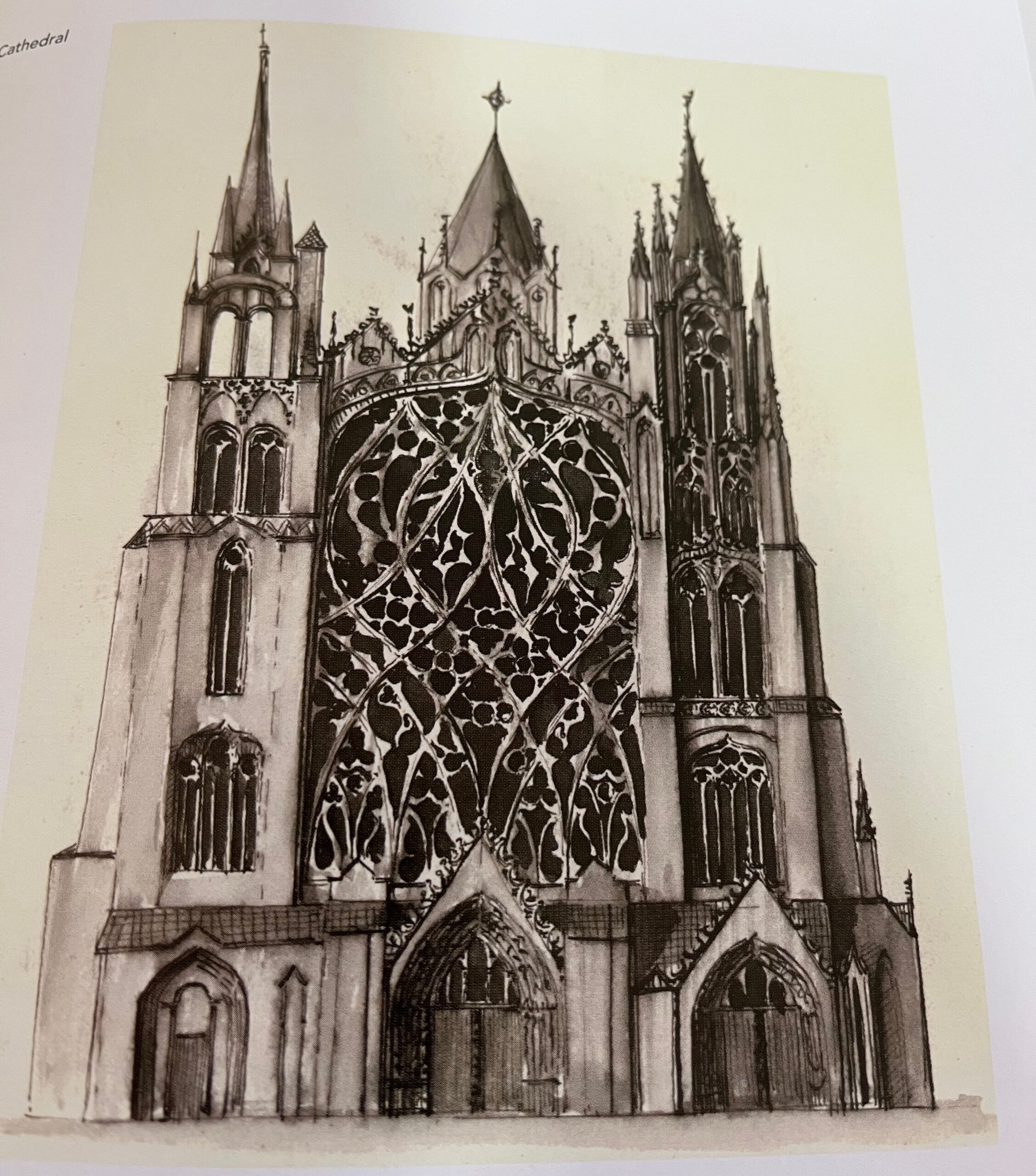
From the mid to late 50s, Blok produced hundreds of Barbarusian drawings and sculptures. In 1960, the Gemeentemuseum displayed a selection of them in a dedicated exhibit (apparently the explanatory materials did not sufficiently clarify the joke; Blok claims that some visitors later called the museum to complain that they could not find Barbarusia on a map). While some of the Barbarusian drawings reproduced in A Tolkien Tapestry have a kind of Gothic complexity, others demonstrate the simplicity of style that Blok would later apply to The Lord of the Rings.
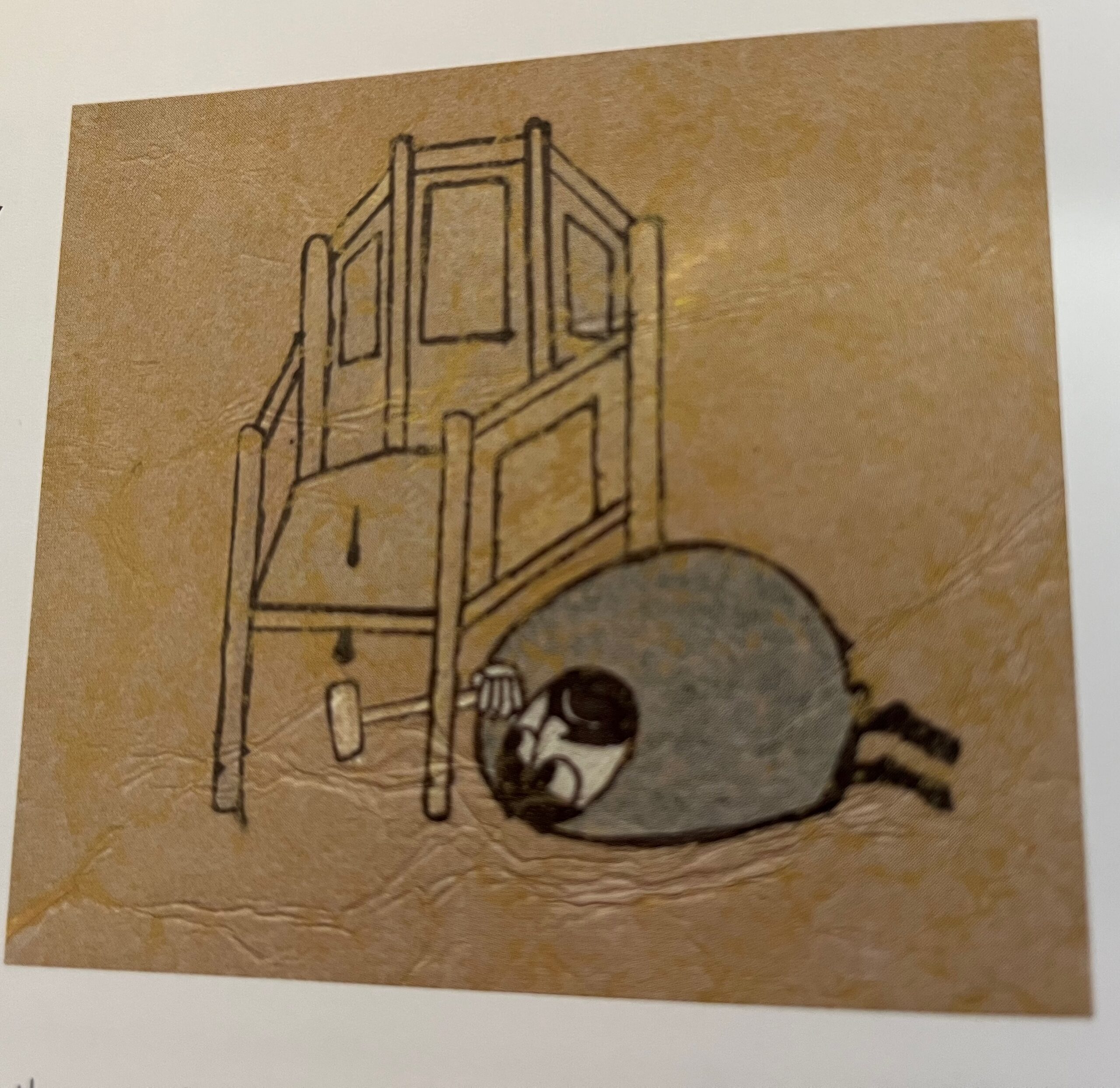
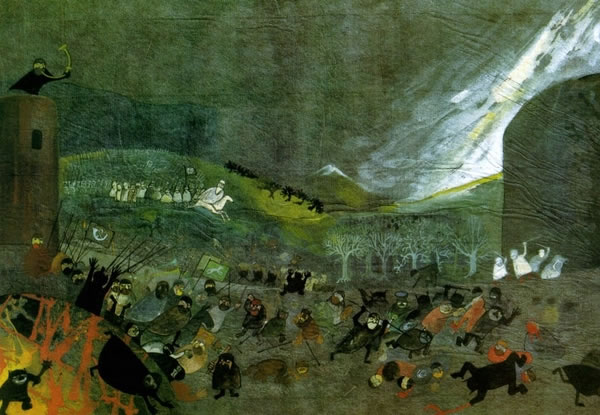
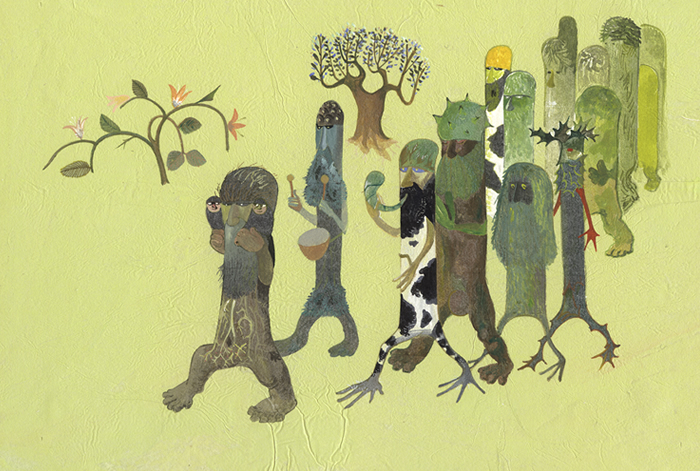
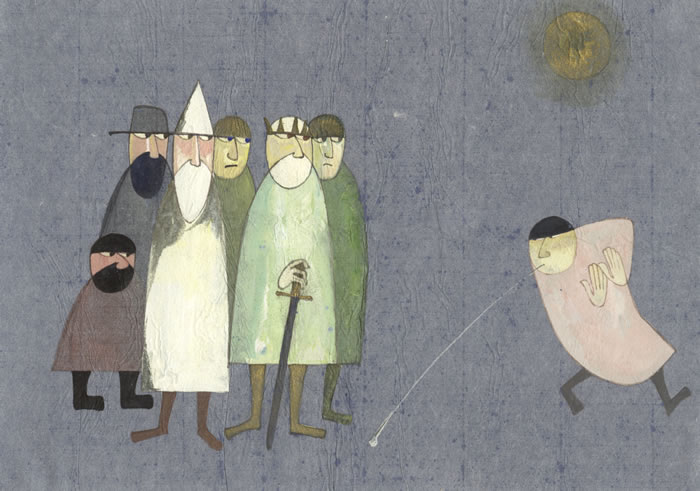
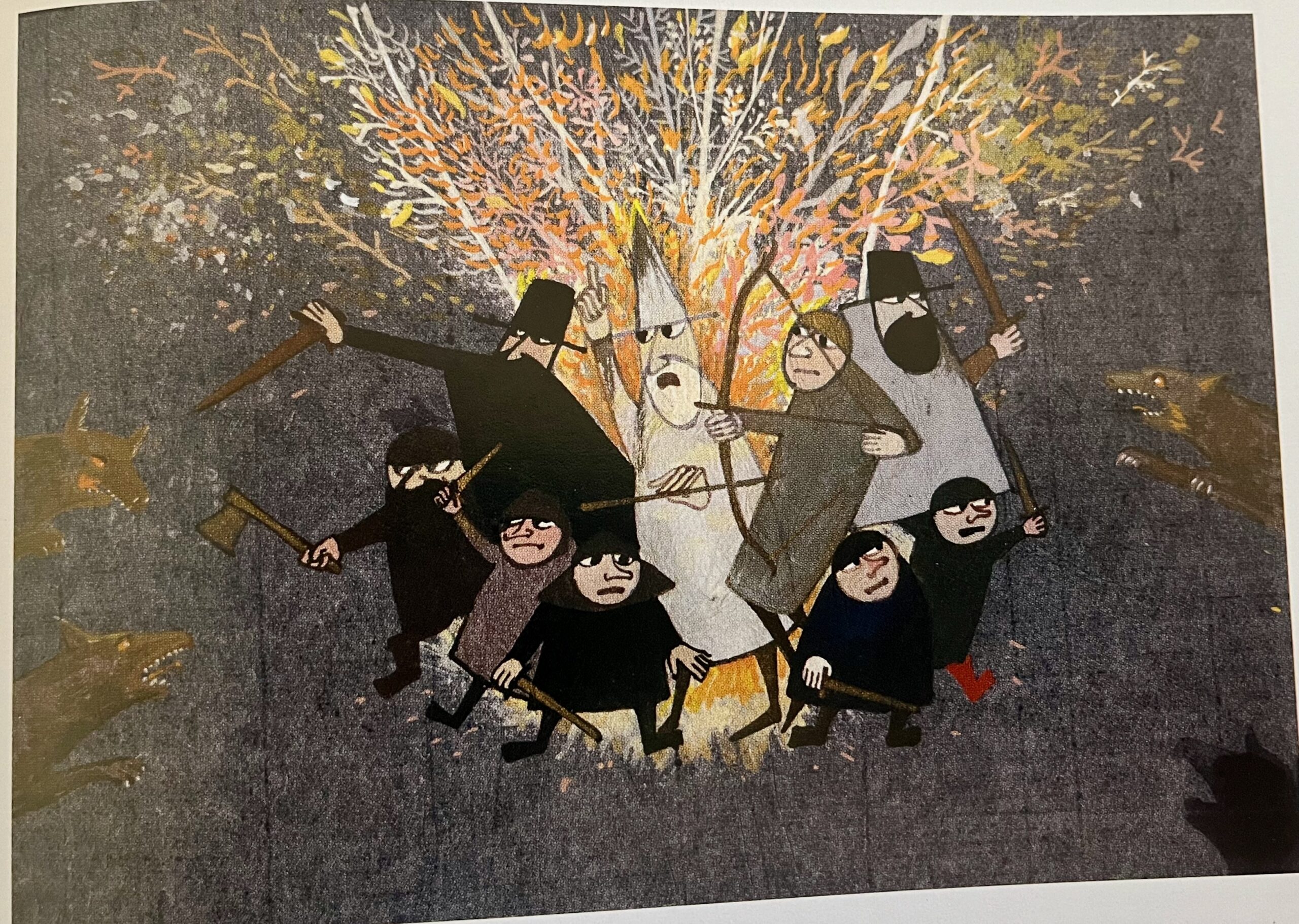
Blok discovered The Lord of the Rings in the late 50s, and between 1958 and 1962 produced some 140 paintings depicting various scenes from the book. Unlike other artists who have made a career out of illutrating the settings and characters of Middle Earth, Blok, while greatly admiring Tolkien’s work, does not seem to have considered himself to be a fan artist. He was an artist in search of inspiration, which The Lord of the Rings provided, speaking to his fascination with older, non-figurative forms of illustration, and his sense of humor. The satirical attitude he takes to the material seems integral to both his artistic choices, and his political worldview. In response to a complaint by Tolkien (whom he met in 1961; Tolkien purchased several of Blok’s paintings, including a large piece depicting the battle of the Hornburg) that few artists “even try to depict the noble and the heroic”, Blok responds that “During this century [the depiction of the noble and the heroic] has become the province of two kinds of artists: those who serve dictators and those who create superheroes for the pulp market.” Accordingly, the figures in his drawings often seem to have a sort of charming mundanity to them. Their potato-shaped bodies and blank expressions seem designed to forestall any heroic interpretation, without losing the pathos of the scene.
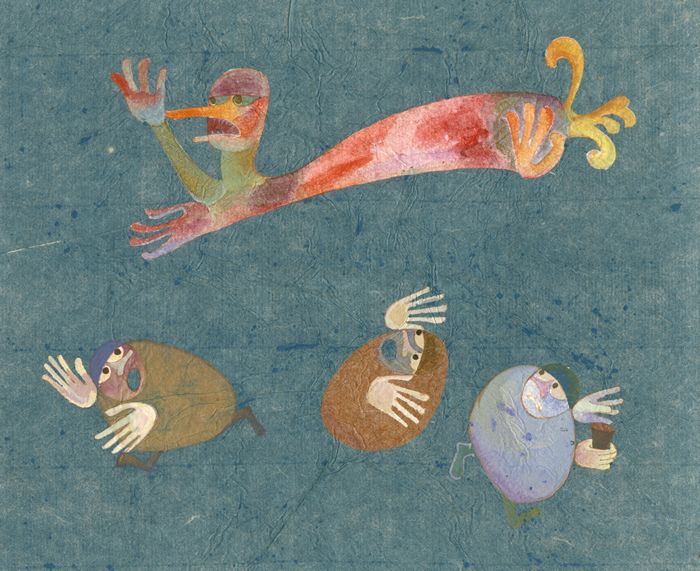
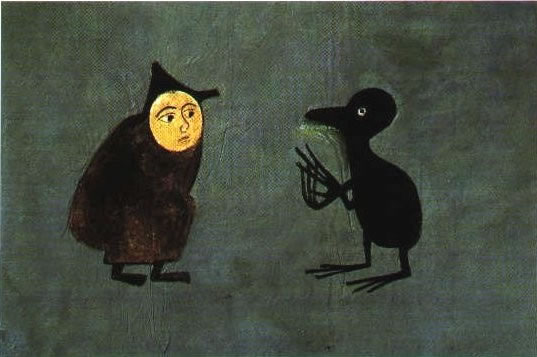
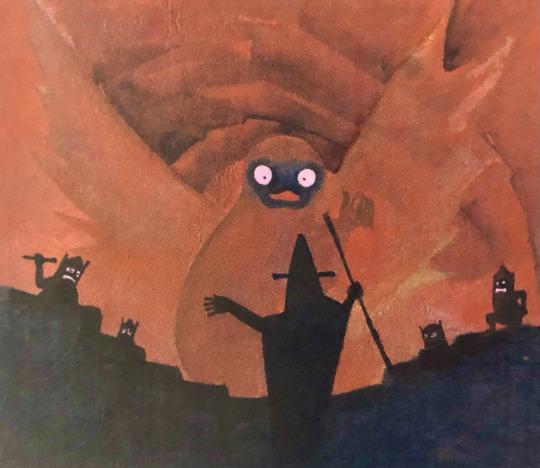
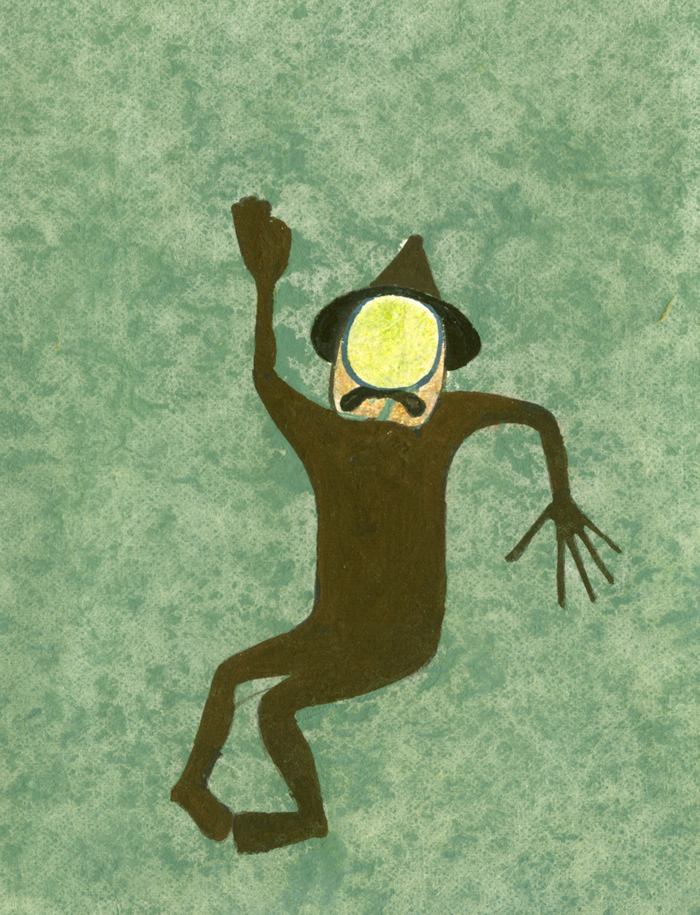
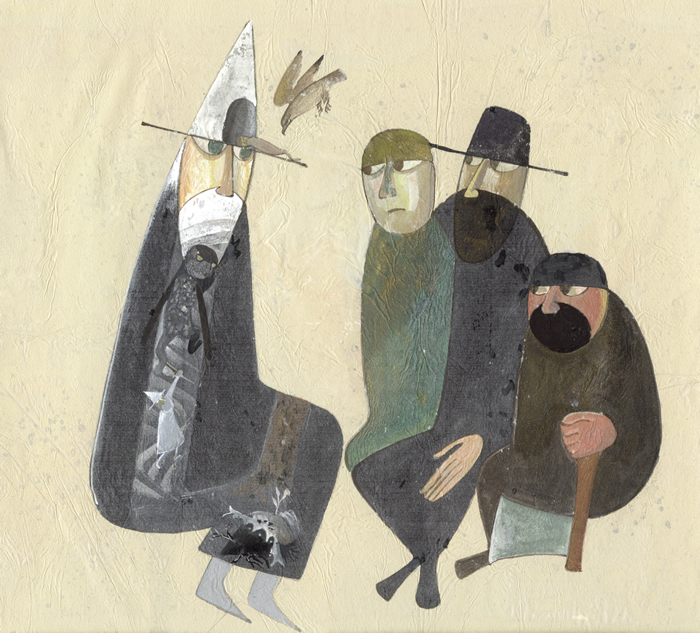
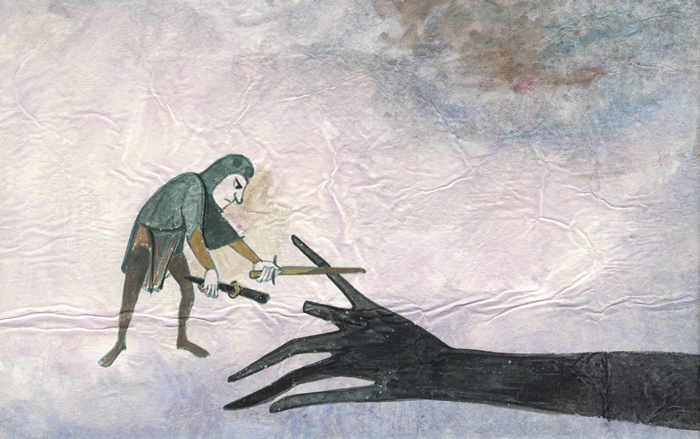
“A well-known German painter of the 1880s is credited with the one-liner: Zeichnen ist Fortlassen – ‘to draw is to leave out'”, Blok explains in A Tolkien Tapestry. This emphasis on removing detail informs much of the work in this volume—Blok is particularly proud of how often he is able to convey that the characters are sitting without drawing chairs. The lack of extraneous detail means that the eye is sometimes drawn to the places where Blok does choose to include more information, such as Pippin’s stick figure legs protruding from Old Man Willow’s trap in “Tom Bombadil to the Rescue”, or Gandalf’s experiences with the Balrog appearing within his body in “Gandalf Relates His Adventures”.
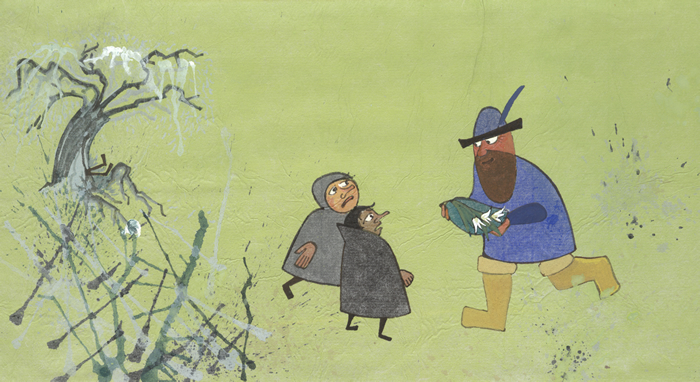
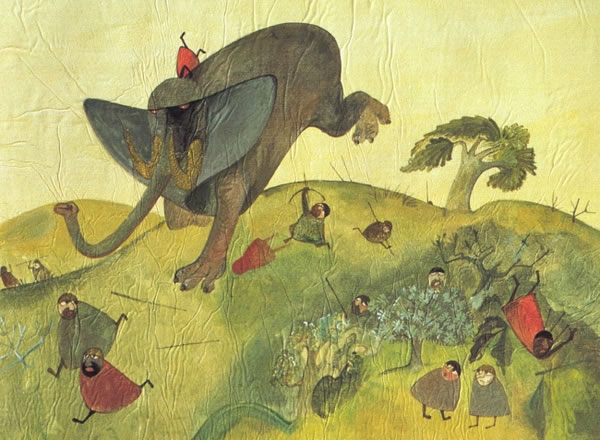
In other places, Blok demonstrates a stunning facility with detail (though he seems almost apologetic for those paintings which are more conventional in their style). “Frodo’s Vision on Amon Hen” dispenses with perspective and the effect of distance to capture the terrifying scope of the vision Frodo experience through the Ring’s power. “Battle of the Hornburg II” has a shocking dynamism despite (or perhaps because) of its obvious inspiration in medieval tapestries. And “The Oliphaunt” is simply cool.

Unlike other Tolkien artists, Blok does not seem to have wanted to make his vision of The Lord of the Rings into a career. His paintings were used to illustrate the covers of the 1965 Dutch translation of the book (see the top of this post), and in 1962 he exhibited some of his Tolkien work (a letter from Tolkien to Blok, reproduced in A Tolkien Tapestry, reveals that the author was invited to the exhibition but could not attend; he seems otherwise to have been an admirer of Blok’s work). Around that year, however, Blok’s well of inspiration, as least as far as The Lord of the Rings was concerned, ran dry. It’s perhaps for this reason, rather than the idiosyncrasy of his work, that he isn’t as well known as other Tolkien artists like John Howe or Alan Lee, whose more figurative depictions have become semi-canonical (certainly since the Peter Jackson movies took them as an inspiration for their own visual language). While he was invited to contribute to official Tolkien calendars in 2011 and 2012, that seems to have been the extent of Blok’s involvement with the Tolkien estate. When A Tolkien Tapestry was compiled, many of the paintings in it had to be tracked down from the individuals to which they were sold.
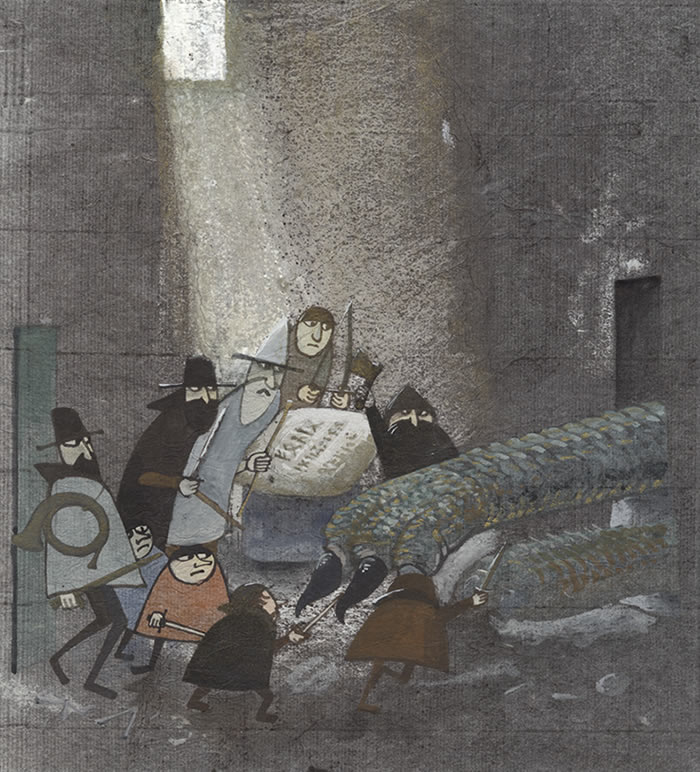
For all that, Blok is far from forgotten as a Tolkien artist. Much of his work can be found online, and I am far from alone in feeling that it is not only distinctive, but in some cases definitive. Figurative representation has its place, but Blok often seems to capture the essence of a scene better than other, more detailed and more realistic illustrations. Let’s look at some more of Cor Blok’s illustrations of The Lord of the Rings.
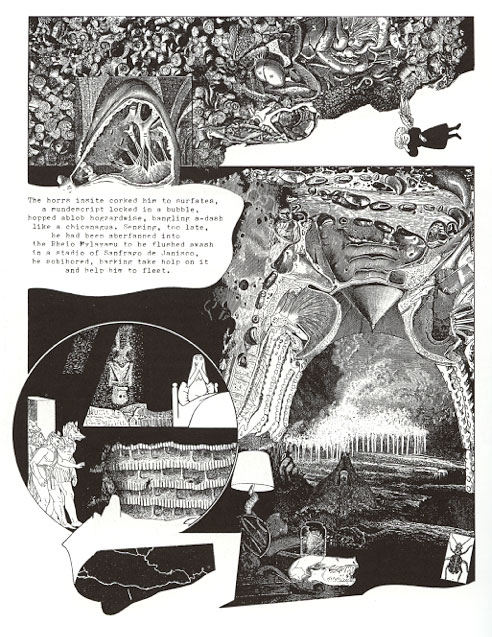
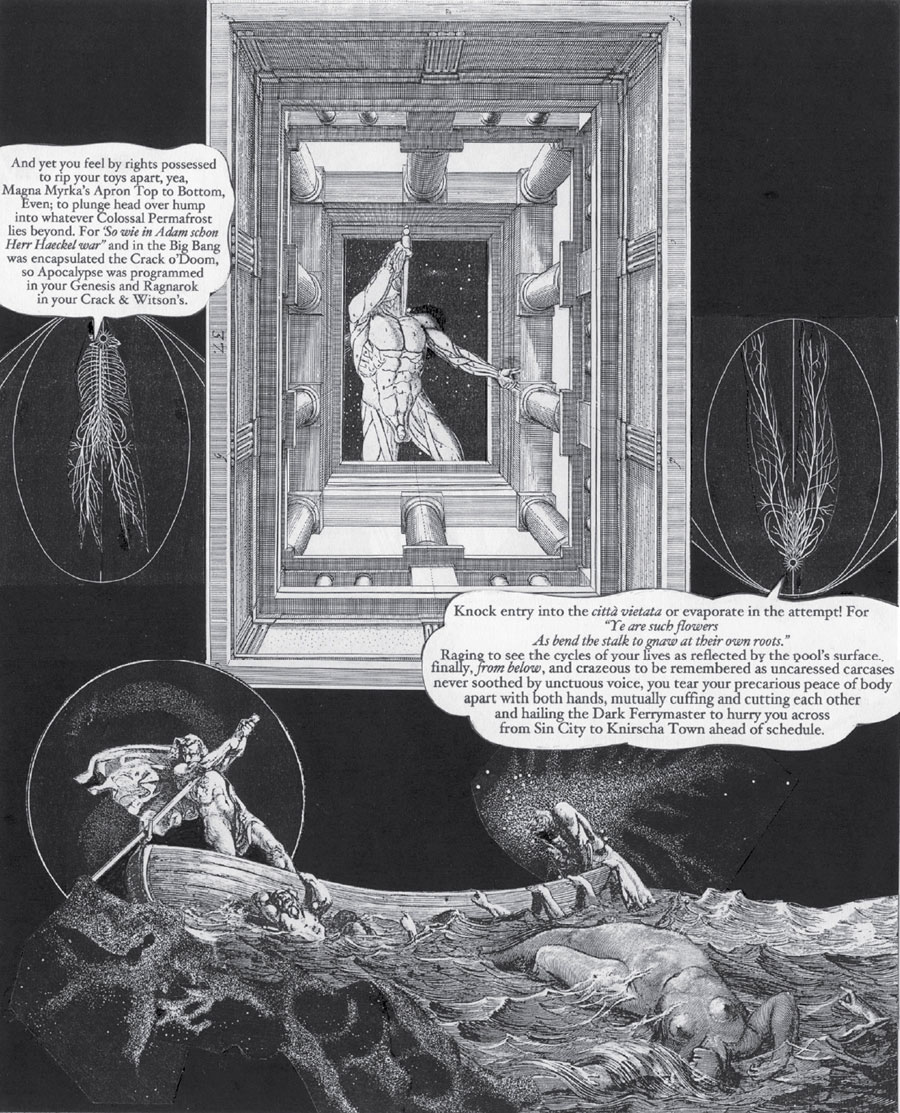
After leaving The Lord of the Rings behind as an inspiration, Blok became a teacher, critic, and academic, though he also continued to paint and exhibit his work. In 1967 he began work on a graphic novel, The Iron Parachute, which he was still at work on as of the writing of A Tolkien Tapestry. Inspired by Ulysses, the book seems to partake in the same worldbuilding impulses that influenced Blok’s career from his student days: “It opens on the arrival, apparently out of space, of the anonymous protagonist in the City of the Erect to be tried in Court, and it ends with the same personage walking quietly out of the picture after witnessing his own trial performed as a play in the Intensive Care Theatre.” A quick google suggests that The Iron Parachute was published, by a Canadian imprint, in 2016, though it seems already to be out of print. The pages from it reproduced in A Tolkien Tapestry and elsewhere, however, demonstrate a massive departure in style from Blok’s Tolkien art, while preserving his inimitable weirdness.
A Tolkien Tapestry appears to still be in print in the UK, and would be an excellent gift for the Tolkien lover in your (or for yourself). Despite the number of pictures I’ve reproduced in this post, I’ve barely scratched the surface of the material here, in art and text. Blok’s thoughts on art, on Tolkien’s work, and on his own career are insightful and informative, a fascinating glimpse into the inner life of a person who never became a superstar artist, but who was nevertheless devoted to his creative labor.