
No, There Is Not A Nuclear Weapon On Nanda Devi
 By
By 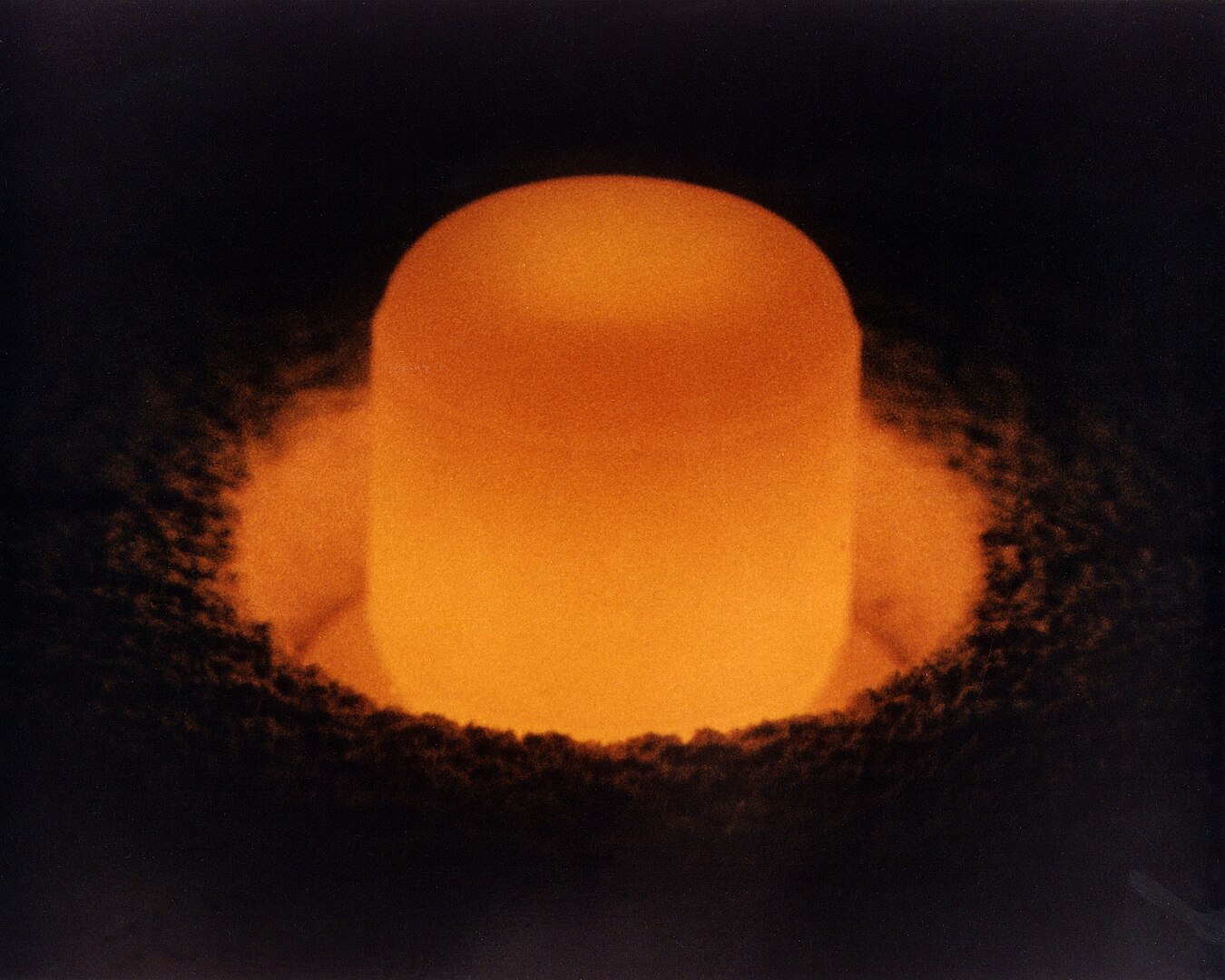
In the world that talks about nuclear weapons, a device is a nuclear explosive without a delivery vehicle. This is fairly generally known, by physicists and political scientists, along with many of the general public. But “device” is, in other contexts, a neutral word referring to pretty much anything mechanical. If you want to get clicks, you can leverage the two definitions, which is what the New York Times did (gift link).
In 1965, the CIA tried to set up a detection station for Chinese nuclear tests on Nanda Devi in the Himalayas. The first several paragraphs of the Times article don’t give the date. Having been teased by the implication of nuclear weapons in the headline, I wondered if this was recent. The date eventually appears.
Those paragraphs include a very scary plutonium fact.
The climbers scampered down the mountain after stashing the C.I.A. gear on a ledge of ice, abandoning a nuclear device that contained nearly a third of the total amount of plutonium used in the Nagasaki bomb.
Okay, something is wrong here. This “device” may not contain enough plutonium for a nuclear explosion, so it’s probably not a device. A little later,
What happened to the American nuclear device, which contains Pu-239, an isotope used in the atomic bomb dropped on Nagasaki, and even larger amounts of Pu-238, a highly radioactive fuel?
Nobody knows.
At this point, those in the know have their suspicions validated. It’s not a nuclear bomb, not even close. The Pu-238 is the tell – it’s a radioisotope thermoelectric generator – an RTG!
The reporters are determined to make it into a bomb.
Scientists say the generator will not explode on its own — for one, there’s no trigger, unlike in a nuclear weapon.
Those three words – “on its own” – are unnecessary. The RTG is not intended to explode, and it will not explode. Nor is a “trigger” relevant. Reporters on nuclear matters should know this without having to check with scientists.
Why did the Times reporters choose to frame the story this way? They certainly got my attention, and from what I saw on Bluesky, the attention of others, both knowledgeable about nuclear weapons and not. Far too many of the latter did indeed think that the “device” was a nuclear weapon. Thanks, New York Times, for contributing to confusion about nuclear issues.
The frame could easily have been that more information has become available on a story from 1965, parts of which have been reported before, and parts of which the US government refuses to make public. Several reporters thought the reporting was cool. But I guess bombs get more clicks.
The biggest concern is that the plutonium still on Nanda Devi could contaminate water downstream, but, buried deep in the article is a report from a commission that considered the problem and concluded that this is a very low probability.
Then there’s the always clickworthy possibility that someone could find the RTG and use the plutonium in a “dirty bomb,” capitalizing on exactly the kinds of fears generated by this article.
RTGs are what keep Voyager sending back information from far outside the solar system and allow other space probes to send back gorgeous closeup photos of the planets. They have also been used on earth. They do this by generating electricity from the heat of radioactive decay of Pu-238. The photo at the top of this post is a pellet of Pu-238 heating itself to red heat. It is not used in nuclear weapons. It is sometimes mixed with the bomb isotope, Pu-239, for RTGs, but good luck separating them.
Multiple layers of container are welded around the plutonium sources (Los Alamos, NASA, Johns Hopkins/NASA). The metal container keeps the plutonium from contaminating the glacier, snow, rivers. Could the containment break? Perhaps. Even then, this is a small amount of plutonium in an enormous watershed. A greater danger is that someone might find the RTG and break open the plutonium capsules.
The article discusses the potential exposures of the people on the expedition to emplace the surveillance station without telling us what the radiation level was at the surface of the capsules. Alpha radiation is stopped by a piece of paper, so it was not a danger. The metal container would have stopped much of the rest. Here’s a report about a similar setup. The Times reporters could have asked a professor of nuclear engineering about this. (Thanks to Bill Higgins – Beam Jockey on Bluesky for the report!)
Another piece of misinformation is that a few atoms of plutonium will kill a person. This is like the idea that touching fentanyl is deadly. Both are wild exaggerations. Both materials are dangerous in their own ways, but people have ingested plutonium, have had it in their lungs for years, with no ill effects. It has caused cancers in others.
The half-life of Pu-238 is 88 years, so it’s been on Nanda Devi almost one half-life. That means that almost half of the Pu-238 is gone.
The RTG most likely cannot be retrieved. If it landed on a glacier or snowfield, it would have melted its way down to rock, and the hole it left would have frozen over. The difficulties of reaching the area are well described in the article.
Reports of various nuclear accidents resurface every few years. This particular incident has been written about many times.
The time between the various articles is enough that the multiple stories about individual incidents each may seem unique, multiplying the perceived numbers of nuclear accidents. And now we have YouTube and podcasters to add to the multiplication. Reporters would serve us better by making the time of the incident clear, and that it has been reported before. The Times article buries these facts.
Since 1950, there have been 32 incidents involving nuclear weapons that resulted in the accidental launching, firing, detonating, theft, or loss of the weapon. To date, six nuclear weapons have been lost and never recovered. This is for all nuclear countries, all over the world. I’ll bet you thought there were more.
Cross-posted to Nuclear Diner