
Erik Visits an American Grave, Part 2,229
 By
By This is the grave of John Dickinson.
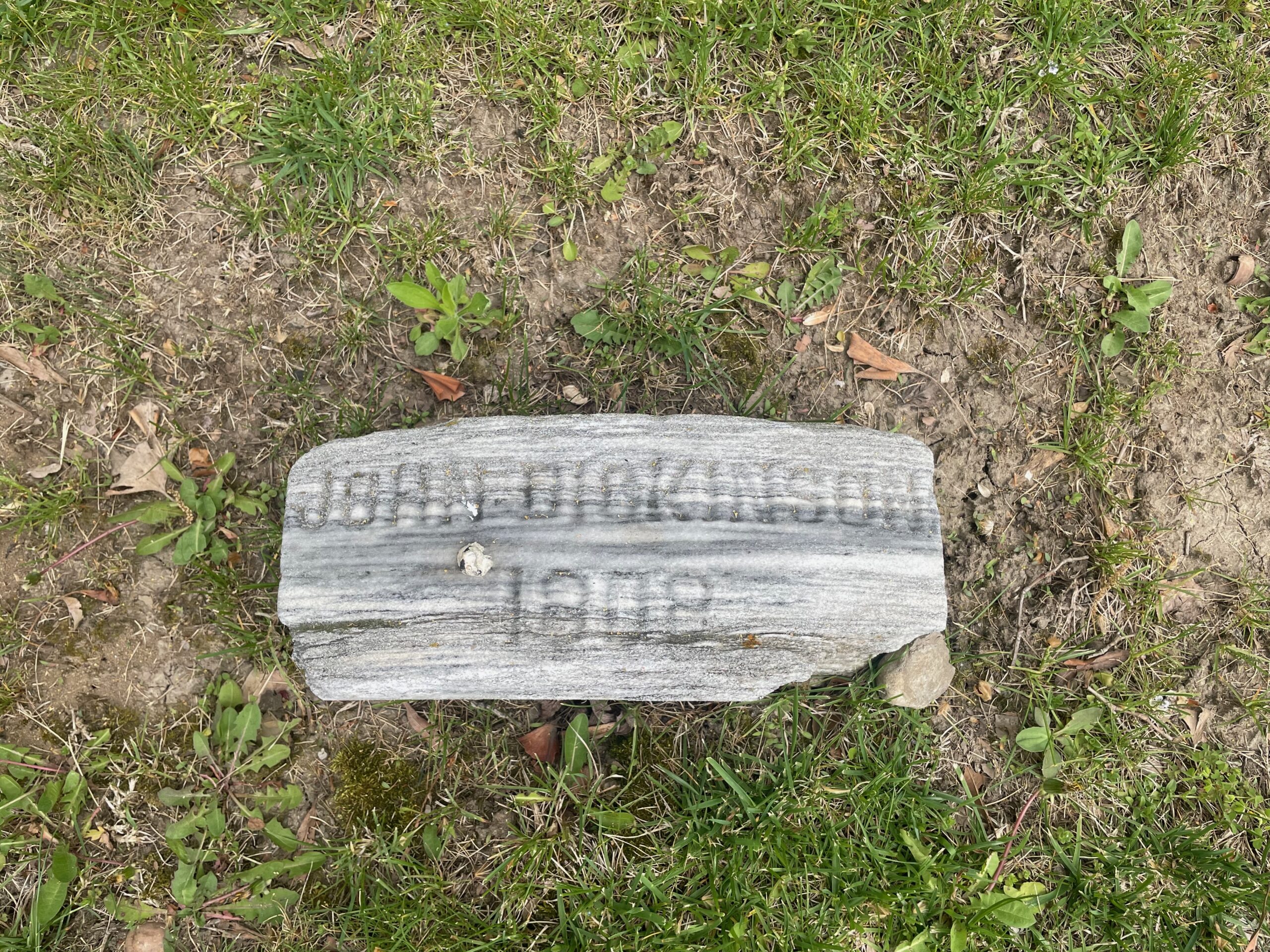
Born in 1732 in Crosiadore Plantation, Talbot County, Maryland, where his parents wrested profits from the backs of enslaved Africans, Dickinson grew up rich, really the first truly wealthy generation in North America. It’s worth remembering that even at the time of the American Revolution, the rich colonists were really middle class compared to the Caribbean sugar planters. Before 1732 or so, (also the year George Washington was born) plantation owners were out there carving their fiefdoms out of the soil too. So this was a time when real wealth began to generate in the North American colonies.
This was a Quaker family but at this time, there was nothing oppositional to slavery among the Quakers. That was just beginning with people such as Benjamin Lay, openly challenged his fellow Quakers. Dickinson’s family was just buying up land and owning all the slaves they could. Dickinson was educated by private tutors on the plantation.
In 1750, Dickinson moved to Philadelphia to read for the law. Then in 1753, he went to London for three years of intensive study. He was there for three years before coming back and become a leader in the Middle Colonies. It’s not clear to me how quickly Dickinson became angry over the British treatment of the colonies, but he certainly was by the time of the Townshend Acts. He published a series of anonymous letters known as Letters from a Farmer in Pennsylvania (even by this time “farmer” was seen as “citizen” over here; the inheritance of this is all the ridiculous political ads showing farms even though at most 1% of Americans live on them) that urged the colonies to work together against an unconstitutional move by Parliament to tax the colonies. The letters were mild in tone, which certainly helped a group of people very slowly feeling their way toward not being connected with the British any longer. I think the objections about taxation are largely pretty silly given the facts on the ground in the colonies and all the money the Crown poured into the colonies to pay for these hillbillies constantly starting wars with the tribes, but whatever. The letters were really influential and when it was discovered Dickinson wrote them, made him a leading figure in the colonies.
So unsurprisingly, Dickinson was sent to the Continental Congress, both First and Second. He wrote the Olive Branch Petition, the last attempt to make peace with the Crown, though by this time, London was pretty well sick and tired of listening to the colonists. Interestingly, despite all his work before the Declaration of Independence, Dickinson was not ready for a total break in July 1776 and wasn’t real happy, though he wasn’t there the day it was signed anyway. That said, once it was done, he lived with it and worked to build the Articles of Confederation. In fact, he was already writing the Articles of Confederation while opposing the Declaration at the moment. Yet Dickinson outright refused to sign the Declaration, which is probably why he is little known today except among historians.
Dickinson’s opposition to the Declaration had a real impact–he volunteered to lead armed forces and was given a commission but less prominent people were promoted above him because of suspicions of his loyalty. So he resigned at the end of 1776. For awhile, he seems to have stewed over all of this. His house in Philadelphia had also been confiscated to use as a hospital without his knowledge, which didn’t thrill him. Then Delaware asked him to represent them in the Congress in 1777 but he said no. He briefly served again in the Delaware militia but refused a commission shortly after. It wasn’t until 1779 that he became active in the Revolution again, when he finally agreed that Delaware could send him back to Congress. In 1781, he was named President of Delaware, which was how that state decided to call their governor at the time. Not many Americans have held that august title! He moved up the next year as President of Pennsylvania.
By the 1780s, Dickinson saw that the Articles of Confederation were not going to work as a government. He was unhappy at the rise of popular disorder, one of many Revolutionary elites who had become unsure that all this rabble rousing was a good idea. Rhode Island vetoing everything because my adopted state is full of contrary assholes is not a good principle by which to run a government. He was a huge player in creating the Constitution. He was elected president of the Annapolis Convention in 1786 that called for the second meeting in Philadelphia the next year to fix what we might just call The Rhode Island Problem and then was a delegate and major supporter of the Constitution and its ratification battle.
Now, this was also the very moment in which the Quakers were starting to move against slavery. That was not predestined. It took the activism of Quakers such as Benjamin Lay to do so. But the Quaker way of thinking did open a path toward opposing slavery. Dickinson was not a huge slaveholder, but he did own 37 people at the time of the American Revolution. While he had more than a bit of Thomas Jefferson in him, not really comprehending how he could live without slavery while also bemoaning the fact that it was introduced into the colonies to begin with, unlike the hypocrite from Virginia, Dickinson freed his slaves in 1777. Now, it’s worth noting that he was moving away from labor-intensive crops on his Delaware plantation here. But of course he could have sold them. He did not. That made him the first slaveholding leading Founder to free his slaves.
After the Constitution’s ratification, Dickinson stepped back and took more minor roles. It’s almost as if, unlike every leading Democrat today, he thought that he was pretty old and maybe it was time for a new generation with new ideas to lead. Crazy! Dickinson did agree to preside over the 1791 Delaware Constitutional Convention, one of the many, many times the nation’s attention has been riveted by Delaware.
Dickinson died in 1808. He was 75 years old.
John Dickinson is buried in Friends Burial Ground, Wilmington, Delaware.
If you would like this series to visit other so-called Founding Fathers, you can donate to cover the required expenses here. Patrick Henry is in Aspen, Virginia and Arthur Middleton is in Dorchester County, South Carolina. Previous posts in this series are archived here and here.