LGM Film Club, Part 559: Where the Lilies Bloom
 By
By 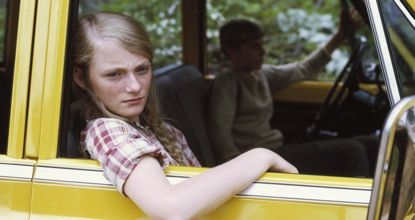
The 1970s were an unusual time in American cultural history–people gave a shit about the working class. THere are so many working class productions in the films in these years. A few of them are remembered, many of them are just cheap exploitation, quite a few pretty good films are forgotten. William H. Graham’s 1974 film Where the Lilies Bloom is among the latter. It’s the story of a group of kids in rural Appalachia (shot outside of Boone, North Carolina) whose mother is dead and whose father is dying. When he dies, it falls to a 14 year old girl to keep the family together. She does all she can and does a pretty great job. It’s a story of rural poverty but also the stick-to-it-ness that allowed people to live such hardscrabble lives in Appalachia for two centuries.
It’s not a great movie–not all the acting is first rate. But there are several interesting things about it. First and foremost, and if it’s remembered for anything it is this, it stars a still pretty young Harry Dean Stanton as the slightly more successful farmer who took over the foreclosed land of the family. They hate him for it, but he’s in love with the family’s oldest daughter, who is 18 or so and is not in charge after the father dies because she’s “flighty,” which in this case seems to mean she’s a relatively normal human. And she’s in love with him. She’s in fact played by Jan Smithers, who was Bailey Quarters on WKRP in Cincinnati. The dying father is played by Ron Howard’s father. William Graham was a long-time TV director who got the occasional work in feature films. He directed the last Elvis film, Change of Habit in 1969, Honky in 1971, and Return to the Blue Lagoon in 1991. There’s a fuckton of bad TV movies in there too. Finally, Earl Scruggs does the soundtrack, as he was highly inclined to do in those days, part of his Appalachian cultural renaissance thing he was doing in the 70s that attempted to merge traditional mountain music with new forms of art and the avant-garde at times.
So it’s an interesting film at the very least.