
It’s the System, Man
 By
By 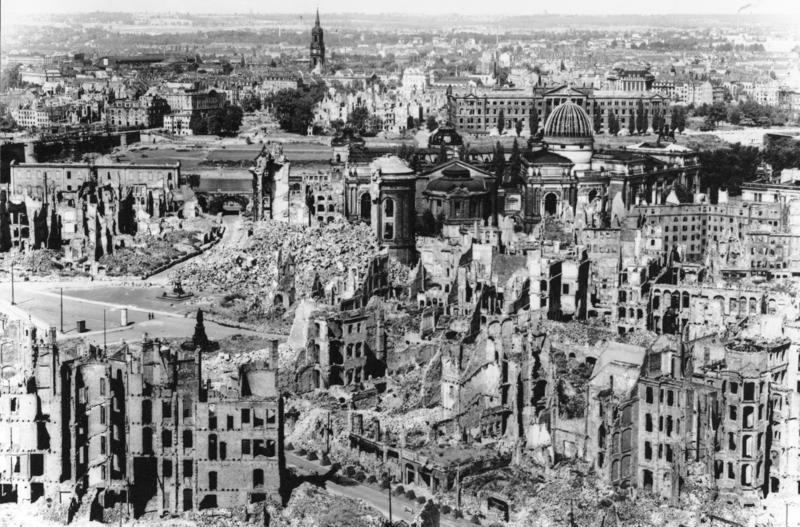
It’s been made clear over time that one of the least popular subject to post about here is Law of Armed Conflict (LOAC). Nevertheless, this is an awfully interesting account from Miro Sedlak on how LOAC approaches attacks on targets which are part of a system (say, an electrical network), and what kind of reforms might generate a better legal structure. The fundamental issue is that LOAC generally prohibits attacks on systems qua systems; an attack against an electrical network in general cannot be legally justified, but attacks against specific targets within the system can if those targets meet other legal criteria. The intention here is to avoid justifying the kind of area attacks against cities that were common in World War II, and instead force planners to specify their urban targets with precision. But this approach also leads to some problems:
First is the problem of reverberating effects. In interconnected urban systems, striking a single power station may cascade through water treatment plants, hospitals, telecommunications, and heating systems across an entire region. The proportionality assessment must account for these foreseeable secondary and tertiary effects—not merely immediate damage at the point of impact. The standard concerns effects reasonably foreseeable at the time of decision, not hypothetical downstream consequences.
Second is the challenge of cumulative impact. A single strike on a transformer station may be individually proportionate. But sustained campaigns against infrastructure raise complex questions about how anticipated effects are framed within each individual strike decision. International humanitarian law assesses proportionality per attack, but commanders planning successive strikes against interconnected systems must consider how prior damage shapes the foreseeable consequences of the next.
Third is the enduring tension between system-level targeting logic and object-level legal requirements. Military planners think in terms of systems: disrupting air-defense networks, collapsing logistics chains, degrading command-and-control capacity. But international humanitarian law requires that each object be independently assessed as a military objective, its advantage independently articulated, and proportionality assessed for each attack. This gap is where the greatest doctrinal friction occurs.
Legality does not depend on the scale of destruction alone. It depends on whether each attack is directed at a specific military objective, whether incidental civilian harm is excessive relative to the military advantage anticipated, and whether feasible precautions were taken. A campaign destroying large portions of an adversary’s infrastructure may be lawful if each strike satisfies these requirements. A single strike that does not may be unlawful regardless of limited damage.
Sedlak also works through how this thinking was applied in the 1999 Kosovo War at some length, along with a few comments on the Russia-Ukraine and US-Iran conflicts. Well worth your time if you’re into this kind of thing, which I know most of you are not…
Speaking of which, please have patience with respect to me getting in touch with you about the auction and other fundraiser related stuff; I’m currently at the AP Reading in Cincinnati and I don’t have nearly as much free time as I’d like.