
Bloody Sam Alito’s Wild Years
 By
By
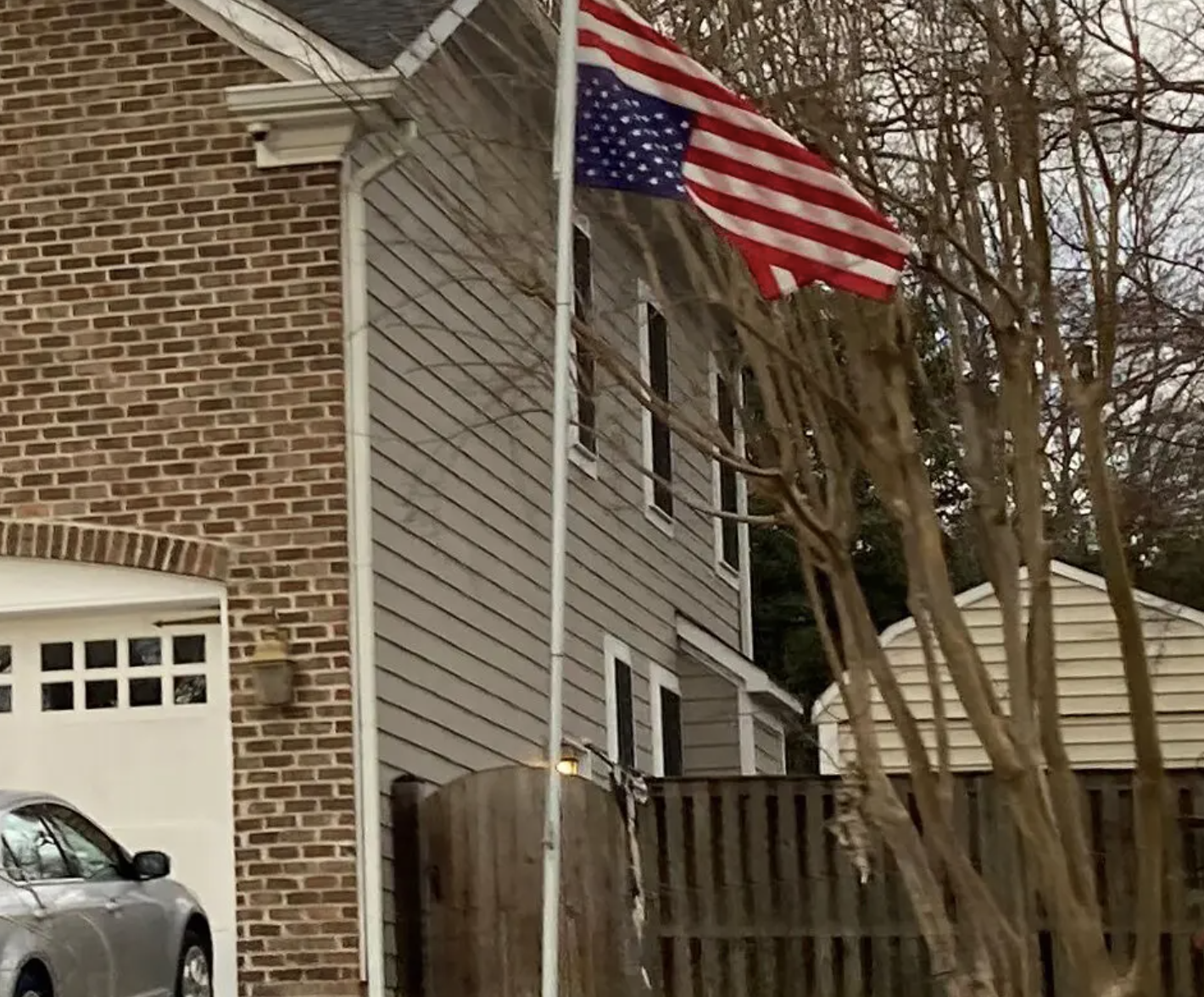
We haven’t discussed what in legal terms might be the very craziest Sam Alito opinion from yesterday’s metaphorical and literal bloodbath. The Neoconfederate Six struck down a Hawaii ban on taking licensed weapons onto private property without the owner’s consent, even though 1)there is no Second Amendment right to take firearms onto the property of a nonconsenting owner and 2)even based on the already ridiculously restrictive Bruen framework the regulation has many historical analogues. Absolute crackpot stuff:
The Supreme Court’s 6–3 decision in Wolford v. Lopez on Thursday confirms our worst fears about the supermajority’s Second Amendment jurisprudence: It is a freewheeling policy project utterly unmoored from history that allows the Republican-appointed justices to implement their preferred gun laws under the thin guise of judicial review. These justices struck down Hawaiʻi’s law restricting guns on private property not because the Constitution required them; to the contrary, the state proved beyond doubt that its statute was deeply rooted in history and tradition. Rather, the supermajority killed the law because it was offended that Hawaiʻi would dare try to mitigate the violence that SCOTUS has unleashed through its radical, incoherent gun rights jurisprudence. Justice Samuel Alito’s opinion for the court bristles with annoyance toward the state government’s attempts to protect people on private property from getting shot to death. Constitutional law has given way to six justices’ ad hoc nullification of any law that favors human life over the paranoid obsessions of gun enthusiasts.
Wolford involves a Hawaiʻi law that prohibits individuals from carrying guns on private property unless the owner affirmatively consents. (California, Maryland, New Jersey, and New York have enacted similar statutes—all now likely invalid.) The state intended this rule to respect property rights by creating a default rule that nobody takes a firearm onto someone’s land without their permission. Gun advocates promptly challenged it under Bruen, the Supreme Court’s 2022 decision holding that a burden on the right to bear arms is unconstitutional unless it has enough “historical analogues” from the distant past. They claimed that Hawaiʻi could not identify a sufficient number of these “analogues” to justify its law.
There are key problems with this argument, as Justice Ketanji Brown Jackson explained in dissent. First, Bruen ostensibly compels courts to figure out what conduct the Second Amendment protected when ratified; if a contemporary law infringes on that conduct, it is presumptively unconstitutional. But, Jackson wrote, “there is no right to carry a gun onto private property without the permission of the owner.” The majority did not even contest this point, because it is uncontestable. Instead, Alito ratcheted up Bruen’s level of generality: Rather than asking if Hawaiʻi’s law actually burdens a concrete, well-defined right, he merely asked if it “hampers” an individual’s ability to take their gun anywhere they want. Because it does, he concluded, it must be supported by appropriate “historical analogues.”
Then, having defined the right to bear arms as broadly as possible, Alito demanded granular specificity from older statutes that echo Hawaiʻi’s. The state offered many; its list included 18th-century laws in Pennsylvania, Maryland, New Jersey, and New York that required permission from a property owner before carrying a gun on his land, as well as 19th-century laws in Florida, Louisiana, and Texas that restricted the unapproved carrying of guns on “the premises or plantations of any citizen.” Even under Bruen’s stringent standard, aren’t these statutes enough to shore up Hawaiʻi’s modern version?
No, Alito wrote, because each is “distinguishable” from Hawaiʻi’s. The state’s true goal, he asserted, is to enshrine “local attitudes” and “a Hawaiian tradition” that “disfavor the carrying of guns” in public to prevent violence. By contrast, the 1700s laws were mere “anti-poaching” rules meant to mitigate “harms and risks associated with unauthorized hunting.” So, under Bruen, they are not “relevantly similar” to Hawaiʻi’s in terms of “how and why” they were enacted. Meanwhile, the 1860s laws were post–Civil War “Black codes” meant to oppress former slaves. So Alito dismissed them as a “tainted artifact” that did not qualify as Bruen “analogues.”
Each of these moves infuriated Jackson. To start, she bemoaned the majority’s “boundless” Second Amendment that “presumptively protects” the right “to carry anywhere and everywhere.” Alito’s “newfound understanding of the first step of Bruen,” Jackson wrote, “obliterates any need for reference back to original meaning.” After Wolford, “judges are now free to insert any meaning they desire into the text of the Second Amendment and then demand the government provide analogues to fit that interpretation.”
“States cannot pass otherwise valid gun control regulations unless they love guns as much as we do” is both a lunatic position and one with six spanking Supreme Court votes. Hillary Clinton’s email server something something,