
LGM Film Club, Part 537: Dahomey
 By
By 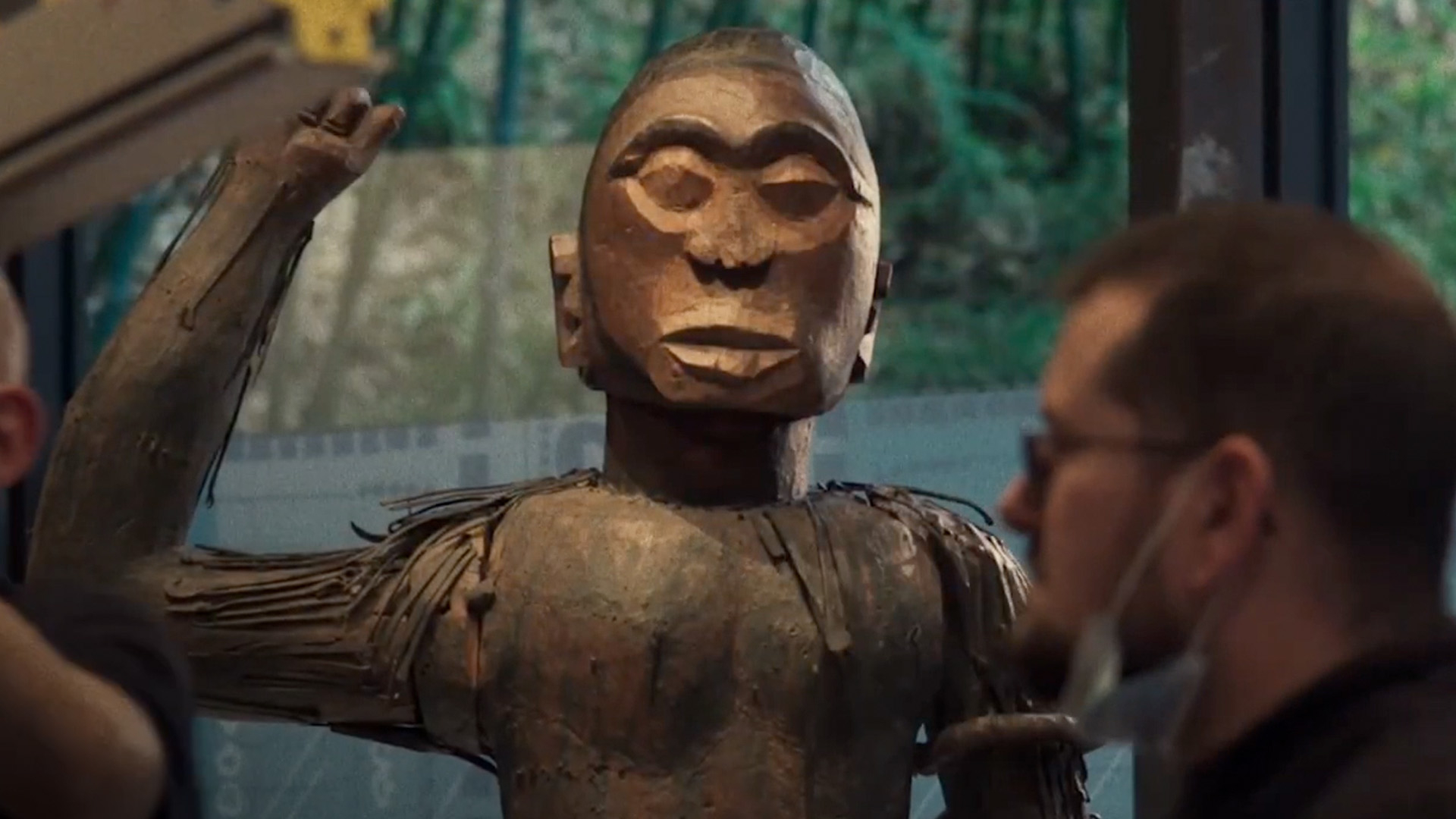
In 1892, the French military decided to colonize big chunks of western Africa. That year, they rampaged across what is today Benin and engaged in a massive looting of that area’s amazing historical artifacts. The English, other Europeans, and the Americans were doing the same thing around the world, stealing stuff from all over the place to fill their museums. It’s gross and it’s a great example of how imperialism not only worked but continues to work. Because, see, the rich white nations don’t want to give any of it back.
But that’s getting harder to hold the line on. Nations want their historical artifacts back. And they have every right to them. Very slowly–painfully slowly, the European and Eurodiaspora nations and their museums are coughing things up. Benin has demanded France repatriate its stolen art. Mati Diop is perfect to make a film about the return of 26 major objects to Benin. She is half-French, half-Sengalese, full-excellent director. Her uncle is the legendary Senegalese director Djibril Diop Mambéty, director of the astounding 1973 film Touki Bouki, among other films. So she filmed the return of these objects in her 2024 film Dahomey. This pretty short film, just a touch over an hour, has its slow moments. It starts with some static museum shots in France, the slow packaging of these objects, their return to Benin. She even put a camera in one of the boxes to show its closing in France and then opening in Benin. There’s some voiceover work from the perspective of the objects to think about what it was like for them in France, or their spirits anyway.
The best part of the film is in the second half, where for about 20 minutes, Diop films a conference of young people in Benin arguing over the return of the objects. It’s not that any of the students are unhappy about their return, but some see it is an outright positive and others see the fact that there are thousands of objects from Benin still in French museums and this just a drop in the bucket. In an era where the dreams of postcolonial liberation are long in the past, it’s fascinating to watch contemporary debates around this issue. So the film at its best ends up being about identity in a postcolonial world and the possibilities and very sharp limitations of that.
This film might not be for everyone. Film does not have to be “entertainment” after all. But it’s quite worthy of your hour.