
When White Women Matter
 By
By 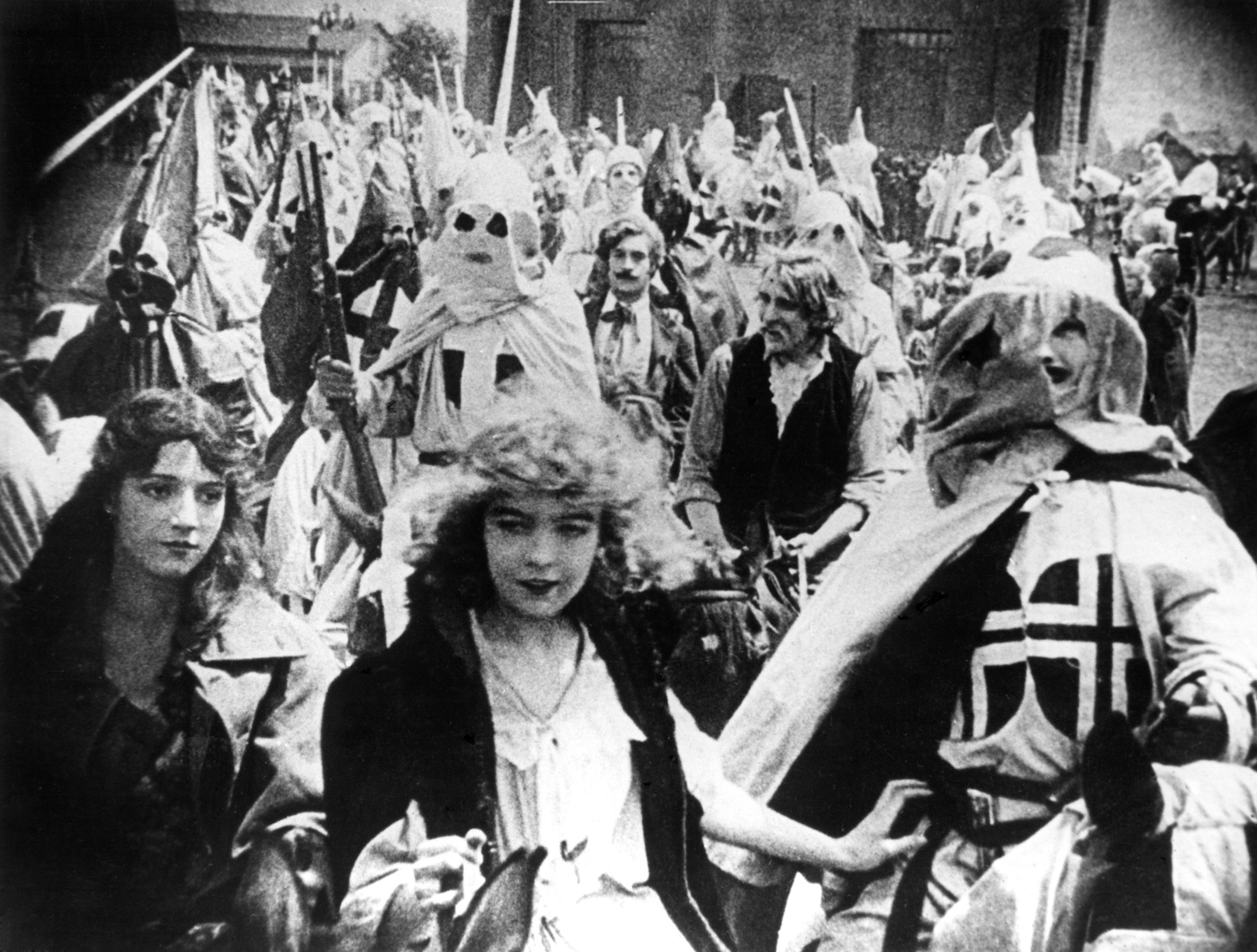
Interesting essay about when the far right thinks white womanhood needs protecting and when it is happy to murder white women like Renee Good. It looks back to that ur-text of the far right in American popular culture, Birth of a Nation, to help us understand.
Good did not properly defer to the white male authority of armed agents occupying her neighborhood, nor was she adequately afraid of living in a multiracial inner city. (She was stopped by ICE just blocks away from the intersection where a Minneapolis police officer murdered George Floyd.) Worse, Good was insufficiently grateful for the masked men in tactical gear sent there to defend her from Somali immigrant bogeymen. State violence wielded as protection for white women has long been a touchstone of white racial domination. The circumstances of Good’s death, then, complicate – and at worst, invalidate – that narrative.
In every epoch of the American project, the expansion of white state power, the justification of land theft, and the exploitation of Black and brown people have been given moral cover with stories about defending white women against the threat of outsiders. That narrative is foundational to the righteous tinting of white supremacist violence, and a decisive reason why the assault on Good’s character was so swift after her killing by the state. But long before this messaging about white women’s need for protection was hammered by Fox News talking heads and far-right streamers, more than a century ago, this propaganda was fueled by the silver screen. One of Hollywood’s most celebrated sagas – the blockbuster film that made white America fall in love with the movies – was the basis for this enduring racist iconography.
In 1915, white moviegoers in Minneapolis and hundreds of other US cities queued for blocks, having paid an unprecedented $2 for the theatrical release of Birth of a Nation. The Confederate-sympathizing silent drama was as much a landmark for cinematic innovation as it was for reigniting a reign of racial terror across the country. The picture fictionalized the outcome of the civil war to suggest what would have happened if the newly freed Black population seized government control of the reunited states. Based on the novel The Clansman by Thomas Dixon, a former college roommate of then sitting president Woodrow Wilson, and directed by DW Griffith, the film laments the loss of what it deems the bygone halcyon days of slavery by dramatizing the horror and chaos of a country that allows Black participation in American democracy.
In this film’s alternate depiction of Reconstruction – the short-lived period between 1865 and 1877, in which Black freedmen were elected in record numbers to local, state and national office (including 16 Black members of Congress) – the federal government is overrun by rapacious, ravenous and uninhibited Black men. Portrayed in minstrel blackface by white actors, their political and social gains are motivated solely by their marauding lust for white women. The only white women featured as principals are daughters of a southern slaver family, and their character arcs are wholly motivated by their efforts to resist Black men’s sexual advances. In a culminating action sequence, one of the sisters jumps to her death rather than having her virtue sullied by the Black predator giving chase. The scene flashes to an intertitle that reads: “For her who had learned the stern lesson of honor … we should not grieve that she found sweeter the opal gates of death.”
For this mortal act, she is revered for her uncompromising devotion to preserving white racial purity. She is a hallowed victim because she died upholding her feminine obligation to remain the property of white manhood. Her fictitious martyrdom ignited the rebirth of the Ku Klux Klan both on and off screen (the film was used for Klan recruitment for decades). The group’s domestic terror campaign against a multiracial democracy was immediately rebranded as a white men’s chivalrous cause to restore racial order. Those 13 years of Black social and political progress during Reconstruction were, in reality, followed swiftly by a “nadir” period, which removed Black officials from office. Union troops were withdrawn from the south and unchecked former Confederates sought murderous vengeance on the thriving freedmen they once called property. The Klan’s charge then was to safeguard white women against the threat of Black political power – power that was considered nothing more than a ruse for Black men to pillage white men’s sexual property for themselves.
Birth of a Nation’s three-hour runtime is driven by a simplistic message that Black political power is a peril to white womanhood, and that white women are “virtuous” and “unblemished” so long as they are loyal to white masculinity. The presumed innocence of white femininity has served as the necessary political foil to the criminality of Black citizens and now, as we are seeing today, racialized immigrants.
For the right, the killings of people like Floyd by a police officer, or Keith Porter Jr by an off-duty ICE agent, needed only be justified by the victims’ Blackness, as they were assumed to be inherently delinquent. The justification of Good’s killing, on the other hand, requires a bit more cunning. The proper role of a white woman as a vector of racial purity is at the bedrock of the racial hierarchy. But narratives about threats to white womanhood are only as useful as white men are able to deploy them to harm and hegemonize others. Racial barbarity under the guise of protecting purity presupposes that respectable white femininity can be tarnished by even the appearance of sympathy for antiracist politics and communities of color. The far-right podcaster Matt Walsh demonstrated this succinctly when he wrote of Good: “This lesbian agitator gave her life to protect 68 IQ Somali scammers who couldn’t give less of a shit about her.”
This is what happens when you turn white womanhood into a racialized fetish. And it’s worth noting that what made the white South really hate Ida B. Wells, to the point that many wanted to lynch her, is that she wrote openly and with documentation about all the southern white women fucking Black men by their own choice.