The United States of Denial
 By
By 
Paul Krugman gets to the heart of the matter:
Five years ago Donald Trump tried to overthrow an election he lost. He failed, and I assumed that the threat was over. Never in my worst nightmares did I imagine that he would make a comeback and return to the White House. But there he is. And he’s every bit as bad as his opponents and critics warned he would be.
I’m not going to talk today about how we got here and strategies for getting out. All I want to do right now is to say that we should be clear about what is happening. American fascism is on the march, and anyone who balks at saying that clearly, who makes excuses and pretends that Trump and the people he brought in aren’t monsters, is deeply unpatriotic. If we are to have a chance at saving democracy, our first duty must be clarity. No sanewashing, no bothsidesing. Only facing the horrible truth can set us free.
I still see a certain amount of denial about this even at LGM, in the form of some comments along the lines of “Trump is unpopular and getting more so,;2026 will be a wave election; stop acting like taking over Greenland is a real thing; the MAGA base is already flying apart” and so forth. To be clear I don’t doubt that a solid majority of commenters here would agree wholly or almost wholly with what Krugman is saying above, but after ten and half years I’m still wary of the reflexive impulse to minimize the threat of Trump and Trumpism. Looking back at the archives I’m struck by how many commenters were confident as late as the fall of 2022 and even into 2023 that Trump was not going to get the 2024 GOP presidential nomination. This seemed to me at the time to be pure wishful thinking, flying in the face of overwhelming polling data — “the polls are meaningless” was a very common response at the time — as well as the evident fact that almost all Republican power brokers were acting as if they assumed Trump would be the candidate.
Then during the course of 2024 we had months and months more of “the polls are meaningless,” as the polls consistently showed Trump with a considerably better than 50% chance to win, at least before The Thing happened. At that point things got more complicated, but the available data were still incredibly disturbing, since it could not have been clearer that trying to overthrow the government, criminal convictions, and legal liability for sexual assault simply weren’t considered significant issues, and not only by the Republican base, but by pretty much all Ariana Grande voters. I’ll cop to optimism bias myself on this score: my assumption in the spring of 2024 was that swing voters were per usual simply not paying attention, and were going to be surprised when Trump was the GOP nominee, in the face of everything that had happened and was happening. This turned out to be completely wrong: nobody who mattered, which is to say the marginal voters who decide elections in this country, seemed to care about any of this, incredibly enough.
And so on this horrible anniversary I’m struck in particular both by how what Krugman is saying could not be more obviously true, and how, again, it doesn’t seem to matter. People go on with their lives very much as if none of what is happening is happening, except for a few tiresome politically engaged people who are talking about fascism, which is a word that 93% of the populace could either not define at all, or only in the vaguest and most meaningless way. (BTW I’ll stipulate that I seriously underestimated the percentage of LGM readers who recognized the name of Jacobo Arbenz, which was heartening in its own fashion).
And this isn’t in any surprising of course: I think back 40 years now to the Iran-Contra scandal, and how I wasn’t really paying that much attention to any of it, although I read TNR and the NYRB regularly, and was “reasonably well informed,” but I was also busy with work and school and a hundred other things, and of course this was pre-internet so it was quite easy to just not pay that much attention to politics, even though I was paying a lot more attention than most people, which as is the case always and everywhere was and is not at all.
Having profaned the altars and their chalices, and trampled under the herbs and flowers of the garden, the Huns rode their horses into the library of the monastery and tore the books from the shelves and lecterns,
and, shouting their curses at the incomprehensible letters, flung them to the flames: fearing maybe that the mysterious symbols pronounced blasphemies against the scimitar of iron they exalted as their god. The
piled palimpsests and codices lay burning: but midmost in the pyre the ashes preserved intact the Civitas Dei, which tells how Plato had taught that, at the end of the centuries, all things shall recover their original state,
and that he himself, stood before those his very auditors in Athens, would propound there the doctrine of Eternal Recurrence.The flames spared an especially venerated book: and the monks who read it and read it over again were wont to forget, in their distant province, that Augustine states the doctrine only to better refute it.
Jorge Luis Borges, “The Theologians”
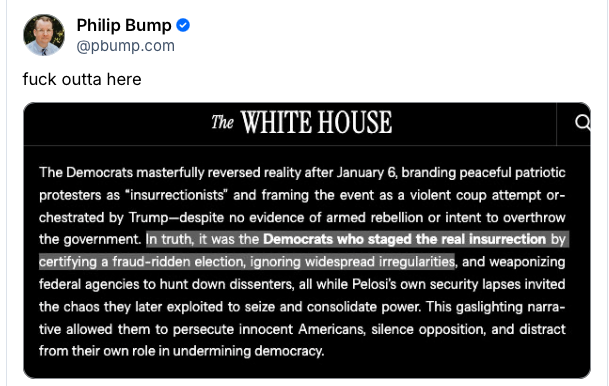
. . . This is what you get when you smash together essentially Stalinist totalitarian psychology with the magical thinking prevalent in evangelical circles: