
Erik Visits an American Grave, Part 2,045
 By
By This is the grave of Sam Goody.
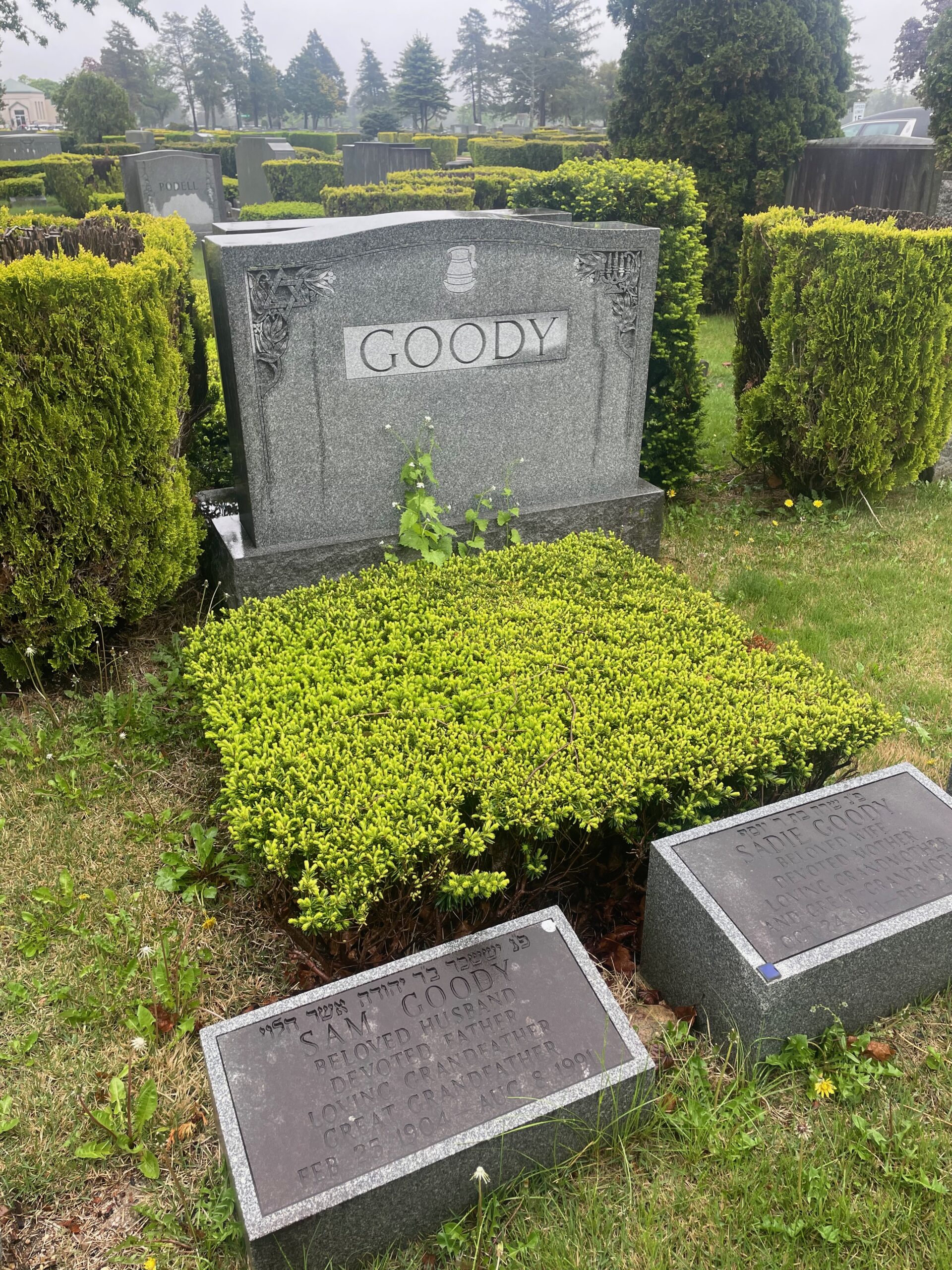
Born in 1904 in New York City, Sam Gutowitz grew up in the city and started running stores, part of the Jewish merchant class. His father was a tailor and his parents had migrated from Poland. A common enough trajectory. Gutowitz was a fine enough name for the Jewish community, but in the broader world, he didn’t want to be tainted with his heritage, so he went with Sam Goody. It really stuck too, as you can see from the grave. He didn’t even use Gutowitz on the tombstone, even though it’s a Jewish cemetery with Hebrew on the grave.
Well, Goody did one thing in American history that matters. In the 1940s, he opened a record store, right after the creation of long-playing records. He already had plenty of history running stores by this time. He worked in the discount world, where there was a lot of money if you were crafty and lucky enough to make it work. This happened because in 1938, when he was running a toy store. Someone came in asking if he had any records. He said no, but the customer then said that if he had any, he’d probably buy them. So he started scouring around basements and people’s sales and buying them and it turned out they sold. He bought 300 opera records from a family in Brooklyn for $60. He sold them for $1,100. This was good business.
Goody basically cornered the market on discounted LPs, for which there was a huge market among young music fans who didn’t have a lot of money. What this meant was something no one had experienced before–an enormous record store that had a huge amount of stock and variety. So if you were in the know, you could visit his store on 49th Street and be in what must have been complete paradise. It’s hard to imagine in this day of having every conceivable music available to you in some form or another how amazing this must have been.
As you can see from my Music Notes posts, I can listen to some old country and then some new post-punk album and then some jazz from any era and then an African album from the 70s and I can live this life of real musical enjoyment with enormous diversity. This hasn’t quite been my whole life, but the idea of a really broad range of music has been known since I was kid. I remember going to House of Records in Eugene when I was in college and just picking random things that sounded interesting. In fact, I took a lot of ribbing from my friends when I bought Muzsikas’ Maramoros: The Lost Jewish Music of Transylvania when in college, just because I wanted to hear what that sounded like. I still have that album too and while I don’t listen to the whole thing much, I do enjoy it when it comes up on shuffle. Well, it was Goody who created the world when such a thing was plausible.
Anyway, Goody’s discount record store model worked like gangbusters. He made money hand over fist here. When most stores sold a record for $3.98, he sold it for $3.25. Notably, he knew nothing about music and didn’t care. But he did hire people who did know about music for his store. In 1951, he created the chain of record stores in his name that you know him for. Later, Goody had money problem and creditors took over the chain in 1959, but he was associated with it to some degree for a long time. He was still around in 1978 when the American Can Company bought the chain and he made plenty of money on that sale. Why American Can? It was just a conglomerate by that point and had already purchased Musicland, which was the main rival to Goody’s discount empire, so it was the kind of logical consolidation at the heart of capitalism. Goody died in 1991, at the age of 87. It was heart failure.
It’s interesting that there’s so little on the man on the internet. The chain has a Wikipedia page, but he doesn’t. He did get a decent New York Times obit. But everyone of not one but about three generations at least knows who he is. No more though. There was talk that the last Sam Goody record store was going to close this year, though I am not 100% sure if that happened.
Sam Goody is buried in New Montefiore Cemetery, West Babylon, New York.
If you would like this series to visit other people who gave their names to the store chains they founded, you can donate to cover the required expenses here. Richard Warren Sears is in Chicago and so is Aaron Montgomery Ward. Same cemetery in fact. Previous posts in this series are archived here and here.