
Best TV of 2025
 By
By 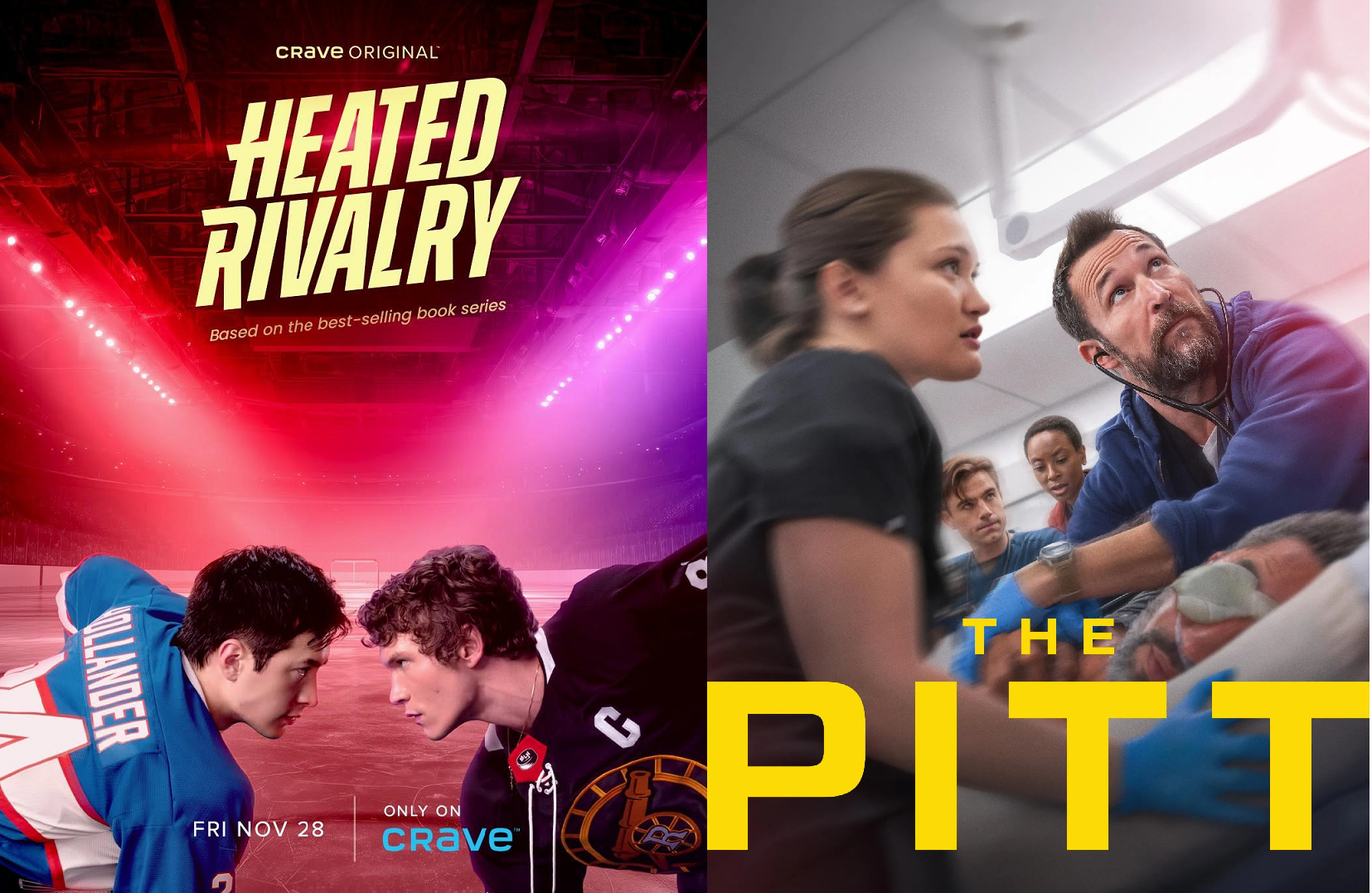
Every year for the better part of a decade, I write one of these TV roundup posts, and every year for most of that time, I have opened with some variation on the same observation: talking about TV in the 2020s is actually talking about business. 2025 is no exception. We can’t talk about the quality of what has shown up on our screens without discussing things like the surprising discovery that audiences will not flock to your banner if you trash a thirty-year old brand synonymous with prestige TV, or yet another attempted merger in which the best we can hope for is that the Trumpists don’t triumph, or even the simple fact that there were fewer shows this year as the aftershocks of the 2023 strike finally hit us. This year, however, the business upheavals seem a little more desperate, a little more like rearranging deck chairs on the Titanic. When I look at the quality of the shows being produced, at the type of shows turning up, and perhaps most importantly, at the number of shows that feel truly essential, it’s hard to avoid the conclusion that the wheels are starting to come off the streaming TV bus. After fifteen years of this new experiment in funding, producing, and delivering television, nobody seems to have figured out how to make this model work.
Take, for example, Alien: Earth, a spin-off of the venerable movie franchise that aired on FX in the summer. Created by Noah Hawley (Fargo, Legion), one of the top formal innovators currently working in television, it features top-notch (and extremely expensive) production values, some instantly iconic performances, and terrifying creature effects. It also feels very much like someone put all previous Alien movies in a blender and leaned hard on the power button. The first season’s fifth episode, for example, is nearly a beat-for-beat retread of the original movie. And, like a lot of TV shows these days, Alien: Earth has the “surf Dracula” problem that the actual scenario promised by its title, of xenomorphs run amok on Earth, doesn’t even begin coming to fruition until the final minutes of the first season. Watching Alien: Earth is a constant see-saw between feelings of awe at its visual and filmic inventiveness, and the nagging feeling of not understanding why, and for what purpose, this thing even exists.
Other shows that aired in 2025 showcase other fundamental misconceptions of how a streaming show should engage its audience. The second season of Silo (Apple TV+) was a genuinely satisfying slice of post-apocalyptic SF that for some reason ended on a cliffhanger, as if it were 1997 and we only had to wait four months for the story to conclude, instead of two to three years. The third season of Star Trek: Strange New Worlds, a show that started out charmingly committed to telling standalone science fiction stories that felt like a return to the original series or TNG, became mired in cutesy gimmicks: zombies! murder mysteries! mockumentaries! It’s the sort of thing that makes for a fun departure in a 22-episode season, but feels like a waste of everyone’s time in a ten-episode one. (Don’t worry; next season there will be a puppet episode, because apparently what constitutes cutting edge TV in 2026 is copying Joss Whedon’s homework from twenty years ago.) Even genuinely great shows, like Andor or Severance, found themselves struggling with fundamental questions of what their story was for or about.
It’s not news that business concerns affect artistic decisions in television, perhaps more than in any other medium. But in 2025 it felt as if the business upheavals that the field is going through, such as the ongoing financialization of Hollywood, the (mistaken) conviction that AI is capable of replacing artists, and the anti-woke crusade, were all exposing a core problem: nobody knows how to tell good stories anymore, and nobody has worked out how to adjust the old storytelling model to new artistic and business models. Well, not exactly anyone: the shows that I highlight in this post, and the two top spots in particular, are notable in part because of how well they navigate these new currents. I just wish that more artists, and more business leaders, were heeding their example.
Best Show of the Year: The Pitt (HBO Max) & Heated Rivalry (Crave)
For my best TV shows of 2025, I’ve chosen two series that are at once similar and polar opposites. They bookend the year: The Pitt started airing in January, while Heated Rivalry‘s first season wrapped up just days ago. They’re both zeitgeist shows, the kind of series where half the fun of watching is the furious conversation that emerges on social media and in a million thinkpieces. And they are, of course, completely different products: a hospital drama that is a deliberate throwback to one of the biggest hits on network television, and a steamy, sexually explicit adaptation of a gay hockey romance novel. But what ties them together—and what makes them stand out from the pack—is an absolute awareness of what the television medium is capable of in 2025, and of how to use the tools on offer to keep an audience engaged.
Originally envisioned as an ER spin-off, The Pitt continues to wear that influence on its sleeve in all the best possible ways. Like its ancestor show, it maintains a tight focus on a single emergency medicine department, weaving between multiple storylines both dramatic and mundane: from minor injuries to tragic deaths, from young doctors on the first day of their rotation to seasoned trauma specialists struggling with the demands of the job and the lingering stresses of the COVID pandemic. And, like the network shows it imitates, it embodies the nearly lost art of knowing how to craft both an episode and a season. Each episode, despite bouncing between multiple different storylines, is still a complete experience in itself, one that leaves you both wrung out and eager for the next hour when the credits roll. Trauma scenes are unfussy but gripping, conveying a wealth of information without losing sight of the patient’s anguish or the doctors’ urgency. The structure of the season spans a single, fifteen-hour shift, allowing the audience to experience it not unlike the way medical teams do, becoming attached to patients who linger for an hour or two, and then losing sight of them in the churn of new cases. A horrific mass casualty event is an all-consuming trauma for two episodes, but when the ambulances stop rolling in and the blood is mopped up, regular patients start arriving again, and must be treated. Characters grow and change despite the season’s compressed timescale, simply because the emergency room is such a crucible. The Pitt is a reminder of how endless—and, increasingly, thankless—the work of medical teams is; but it is also an example of how the most conventional, familiar type of television storytelling, when executed at the highest level, makes for absolutely essential viewing.
If The Pitt is a throwback to the past, Heated Rivalry is a show that could only exist on streaming TV in our present moment (and perhaps not even that precise moment; does a show about gay hockey players get greenlit in 2025 instead of 2024? I’m not sure). Another showrunner might have been content to let the material drive the bus—romance is such a hot genre right now, on page and screen, that one might assume an audience would show up for anything. But creator Jacob Tierney seems to have been determined to use his medium to its fullest capabilities, whether that’s stretching a five-week shoot and a virtually nonexistent budget to create one of the best-looking shows on TV, or deploying two game stars and a hardworking intimacy coordinator to deliver sex scenes that are shocking both for how explicit they are, and for how much they convey about the characters, their feelings for each other, and their acceptance (or lack thereof) of their sexuality. Romance is a genre of heightened emotions, even (or perhaps especially) when its stars are unable to articulate their feelings. By embracing this quality, Heated Rivalry solves the dreaded “second screen” problem of streaming TV; there is always something interesting to look at in this show, even if it’s just a glance or a touch, and these always speak volumes. And, perhaps fittingly for a show that is often about climaxes, Heated Rivalry is keenly aware of how a storytelling climax functions and how to deliver it to maximum effect. The season’s fifth episode masterfully serves up one storytelling swerve after another, without ever feeling rushed or letting up on the story’s tension, culminating in a thrilling conclusion that makes you want to stand up and applaud. There’s been a lot of conversation about Heated Rivalry, but not enough, I think, about the fact that it is damn fine TV.
Rest of the Best:
Andor (Disney+)
Disney was never going to shell out for more than two seasons of Andor. Given the show’s incredible price tag, it’s amazing that we even got a second season of this fundamentally absurd series—a prequel to a prequel about the spy who steals the Death Star plans that kick off the plot of Star Wars, told in a tone that is a million times more serious and grounded than any other work in this fictional universe. In that light, it’s possible to forgive how rushed this season—which bridges the entire, four-year gap between Andor‘s excellent first season and the movie Rogue One—is, and simply appreciate all the things that make Andor special. The profound care put into every bit of set design and worldbuilding; the keen intelligence of the dialogue and plotting; the finely crafted characters, from spymaster Luthen Rael to fascist it girl Dedra Meero and everyone in between; the absolutely gutting set-pieces, which span a massacre on a planet that the Empire plans to strip-mine for resources, and an attack on a hospital by an operative desperate to mercy-kill her mentor before he can give away information that will destroy his life’s work. A spy story about living under totalitarianism that also expands what a long-running science fiction franchise is capable of, Andor‘s second season delivers something remarkable. I would have liked the longer version of the show that exists in a world where money is no object, but I’m grateful for the version we got.
Chief of War (Apple TV+)
Are you jonesing for more Game of Thrones or Shōgun? Then may I suggest Apple’s Chief of War, a dramatization of the unification of Hawaii under Kamehameha I that is visually lush, full of engaging and interesting characters, and effortlessly balances scenes of intense politicking with battles to the death on the slopes of an active volcano. Jason Momoa, who also envisioned and produced the show, plays general Ka’iana, who becomes aware of the looming threat of European colonialism and fixes on Kamehameha (Kaina Makua) as a leader who can unite the fractious Hawaiian nations into a body that might repel them, to which end he must first defeat competing kings played by Cliff Curtis and Temuera Morrison. Along the way you get a stunning, fascinating recreation of the Hawaiian way of life pre-European contact, and an intelligent treatment of the way cultural and religious traditions influence the thinking of Hawaiian leaders and their actions against each other. For fans of both intelligent historical fiction, and thrilling adventure storytelling, Chief of War delivers a rich meal.
Common Side Effects (Adult Swim)
I am still not OK with the unjust cancellation of the magnificent, trippy animated series Scavengers Reign a few years ago, but here’s a small bit of consolation: co-creator Joe Bennett quickly picked himself up and made another show, Common Side Effects. A paranoid thriller about events that play out after when a pharmaceutical company discovers that a rare mushroom possesses the power to heal all injuries and illnesses, the show sends a hippie scientist and his turtle, a pharma executive who is also his teenage crush, and two DEA agents on a frequently violent quest to understand, isolate, and control the mushroom, while debating what, if anything, is to be done with it. Should the science be suppressed to maintain drug companies’ bottom line? Is it, perhaps, only those companies that can safely mass-produce and distribute a treatment synthesized from this plant? And what about the psychedelic visions and bizarre abilities that people who take the mushroom begin to experience and exhibit? Smart, caustically funny, but also frequently moving and extremely weird, Common Side Effects is a reminder of the scope that animation offers for adventurous, experimental science fiction storytelling.
Étoile (Amazon)
Like many people, I have a complicated relationship with Amy Sherman-Palladino’s output. Her writing is funny and whip-smart, but it can also be snobbish, oblivious to issues of race and class, and often just profoundly mean. So I approached her new series, in which the Paris and New York ballets swap dancers and choreographers as a publicity stunt, with some trepidation, and quickly discovered an absolute delight. So much of what makes Sherman-Palladino great is on display here: her crackerjack dialogue, her quirky but often deeply wounded characters, and perhaps most importantly, her profound love of dance. Through the eyes of a variety of characters—a powerhouse of a prima ballerina who is starting to realize that she needs to find the next stage in her career; a neurodivergent choreographer whose encounter with a brash dancer forces him out of his comfort zone; an artistic director torn between his genuine love of the institution he’s given his life to and his realization that he must prostitute it to keep it alive—Étoile delivers a meditation, both moving and hilarious, on what it means to dedicate one’s life to something ephemeral and exacting. Because life is unfair, Amazon cancelled Étoile after one season. But what a season it is.
The Newsreader (Netflix)
At the tail end of the year, Netflix has delivered all three seasons of this excellent Australian drama, which means I can offer it my guilt-free recommendation. Daring to ask the question “what if The Newsroom was good?” the show features Anna Torv as a seasoned news presenter in 1980s Melbourne, who is popular but too often relegated to human interest and women’s stories. When she befriends a new reporter at her station, played by Interview With the Vampire‘s Sam Reid, both of their careers begin to take off. The ripped-from-yesterday’s-headlines premise, which covers such events as the Challenger explosion and the exoneration of Lindy Chamberlain, gives the show an opportunity to talk about how news media has changed, in ways both good and bad, without making any of its characters a prophet or a saint. Torv has killer instincts about how to present breaking news, but she plays into a sensationalism that will lead, one step after another, to today’s 24-hour news cycle. Reid instantly connects with the audience, but only by denying the aspects of himself that they won’t accept. Their older colleague decries the changes he’s seeing in the field, while proving himself incapable of reporting with fairness and compassion on sensitive, important topics such as AIDS or the growing indigenous rights movement. To all this add some excellent, juicy character drama, and you get one of the most satisfying shows of the last few years.
The Residence (Netflix)
There’s been a veritable deluge of Knives Out imitations on our screens, both big and small, most of them quite forgettable. But just as the floodwaters were starting to recede, Netflix came out with this gem of a show (which it promptly cancelled after one season; ah well, at least that season is a self-contained mystery that is solved at the end). Uzo Aduba plays Cordellia Cupp, an idiosyncratic detective who often seems more interested in checking birds off her life list than solving a murder. Even if that murder took place in the White House (now a historical artifact, since the White House in the show includes an east wing) during a state dinner. Cue a twisty, timeline-hopping mystery that delves into the workings of this august institution, the gentle friction between staff and political appointees, and—somewhat topically—the conflict between preserving tradition and making way for new ideas. Recent changes to the White House notwithstanding, the whole thing can feel a bit like a fantasy—as in a scene in which a Republican senator loses her shit when she learns an unappointed political advisor was making policy decisions on the night of the murder. But it’s a fantasy we could all stand to believe in, and a fun mystery to boot.
Severance (Apple TV+)
The long-awaited second season of Severance, a weird, phantasmagorical show about the shenanigans that occur in a world where it is possible to split your personality into “work” and “life” halves, is mostly concerned with paying off storytelling debt. Questions raised by the show’s first season—what is Lumon, the company that markets severance and employs our heroes, and what do they want? what happened to protagonist Mark’s wife? why is Lumon scion Helena pretending to be office drone Helly?—are addressed and sometimes definitively answered. This is, to be blunt, a bit of a letdown, leaving less space for meditations on our relationship to labor, and the power of capitalism, that made the first season so effectively disquieting. In compensation, however, we get some of the best SFnal worldbuilding, and some of the most gonzo story developments within that worldbuilding, of the last year. Expanding Severance‘s world, with increased attention to Lumon’s middle managers or a flashback episode that reveals what has been done to Mark’s wife, delivers some of the best set-pieces of the year. If Severance, in its second season, felt as if it had less to say, what it showed us was more than worth our time.
Honorable Mentions:
Miss Austen (BBC) – There are a lot of (perhaps too many) dramatizations of Jane Austen’s life, but this miniseries, told from the point of view of Jane’s sister Cassandra as she tries to protect her sister’s legacy, is a uniquely thoughtful and sensitive one, commenting intelligently on how women live even when they’re denied the happy ending found in Austen’s novels.
Pluribus (Apple TV+) – Gorgeous cinematography, great acting, and a chewy, intriguing premise, about a woman who is one of the few exceptions when a virus melds all of humanity into a hivemind, make Vince Gilligan’s return to TV a must-watch. It’s not yet a truly great show—there’s a fundamental sloppiness to how it handles its material and characters—but the potential is more than enough to keep me watching.
Stick (Apple TV+) – With Ted Lasso deeply embedded in its DNA, this charming but hardly sappy series about a washed up golf pro who decides to coach a young phenom delivers a winning meditation on parenthood, coming of age, and the beauty of a good swing. A top notch cast, led by Owen Wilson at the peak of his dirtbag-charmer tendencies, makes what could have been a cloying story something moving instead.
Best Episode in an Otherwise OK Show: “The Day”, Paradise (Hulu)
A few weeks ago there was much discussion online about the power (and the contrivance) of the Kathryn Bigelow movie A House of Dynamite, in which a wide array of characters in different levels of government contend with the possibility of imminent nuclear war. Rarely discussed in any of these conversations was the fact that A House of Dynamite was actually the second 2025 story about this sort of catastrophe, and arguably the less successful of the two. Hulu’s Paradise begins with a secret service agent investigating the death of an ex-president, before revealing that the agent, president, and everyone around them are residents of an underground bunker following an unspecified global calamity. In the season’s penultimate episode, “The Day”, we flash back to the day of that calamity, in what is probably the most terrifying hour of television I watched this year. What’s disquieting about “The Day” is how it keeps honing in on the collapse of institutions: the reporters who gamely set out to cover the looming catastrophe before realizing that it is about to consume them; the news anchors who keep trying to project certainty and calm even as it dawns on them that normality has ended; the white house staffers who bravely stay at their posts until it sinks in that soon there will nobody who will care what they did; the leadership whose choice, to lie to the public or tell the truth, eventually comes to seem meaningless. There’s relatively little depiction of the actual disaster in “The Day”, and more focus on the panic of people who believed they’d always end up on top of any upheaval—a panic that it is easy to imagine yourself succumbing or falling victim to. The rest of the series is fairly banal in comparison—the mystery of the president’s murder isn’t particularly compelling, and the post-apocalyptic story plays out in not terribly interesting ways—but “The Day” is still an absolutely gutting hour of TV.
Most Overpraised Show: Adolescence (Netflix)
In fairness, it would be hard for Adolescence not to feel overpraised, since it’s been hailed as both a towering artistic achievement and a vitally important political statement. But even if you lower your expectations, the show feels to me like a miss with some fine qualities—chiefly the performances, by Stephen Graham as a working class father gutted by the revelation that his teenage son murdered a classmate, by Owen Cooper as the son, and by the rest of the cast. The premise is obviously ripe for deeply affecting storytelling, and there are some powerful moments in Adolescence—a glimpse of the local school, where teachers are at their wits’ end and students easily fall through the cracks, or the murderer’s family desperately trying to continue with their lives in the wake of a rupture they will never recover from. But most of the things that Adolescence has been widely praised for strike me as inert or even counterproductive. The vaunted episode-long takes are showy and distracting (is it, perhaps, finally time for a long take backlash? can we acknowledge that this one device is not the be-all and end-all of filmmaking, and that sometimes a cut or a time jump are necessary for good, effective storytelling?). The much-praised third episode, in which Cooper faces off against a psychologist (Erin Doherty) assessing his fitness to stand trial is contrived and almost nonsensical, designed to evoke emotions in the audience regardless of whether anything happening on screen makes sense. And the show’s supposed political salience strikes me as a comforting lie. It’s all the internet’s fault, you see, so the problem can be solved by kicking the under-16s offline. Nothing to do with the MeToo backlash, with politicians, public figures, and even princes who hobnob with sex traffickers, with the erosion of women’s rights and a media apparatus that treats this as an afterthought. Adolescence wants us to believe that boys learn misogyny from youtubers, when the truth is that this show, so laser-focused on a relationship between a boy and his father, shies away from the chance to examine the place where most men are taught to hate women.
Proof That Stardom Still Matters, Even On TV: Your Friends and Neighbors (Apple TV+)
In Your Friends and Neighbors, John Hamm plays a rich hedge fund guy who ends up in an emotional and financial tailspin. His marriage broken and his job gone, he decides to steal watches and jewelry from his neighbors, most of whom are too rich to notice these objects’ absence. There’s a lot that this show wants to be about: the lifestyle oneupmanship in the enclaves of the super-rich, where no matter how much you have, there’s always someone who has more, and who pushes you to overextend yourself to catch up; the relationship between the wealthy and their servants and hangers-on; the bewilderment that occurs, on both sides, when someone like Hamm tries to do business with small time criminals; the liberation he feels when he does something wrong. In practice, very little of it actually lands (and what does is undermined by the fact that, when it comes down to it, Hamm is a common thief who doesn’t even have the excuse of being poor). But I nevertheless kept watching Your Friends and Neighbors in sheer admiration for how completely Hamm carries the show. It’s not a particularly memorable performance—Don Draper with a bit more mileage and a lot more soul—but Hamm is so magnetic, and so compelling, that you buy even things that are completely ridiculous, such as a contrived murder mystery and an even more contrived happy ending. Hamm hasn’t had a role worthy of him since the end of Mad Men, and Your Friends and Neighbors is no exception. But it’s a reminder that he is a real star, and that somebody with writing chops should get around to taking advantage of that.