
A Guy Walks Into A Reactor Shop With 34 Tons of Plutonium…
 By
By 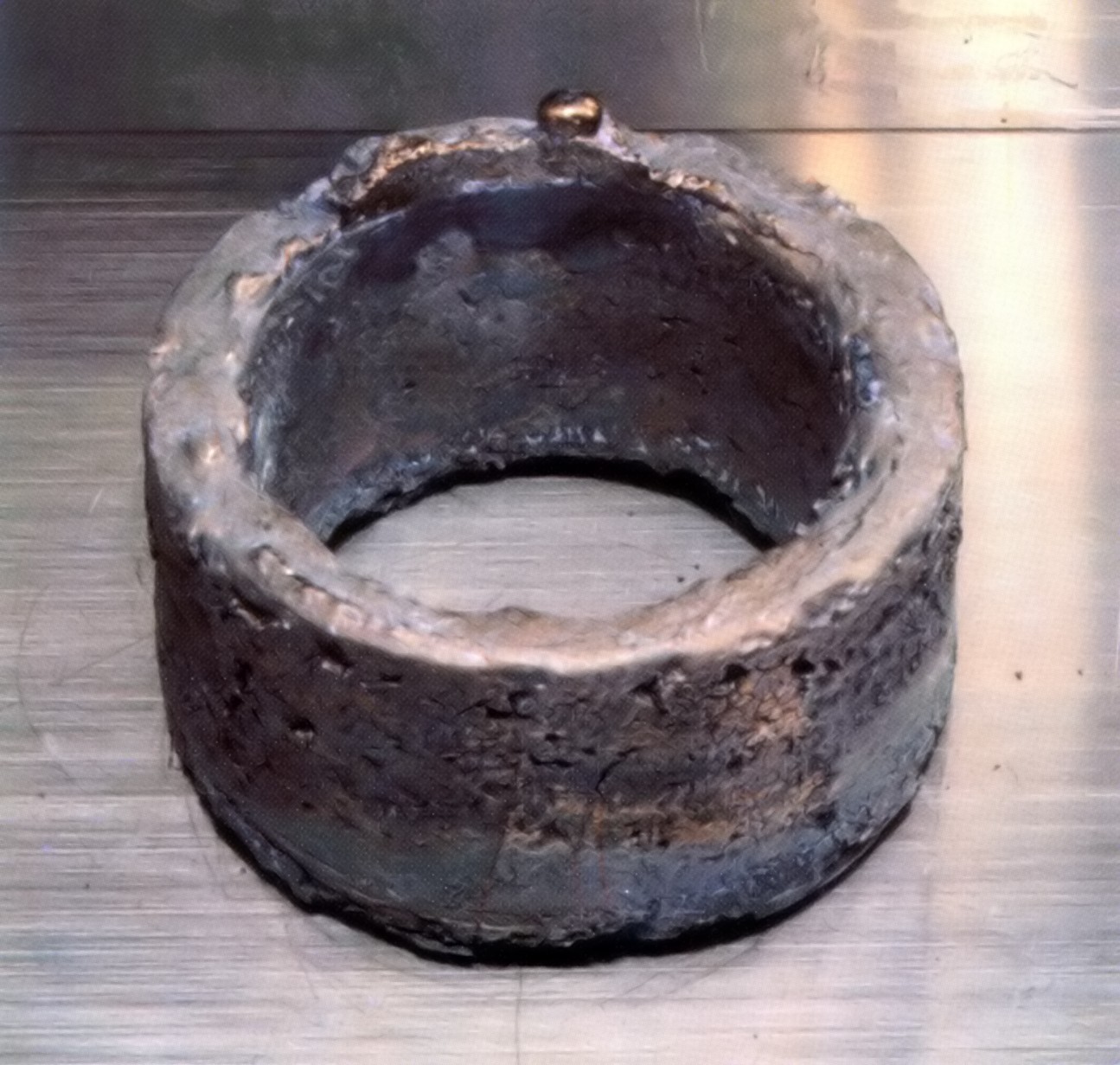
By Los Alamos National Laboratory – Scanned from: Christensen, Dana (1995). “The Future of Plutonium Technology”. Los Alamos Science (23): 170., Attribution, https://commons.wikimedia.org/w/index.php?curid=1034607
This article is about 34 tons of plutonium that the US government doesn’t know what to do with. The current suggestion is to use it to power nuclear reactors to run all that AI nobody wants. The article lacks historical grounding and thus gets a lot wrong.
There’s a story about that plutonium, but it’s not the one that the reporter, Zack Coleman, tells. And others have forgotten, or never learned, large chunks of the story.
When the Soviet Union was coming apart, President George H. W. Bush moved to convince embattled President Mikhail Gorbachev that the US wouldn’t take advantage of his country’s weakened position. Bush took out of service all of the US’s “tactical” nuclear weapons. Later in the decade, Russia also took a large number of weapons out of service. Each country had about 34 tons of plutonium they didn’t need any more.
They agreed to dispose of the plutonium in some way that would not allow it to be recycled back into weapons. That was the Plutonium Management and Disposition Agreement.
I have a personal stake in this – I worked in a program to convert the nuclear weapons parts to a storable form of plutonium. My team designed the storage cans – three levels , the outer two welded shut. As far as I can tell, that design is still in use.
The Russians intended to use their plutonium in reactors. That was a possibility for the US, but we had a very vocal faction that wanted deep geological disposal of the plutonium. Deep disposal was far too expensive, and the insistence on it stalled the program.
The Russians moved ahead and produced fuel for reactors. The US was stuck. In 2016, partly because he was generally pissed off at the US, Vladimir Putin suspended the agreement. It wasn’t entirely unreasonable on his part. This week, the Russian Duma formally withdrew from the agreement.
But the 34 tons of US plutonium didn’t go away. A committee formed by NNSA recommended that the plutonium be diluted with a magic powder that would make it unusable and stored in the Waste Isolation Pilot Plant (WIPP) in Carlsbad, New Mexico.
The composition of the magic powder is classified. I have my doubts, although I have been assured by someone in the know that it will work. Whatever. If we put it in WIPP, it’s pretty much gone forever, swallowed by the salt.
BUT
The processing of the plutonium would have to be done by Los Alamos and Savannah River, which are supposed to be ramping up to make more plutonium parts for nuclear weapons. WIPP’s license with the State of New Mexico would have to be modified. All that takes time. So we’ve still got the plutonium. Enter the Trump administration.
Colman’s article is confused, because he doesn’t understand that history. There’s more history, too. There have been many attempts to use plutonium in the fuel for nuclear reactors, and none has been successful. They’ve worked, more or less. Russia has the most experience, and they use plutonium regularly.
The problem is that manufacturing and handling nuclear fuel containing plutonium is more difficult than for uranium alone. That makes costs higher. The plutonium doesn’t add anything to energy generation to offset those costs. That’s been true in the US and other countries.
A gaggle of new nuclear reactor companies have new ideas on how to design nuclear reactors. One of them, Oklo, is interested in the plutonium. Chris Wright, Trump’s Secretary of Energy, was on the Oklo board. Oklo wants to provide power for AI. Sam Altman was also on its board, so we are at the intersection of new reactor design, AI, and conflict of interest.
AI looks like the next big economic bust, exacerbated by the nuclear reactors that will not be built.
Oklo’s design is a metal-fueled, liquid-metal-cooled, fast reactor. Plutonium is better adapted to a fast reactor than to today’s commercial designs. But the history of such designs is not as sunny as Oklo makes it sound. Oklo probably doesn’t have the facilities to manufacture plutonium fuel. They would take years to build and install.
Contrary to the quotes in Colman’s article, NNSA does not need this plutonium for its pit program. There are gobs of plutonium around. That is what the agreement with Russia about the 34 tons was intended to address.
So the article is a mess. We seem to have consigned the history of the 1990s and the response to the end of the Soviet Union to the memory hole. I don’t know why.