Subscribe via RSS Feed

[ 0 ] December 30, 2005 | Robert Farley


Friday Cat Blogging… Snowball

Bipartisanship!!

[ 0 ] December 29, 2005 | Scott Lemieux

Wow, I never thought it would happen either, but I agree entirely with a post about movies on The Corner. (Hell, I’m shocked that there was a post about movies, as opposed to using movies as a pretext to talk about politics, at The Corner.) Since we could use more conservatives who actually care about aesthetics, I figured I should give a link…

Rhythmic Admirer of the Day

[ 0 ] December 29, 2005 | Scott Lemieux

Glenn Reynolds.

That Poll Does Not Mean What You Think It Means

[ 0 ] December 29, 2005 | Scott Lemieux

John and Ezra are, of course, right: despite the claims of people like Jeff Goldstein, the fact that only 64% or the public answers “yes” to a question that I (and virtually everyone else) would unhesitatingly answer yes to is hardly a sign of strength for the President’s position; if they ask about the President’s program as opposed to the concept of using wiretaps to fight terrorism in general, then we’ll have something. In addition to this, of course, we get the usual projection of intense partisanship onto others. He asks: “Will these results convince partisan Democrats who’’ve been pushing the story that they’’re not likely to gain much politically by pressing the issue?” The answer, of course, is “who gives a shit?” Let’s say for the sake of argument that opposing the President’s program will be unpopular–quite likely, although this particular poll is neither here nor there as far as that’s concerned. I could still care less. If it’s unpopular to oppose presidential illegality and pointless violations of civil liberties, so be it. There are some principles you have to stand on; if some people believe that narrow partisanship is more important than upholding the Constitution that’s their privilege, but speak for yourself.

As for the claim that “case law to this point supports that authority”, uh, sadly, no. We have to start with the fact that the program clearly violates the FISA statute. We need not concern ourselves with the few embarrassingly specious and outcome-oriented attempts to argue otherwise, because not even the administration itself is claiming that their wiretaps were authorized by FISA. And the claim that the taps were somehow authorized by the AUMF is, if anything, even more unserious. So, the question is: does the case law support an inherent presidential authority to engage in national security protections contrary to Congressional statutes? Let’s turn this over to Daniel Farber’s Lincoln’s Constitution, an (excellent) attempt to defend the constitutionality of most of Lincoln’s wartime measures:

With the possible exception of Midwest Oil, where the court found in a long history of prior congressional acquiescence, the Supreme Court has never upheld a presidential claim to take emergency action in violation of statute. At the very least, any such claim of presidential authority must be scrutinized with great caution…On balance, Lincoln’s transfers of federal funds are probably best regarded as unconstitutional. (137)

In this case, Midwest Oil is also clearly inapplicable; not only has Congress not provided long-term tacit consent, but the Attorney General has argued that the program is necessary precisely because Congress wouldn’t grant the authority. And as Glenn recently pointed out, in the Steel Seizure cases the Court refused to uphold Truman’s actions even though 1)there actually was a war as traditionally understood going on, and 2)the steel seizure represented a far more plausible “emergency” context than warrantless wiretaps in December 2005. If Truman didn’t have the inherent authority to override the will of Congress, Bush certainly doesn’t. So, the case law on this question is indeed clear: the President plainly exceeded his constitutional authority. The program would only be constitutional if the Court were to expand traditional understandings of executive power considerably. For the good of the country, we can only hope that they won’t.

Digby gets it right.

10 Worst Americans

[ 0 ] December 28, 2005 | Robert Farley

Far be it from me to decry any of my countrymen, but I cannot resist. In no particular order, and including both those crimes aesthetic and political…

J. Edgar Hoover: I don’t think that civil liberty in the United States has ever had a more committed enemy. I don’t know that he hated leftists, african-americans, and civil rights advocates per se, but he was willing to destroy anyone who threatened his power.

Aaron Burr: Had little, if anything, to contribute to the early Republic, and came close to disrupting it in the 1800 election. Killing Alexander Hamilton puts him over the top.

Jefferson Davis: Ninth circle of Hell, next to Judas, Brutus, and Cassius. That his treason was in the cause of slavery makes him much worse than, say, Benedict Arnold.

Nathan Bedford Forrest: Fought to destroy the Union, then fought to destroy the only good things that came out of the Civil War.

Bill O’Reilly: Other demagogues could be placed here, but Bill O’Reilly takes precedence for his insipid faux populism.

George Wallace: Patterson Hood puts it best.

Joseph McCarthy: Willing to burn everything that was good about America in the service of his power.

Henry Miller
: America’s worst novelist.

Mickey Kaus: America’s worst pundit/blogger/journalist.

Joel Schumacher: America’s worst director.

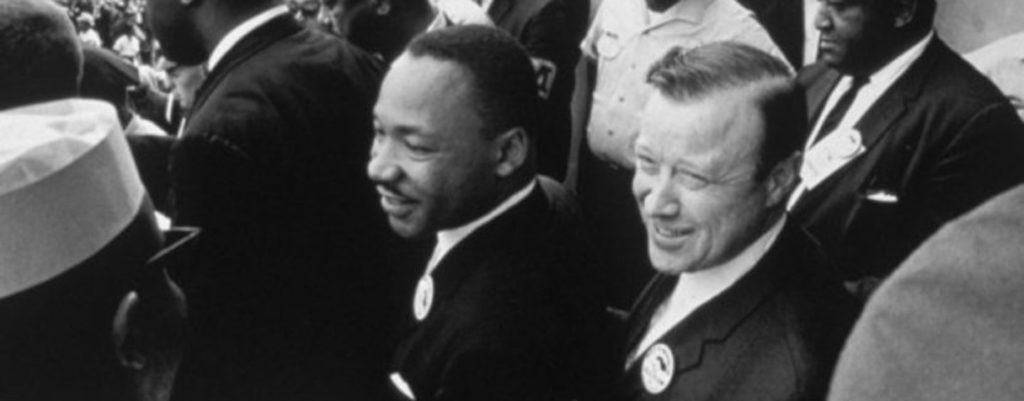
The last three are idiosyncratic, I know. Reading the comments is fun; if you’ve ever doubted whether the right has more spite, anger, hatred, and vitriol than the left, please put those concerns aside. Including Martin Luther King was not enough for one enlightened commenter; she decided to put every African-American on her list. Jimmy Carter seems to be a mainstay on the conservative lists, as does Earl Warren.

American Exceptionalism

[ 0 ] December 28, 2005 | Robert Farley

Chris Bertram reminds us that contemporary discussions of American imperialism miss out on the fact that the United States has historically been a very successful imperial power. It’s not as if we just pulled 37 new states out of our collective ass The conquest and colonization of the West was so extraordinarily successful that modern Americans simply don’t think of it as a conquest in the same way that we think of Russian expansion, Chinese expansion, or European colonialism.

This reminded me of why I have an aversion to Fareed Zakaria. Zakaria is, of course, a prominent public intellectual. Like many prominent public intellectuals, he received his Ph.D. from Harvard. He turned his dissertation into From Wealth to Power, which is a study of the effect of weak executive power on colonial expansion. He concludes that weak executive power in the US in the second half of the nineteenth century precluded the United States from seeking colonies in the same manner as other great powers.

And that, my friends, is absurd. It doesn’t even pass the laugh test. As long as you posit that America’s expansion into the West wasn’t colonialism, it sounds like a great, nuanced, interesting thesis. Similarly, if you posit that pigs are vegetables, you’ll wonder why vegetarians don’t eat bacon. The argument doesn’t even have face validity (and Zakaria deals with the problem in the book only in passing), and yet he managed to defend it as a dissertation and get it published. I once assigned the book to a group of undergraduates, and even they were genuinely flummoxed at the gaping blind space in the center of the book’s argument.

I haven’t read any of Zakaria’s other books, so I can’t comment on them. I have found his columns well-written and occasionally insightful. And yes, there is an element of academic bitterness here; I wish I could have written and published such a crappy dissertation. Nevertheless, I will always find myself suspicious of his work.

See You In Leavenworth, Kenny Boy

[ 0 ] December 28, 2005 | Scott Lemieux

Causey to testify against Lay and Skilling. Bye-bye!

Step 1: Cause the Strike. Step 2: Make Up Effects. Step 3: Blame Someone Else

[ 5 ] December 28, 2005 | Scott Lemieux

Julia Speak, You Listen.

Going For Brokeback

[ 0 ] December 27, 2005 | Scott Lemieux

Once it was decided that my visiting family would be seeing a movie on Christmas Day I was resigned to sitting through The Family Stone or some such, but everyone in my family wanted to see Brokeback Mountain (partly, admittedly, because it was filmed in Alberta. And, of course, Albertan conservatism is kind of a strange brew; when k.d. lang came out it didn’t really seem to cause much of a ripple, but when she came out as a vegetarian…that’s when the sign on her hometown was covered with graffiti.)

The most salient thing about the picture is that it represents the return to form of an immensely gifted director, although (as some have anticipated) Lee’s sensibility certainly won’t be to everyone’s taste. Lee’s rhythms and lovely photography and attention to period detail hit me where I live when he’s on, and this picture works almost as well as the The Ice Storm. I don’t understand claims that the movie is cliched or melodramatic, unless these terms are defined so that they encompass pretty much any movie about problematic romantic relationships. Whether a movie that uses archetypes about thwarted desire and romantic bad faith deserves these labels depends on whether the story feels organic and character-driven, and this one does. And it will also rise and fall on the acting, and while Gyllenhall and (especially) Ledger deserve their hosannas, Williams and Hathaway give the movie a surprising jolt of soul. And, as always, Lee gets consistently good performances across the board, and is especially skilled with teenage and child actors who bring so many other movies to a halt. But while the context of a major Hollywood film matters, it is certainly true that the movie is not really subversive. As Anthony Lane noted, it’s neither particularly gay nor a western–McMurtry’s The Last Picture Show being the obvious antecedent–and nor (may the saints be praised) is it another self-conscious attempt to “demythologize” a genre that has been alleged to have “lost its innocence” almost as frequently as America itself, but I don’t really see that a problem; I don’t see much point in attacking the movie for not being another movie. (And the upside is that it’s not the policy brief in favor of gay marriage or whatever that its anti-aesthetic critics have evaluated it as.)

It’s a very fine movie, and should be seen, but it is certainly flawed. While I can’t go along with the claim that it gives off less erotic heat than a Merhcant/Ivory picture without having seen the latter (I find it hard to believe that it’s even theoretically possible), it’s true that some people will find it too tasteful by half (or maybe by the full one), and I don’t entirely disagree. (Mickey Kaus and his constantly-under-perceived-siege heterosexuality will be happy to know that in the patriarchal tradition of Hollywood there’s more female than male nudity in the film. Perhaps Kaus, who seems to think that attraction to the stars is the only reason to see a movie, can explain why this ratio is so high, and why a majority of the male nudity seems to involve Harvey Keitel.) The scene where Ennis Twist is fired is more explicit than it needs to be–it’s the one lapse where the film tells you what to think instead of dramatizing–and the final twist for Jack Twist does justify the charge of melodrama. Overall, though, I think these are fairly minor quibbles; certainly, it’s one of the best movies of the year.

It should be noted as well that my more politically and aesthetically conservative family liked it as well (which, of course, may hurt my argument more than it helps it, but I stand by it.) They also liked Sweeney Todd, which according to the expanding wave of anti-aesthetic criticism makes us objectively pro-cannibalism as well as pro-homosexuality. (I wonder what Stanley Kurtz thinks is worse?) I’ll have more about it after I see Doubt on Thursday, but despite being a Sondheim skeptic I can’t challenge the consensus about the current production; it’s flat-out masterful…

Victory

[ 0 ] December 27, 2005 | Robert Farley

Christmas is over, and we hold the field of battle.

Grow Up To Be A Debaser

[ 0 ] December 27, 2005 | Scott Lemieux

Tara McKelvey had a terrific article in The Nation recently about academics left and right–some of whom have been called “libertarians”–who have engaged in casual defenses of torture. She’s particularly good at identifying the idea, also so evident in the defenses of Bush’s illegal surveillance, that the nation’s toughness and manliness are somehow at risk if we don’t violate as many rights as possible (even if it requires repudiating long-held theoretical commitments) in the name of not-terribly-well-specified advantages supposedly gained in fighting terrorism:

Dershowitz may be more willing than most academics to talk about specifics. But a number of professors on the “torture circuit”–the talks, roundtables and debates on the subject that have taken place at universities, law centers and conferences over the past four years–have echoed his points. For these professors, the message is clear: Toughen up. In a debate with Physicians for Human Rights executive director Leonard Rubenstein in Cambridge, Massachusetts, on February 28, 2003, for example, Harvard Law School professor Richard Parker balked when Rubenstein said torture should be forbidden under any circumstances. “The idea that anybody would take an absolutist position seemed kind of absurd to him,” Rubenstein recalls.

Another Harvard law professor, Philip Heymann, with Juliette Kayyem, a lecturer at Harvard’s Kennedy School of Government, influenced Congresswoman Jane Harman’s drafting of legislation that would authorize harsh interrogation techniques under certain conditions. Harman discussed the proposal in a speech at Georgetown University on February 7 and was criticized by human rights activists. Quietly, the Harvard plan was dropped.

In some cases, the academics have crossed into government service. In The Torture Papers: The Road to Abu Ghraib, co-editor Karen Greenberg, executive director of NYU School of Law’s Center on Law and Security, says many of the people on the “path to torture” have affiliations with the academy, including, most famously, John Yoo, who served as attorney in the Justice Department’s Office of Legal Counsel and helped draft memos that outlined a strict definition of torture. Yoo studied at Harvard and got a law degree from Yale. He has taught at the University of Chicago Law School and is now a professor at UC Berkeley Law School, Boalt Hall.

In an essay titled “Torture, Terrorism, and Interrogation” in Torture: A Collection, edited by Sanford Levinson, Richard Posner, a judge on the US Court of Appeals for the Seventh Circuit and a senior lecturer at the University of Chicago Law School, agrees with Dershowitz, writing that “if the stakes are high enough torture is permissible.” Interestingly, Posner seems to think torture is more acceptable if it takes place far from home. “Torture is uncivilized, but civilized nations are able to employ uncivilized means, at least in situations of or closely resembling war, without becoming uncivilized in the process,” he writes. “I suspect that this is particularly true when the torture is being administered by military personnel in a foreign country.”

And, alas, even professors at CNUY are implicated:

A CUNY professor goes further. Philosophy professor Michael Levin is the author of “The Case for Torture,” a 1982 essay he continues to defend. “Perhaps the most terrifying moment came when an urbane American academic [Levin] argued the case for torturing not only suspects but even their infant children, if it would induce them to talk,” writes Robert Shrimsley, reviewing Channel 4′s “Is Torture a Good Idea?” in the March 4 Financial Times. “With his cheery evocation of such appalling techniques, Michael Levin…was a living personification of what Hannah Arendt called the banality of evil.”

Profoundly depressing, but important, stuff. In a related note, I think that the administration should issue an executive order compelling all faux libertarians to sign the Posner Waiver

Parochial Boxing Day Bloggin’

[ 0 ] December 27, 2005 | Scott Lemieux

I believe this would make this year’s tally white hats 4, black hats zip. (Well, to be fair, the Neckbreakers are 0-3-1.)

In better news, the lack of stereo has been solved in a satisfying manner, with the crappy bookcase component system (and Sony home audio products in general) avoided.

  • Switch to our mobile site