Subscribe via RSS Feed

Author Page for Erik Loomis

rss feed

Visit Erik Loomis's Website

Steve Jobs’ Vision of America

[ 103 ] November 4, 2011 | Erik Loomis

When Steve Jobs met with President Obama in 2010, Jobs told the president that he would only get one term:

You’re headed for a one-term presidency,” he told Obama at the start of their meeting, insisting that the administration needed to be more business-friendly. As an example, Jobs described the ease with which companies can build factories in China compared to the United States, where “regulations and unnecessary costs” make it difficult for them.

Jobs also criticized America’s education system, saying it was “crippled by union work rules,” noted Isaacson. “Until the teachers’ unions were broken, there was almost no hope for education reform.” Jobs proposed allowing principals to hire and fire teachers based on merit, that schools stay open until 6 p.m. and that they be open 11 months a year.

If China is our model, is this how Steve Jobs saw America’s future? “We found that across the four Chinese-owned copper mines in Zambia, there were persistent labor abuses, particularly in regards to health and safety, long hours of work and anti-union activities,” said Matt Wells, with Human Rights Watch in Lusaka, summarizing the more than 100-page report.”

Or what about this? “Dozens of miners have been trapped in a coal mine in China after a “rock burst”, officials say.
Four miners were killed and 50 more are missing after the accident, which happened late on Thursday in the city of Sanmenxia in Henan province.”

Or this?

Or should I be saying anything negative about National Hero and Demigod Steve Jobs at all? After all, with him not around to give our lives of ennui meaning through gadgets, what’s the point of living? Clearly, worker death and pollution is a worthy model so long as I can download a new app every day!

How Free Trade Agreements Work on the Ground

[ 54 ] November 3, 2011 | Erik Loomis

A Wisconsin-based mining company is using the Central American Free Trade Agreement to sue the government of El Salvador for closing down a mine because of pollution. The Commerce Group is suing El Salvador for $100 million in damages for violating CAFTA.

This is the race to the bottom. This is why companies go overseas. With free trade agreements, we recreate Gilded Age labor and environmental conditions in the developing world. We have simply exported all the negatives of the Industrial Revolution. We were promised cheap goods and information economy. They were promised jobs. Instead, we are mired in an economic slump without a foreseeable end and a failed information economy while they live in endemic poverty and suffer environmental poisoning. And the last several presidents, regardless of political party, have supported the continuation of this trend.

Most Prominent Politicians (XVI): Tennessee

[ 87 ] November 3, 2011 | Erik Loomis

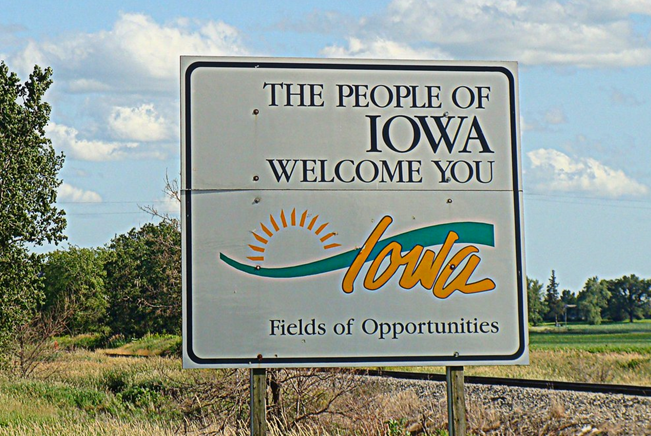
On to the Volunteer State. I’d say Tennessee has performed about to an expected level in generating prominent politicians. Its 3 presidents make it seem like it would outperform, but relative to other states its size in the South, it has rather underperformed in producing congressional leaders.

1. Andrew Jackson–Fairly obvious selection, a man who defined an era for both good and bad.

2. James K. Polk–stole half of Mexico in a blatantly expansionist war. But given that was more or less what he set out to do from the beginning, it’s hard to call him unsuccessful as such. Just a jerk. His administration was also ridiculed by European diplomats for not serving alcohol, as Polk was a teetotaler.

3. Andrew Johnson–Lemieux and I argue over whether Johnson or Buchanan is worse. I tend to go with the latter, but I’m hardly defending Johnson in making this argument. An utter disaster and Lincoln’s worst move.

4. Cordell Hull–Longtime congressman and shorttime senator, but his real accomplishments are of course as Secretary of State, where he served for 11 years, including during most of World War II.

5. Estes Kefauver–Kefauver was an important New Dealer and relatively progressive on racial matters for a man of his time, place, and political position. The Kefauver Committee investigative organized crime may be what he is most known for, but he accomplished far more substantial things. One of three southern senators to not sign the Southern Manifesto in 1956. Was nearly the Democratic presidential nominee in 1952 and 1956.

6. Al Gore, Jr.–The man who should have been president. Thanks Ralph.

7. Kenneth McKellar–Served as senator from 1917 until 1953. A classic southern conservative, though less so in his early days, McKellar became increasingly opposed to the New Deal as he aged. Chairman of the Appropriations Committee, he had full knowledge of the Manhattan Project. He chose to use that information to threaten holding up money for uranium acquisition as part of a feud with Tennessee Valley Authority head David Lillenthal. Nothing like holding up the nation’s war effort to settle a personal score.

8. Al Gore, Sr.–Like Kefauver, Gore should be lauded for refusing to sign the Southern Manifesto. Like Kefauver, an important southern liberal who supported a wide array of progressive legislation. Was targeted and defeated in 1970 as part of Nixon’s Southern Strategy.

9. Howard Baker–The first Republican elected to the Senate from Tennessee since Reconstruction, Baker became Majority Leader and one of the most powerful Republicans in the country, both during and after his Senate career, when he became Reagan’s Chief of Staff.

10. John Bell–I thought about putting Bill Frist here, but he was such a weak Majority Leader and has completely faded from the public view and consciousness, suggesting a not-so-important figure. So I went with Bell instead, who is most known as the presidential candidate for the Constitutional Union party in the 4-way election of 1860. He held any number of posts before that, including congressman, senator, Secretary of War, and Speaker of the House. One of only 2 southern senators to vote against the Kansas-Nebraska Act.

Our Very Serious Republican Leadership

[ 29 ] November 3, 2011 | Erik Loomis

Following up on the brilliance of states passing anti-Sharia laws, Congressional Republicans has decided to respond to farcical threats as well. A Republican talking point this year has been that the Environmental Protection Agency wants to regulate dust levels in the wind, arguing this proposal shows what a ridiculous agency the EPA is and that it should be eliminated.

Of course, no such regulation was ever proposed. Republicans created it out of thin air.

But that doesn’t mean Congress isn’t going to vote on a bill to ban the EPA from implementing such a rule!

I Guess This is How the McRib Gets Its Disgusting, Disgusting Flavor…

[ 20 ] November 3, 2011 | Erik Loomis

Pigs used for the McRib (and at Smithfield Farms more generally) are kept in extra-awful conditions.

A 2010 undercover HSUS investigation, however, revealed information altogether to the contrary. HSUS found that Smithfield pigs were living in hellish conditions where basic needs were systematically unmet. Female pigs were crammed into gestation crates, preventing movement for most of their lives; many crates were coated in blood from the mouths of pigs chewing the metal bars of their crates; a sick pig was shot in the head with a captive bolt gun and thrown into a dumpster while still alive; prematurely born piglets routinely fell through the gate’s slats into a manure pit; castration and tail docking took place without anesthesia; and employees tossed baby pigs into carts as if they were stuffed animals. The investigator saw many lame pigs but never a vet.

Must be the throwing of baby pigs around that creates the ribbed shape in the McRib….

General Strikes in U.S. History

[ 20 ] November 2, 2011 | Erik Loomis

Occupy Oakland asked me to write a document for them about general strikes in American history as they educated themselves about the action they planned for today. Of course, I gladly accepted.

You will see some of this material later as part of the This Day in Labor History series, but if you are interested in some context about general strikes today, I also published a modified version of the piece at In These Times.

Coachella

[ 11 ] November 2, 2011 | Erik Loomis

In the hipster world, California’s Coachella Valley is known for strange creatures such as Animal Collective and Deer Tick that appear once a year to gigantic crowds of bearded men, women with bangs, and asymmetrical hair on both. But for the rest of the year, the defining characteristics of the region are widespread poverty, racial inequality, environmental pollution, sickness, and death.

Teaching the American Revolution

[ 160 ] November 1, 2011 | Erik Loomis

Historiann has a good post on the problems with teaching the American Revolution: the extreme nationalism of the students on the subject

It’s not just that it’s difficult to teach the quintessentially nationalistic course in American history in an era in which a great deal of the historiography is transnational or at least comparative, although that is a challenge for me considering the way I teach the rest of my courses. It’s really the overwhelmingly nationalistic, solipsistic, chest-beating, flag-waving, screaching bald eagle totality of the historiography. In the United States at least, there is no more nationalistic course, and no course that is taught in such a one-sided, pro-American manner. And the students love it! They demand it, in fact, and they revel in the opportunity to indulge in nationalist agitprop in their essays.

I don’t teach this course except for coverage in the survey. And I have certainly found Historiann’s observations to be the case. I really push a 2-sided tale here, one of a modernizing state demanding tax revenues from colonies who keep costing the British money because they like killing Indians and starting wars, of differing views of what representation means, of how the colonies have become transformed societies not quite like the English, etc. But the students don’t want to hear it–they want to know that America overthrew those British tyrants without any complexity involved.

Moreover, I find that this narrative remains surprisingly resistant to revision, even among liberals. The Revolution seems to be the one place where a consensus narrative of American history still stands. We can call Lincoln a racist and can question whether he really wanted to free the slaves, we can reinterpret the American story into one of genocide against Native Americans, we can talk about Americans abroad as a plundering power, but the Founding Fathers (with all the patriarchy that implies) remain untouchable.

I am reminded of this post I wrote in 2007 wondering if the American Revolution was bad for America. Rereading it, I’ll admit it’s a bit overargued at times, but I stand by most of the points, at least as interesting counterfactual talking points. What amused me was that progressives found it as outrageous as conservatives. Plus, one conservative site was pretty awesome about it, noting that not only were liberals fantastizing about losing the current war, but were now fantasizing about losing past wars. Outstanding.

I am very curious about the tenacity of this narrative, which perhaps means most in today’s obsession with legal originalism. Why do we still buy into traditional stories of the American Revolution?

Tim Tebow, Circumciser

[ 52 ] November 1, 2011 | Erik Loomis

Dave Zirin’s piece on Tebow’s disastrous performance and his aggressive evangelicalism links to this very disturbing 2008 news story of Tim Tebow going to the Philippines to circumcise young boys

On the recent weeklong trip to the orphanage his father’s ministry runs in Southeast Asia, Tim assisted in the care of more than 250 Filipinos who underwent medical and dental procedures, including circumcision.

Tim’s original task was to preach to the hundreds of people waiting in line before they had their teeth pulled or cysts removed. But as the day progressed, he looked for more active ways to help the three Filipino doctors. By the end of an exhausting day, he was wearing gloves and a mask, wielding surgical scissors, and helping the doctors in the circumcision of boys, finishing off stitches with a snip.:

Um. Whoa. Wow.

I know that some are saying people are going overboard with the Tebow hatred. But he makes it so easy. And really, what are the chances we are seeing the beginning of a very scary political career here? Way too high.

Hanford’s Impending Crisis

[ 9 ] November 1, 2011 | Erik Loomis

Joshua Frank has a superb story at Alternet (I think it originally appeared in the Seattle Weekly) on the incompetent and dangerous nuclear clean-up procedures at Hanford, in southeastern Washington. In many ways, it’s a story that we’ve heard before in recent years: the government contracts to a major corporation (Bechtel) to conduct major operations, but slashed federal budgets mean a weak regulatory process that allows the corporation to do whatever it wants. In the case of Bechtel and Hanford, this means cutting corners, seeking profit over the long-term safety of nuclear waste, management overrriding employees safety concerns, dismissing inconvenient science that would imperil profits, etc.

While this depressing story is part and parcel of early 21st century America, it’s all the more important here because of the potential for radiation poisoning if this stuff is not dealt with properly.

This is also a object lesson in why outsourcing government operations isn’t a good idea. I worked at Los Alamos for several years, doing historic preservation. But I knew people in various parts of the laboratory structure and the story was more or less the same–you’d have various corporations each seeking a piece of the lucrative environmental monitoring/cleanup/project pie. The incentive for everyone–the companies, employees, laboratory management–was to cut costs wherever possible and that often meant skirting the edge of the law.

Shorter Financial World: “Democracy is Unacceptable”

[ 131 ] November 1, 2011 | Erik Loomis

It’s not like this should surprise anyone at this point.

Fort Monroe

[ 9 ] October 31, 2011 | Erik Loomis

One way Obama’s lands policy has frustrated many in the environmental community is that, unlike most other Democratic presidents in memory and many Republicans for that matter, he has been reticent to use the 1906 Antiquities Act to create new protected lands. This is part and parcel of his centrist lands policy, personified in the Ken Salazar-led Department of Interior.

Finally, Obama has moved to use the act to create Fort Monroe National Monument in Virginia
, a clear and worthy addition to the National Park system that will center on Civil War and African-American history.

One can certainly question whether we should be adding to the parks when we have underfunded them for so long, but at the very least, this move provides permanent protection for a valuable piece of American history.

Now if only Obama would use the Antiquities Act to protect some of our western lands in danger of mineral development. Unlikely.

  • Switch to our mobile site