Subscribe via RSS Feed

Author Page for djw

rss feed

What the 6th Amendment means in the Bronx

[ 63 ] May 1, 2013 | djw

Great piece in the Times today on the fate of the 6th amendment in Bronx courts. For low level misdemeanors, New York state law gives prosecutors 60 days to meet their speedy trial clause. Sounds good, until you learn how those days are counted:

The case of Mr. Zapata would usually be overlooked in the flood of 50,000 Bronx misdemeanor filings a year. But he was part of a special legal-defense effort led by the Bronx Defenders, which provides legal representation to poor Bronx residents charged with crimes. That effort tested the borough’s courts by trying to bring 54 misdemeanor marijuana possession cases to trial for clients who had been arrested as part of New York City’s controversial stop-and-frisk program and wanted to fight the charges.

Instead, these defendants got a through-the-looking glass criminal justice system where charges that were punishable by a maximum sentence of three months in jail could take many times that just winding toward an always elusive trial. And when the increasingly elastic speedy-trial rules of the Bronx were finally stretched too far by delay after delay, prosecutors would sometimes drop the cases as if they were never quite worth their time anyway.

Eventually, the effort by the Bronx Defenders, done in partnership with the Wall Street law firm Cleary Gottlieb Steen & Hamilton, was scrapped. The grim conclusion was that the borough’s courts were incapable of giving defendants the hearings that people expect. Of the 54 cases, not one ended in a trial.

“The normal rules about being ready and having your day in court just don’t apply,” said Lev L. Dassin, a former acting United States attorney in Manhattan who was the Cleary Gottlieb partner in charge of the firm’s work on the project. “It’s appalling.”

The rights of the accused were not the only ideals compromised. The inability to get a judge to provide a complete hearing or a full decision in a single case meant the Bronx courts ignored pressing constitutional questions about the city’s controversial stop-and-frisk program. There were no hearings that allowed Bronx judges to wrestle with the fraught issues of public safety versus civil liberties, and no rulings that provided the police with firm guidelines about what the Constitution allowed when someone was searched in the street.

The Criminal Court’s absence from the debate is particularly glaring in the Bronx, where nearly 1 in 10 residents were stopped and frisked by the police in 2010 and 2011, according to new data compiled by Columbia University.

“The process is the punishment” indeed.

On the fast-approaching end of the Zduriencik era

[ 38 ] April 24, 2013 | djw

Tweet of the day, in response to this:

The Mariners seem to be working on the principle that if trying to be good at defense didn’t work they should try to be bad at it.

As the team is well on its way to losing another series to the atrocious Astros (the Mariners will, shortly, be responsible for over half the Astros wins so far this season), this move can fairly be characterized as “pressing the panic button,” something the organization has been doing regularly since October. The decision to start Andino over Ryan isn’t the most significant one in the world, but it’s exemplary of what’s gone wrong with the Mariner’s decision-making process. Ryan is a terrible hitter and a great defender, Andino is terrible at both. There’s nothing in his track record to suggest he’s a better hitter at all, let alone enough of a better hitter to make up for the defensive gap between the players. It’s fair to say Zduriencik’s regime focused on defense for the first several years, and it’s also accurate to say that the Mariners have not produced winning rosters during those years. This off-season, deciding that if focusing on defense isn’t working, then the sensible course is to open the season with two first basemen and 4 DH’s* on the roster, while sending away the team’s best hitter by a country mile last year to a division rival because the moron of a manager you hired doesn’t like him.

When Jack Zduriencik is fired later this year, the post-mortems for his M’s tenure and its ignominious end will probably focus a great deal on three high-profile busted prospects he acquired: Justin Smoak, Jesus Montero, and Dustin Ackley.** Zduriencik certainly deserves to be fired at this point, but I don’t think these prospects’ failures would be a good justification for it. He’s got a long track record, dating back to Milwaukee, as a strong talent evaluator, and his recent drafts have given the Mariners one of the top farm systems in the league (And Seager’s looking like a great 3rd round find). And it’s not as if he was alone in evaluating these players highly; they were all highly regarded prospects across the board. There might be a flaw in development here, there’s no way to know about that, but I’m willing to believe this was really just bad luck. What he richly deserves to be fired for is the way he dealt with adversity by hitting the panic button and constructing a roster seemingly based on the principles of Veteran Grit ™ and dingers over defense and OBP–views that the 2008-2012 version of Zduriencik seemed to understand were deeply flawed. It’s difficult to overstate the kind of bad process and bad assumptions necessary to produce the decision to release Casper Wells. Wells is nothing special; with his strikeout rate he’d probably be a slightly below average everyday player. But a decent RH bat with good outfield defense, on a team that has the most brittle player in the league in Center and at least one ironglove starting in the outfield every day, is exactly what you need on a roster with the M’s starting outfield. Wells has more value to the M’s than just about any other team. They released him to make room on the active roster for Jason Bay. This isn’t the kind of decision that sinks a team on its own, but it’s exactly the kind of decision that reveals how broken the decision-making process has become. The M’s GM position should be an attractive one; the system has a lot of talent, a bunch of Money is coming off the books, and the purchase of Root Sports should provide the next GM with something to work with. Some smart organization should look to pick up Zduriencik for a leadership position in scouting or player development. He may end up being a good GM someday, if he manages to learn from what went wrong with his tenure with the Mariners, but I wouldn’t bet on it now.

* This is a rather charitable description of the Mariners roster, as it implies that three of the four DH’s, Ibanez, Bay, and Montero (and 1B Smoak) are likely to actually H.

** Not quite fair to call Ackley a bust. He’s got a good approach at the plate, and his defense at 2nd is strong enough that he doesn’t have to become a great hitter to be a useful player. He’s likely never going to live up to the hype, but he’ll probably be useful. Smoak is a bust; the power isn’t there and he doesn’t have much else. Montero is too young to give up on as a bat, but let’s call the C experiment over. His ceiling is looking more and more like ‘adequate DH’ and I’m not optimistic he’ll ever get there.

Politics in the other Washington blogging, cont: Beer

[ 14 ] April 17, 2013 | djw

And while I’m the subject of poor governance in WA, it occurs to me I haven’t complained here about our new governor’s terrible beer tax idea. I’m not an anti-tax person, and I’m not even that anti-Pigovian tax; I recognize that such taxes can have benefits that outweigh their tendency to be regressive. If Inslee were to propose, say, a consumption tax for beer, raising the cost of everyone’s pint by a quarter or something, I wouldn’t be particularly bothered. But his idea is much worse.

Background: in 2010, for reasons that aren’t entirely clear because the revenue raised must have been utterly trivial, the legislature imposed a temporary tax for beer production for breweries producing more than 60,000 barrels a year. Or, to be a bit more precise, they raised Redhook’s taxes. Inslee has been calling for this tax to be “extended and expanded”, in other words, made permanent and without the exemption for breweries producing less than 60,000 barrels a year. Or, in other words, all breweries in Washington not named Redhook. This tax would have raised the rate per barrel from around ~five dollars to over twenty. In Oregon, a state conveniently near Washington that’s known to produce some pretty good beer as well, pays around 2.60 a barrel in taxes.

The house compromise is certainly an improvement, but if we’re going to tax alcohol, there’s no good reason to a) discriminate against beer, and b) discriminate against local producers. Tax consumption or don’t bother.

This effort to inject a new idea on the part of the new Governor doesn’t exactly render me enthusiastic about Inslee going forward: he noticed that Washington has a fast-growing new industry with lots of start-ups and creating a fair number of new jobs, but with razor-thin margins, and said to himself “we change the tax structure in a way designed to harm this industry’s ability to compete with out of state competitors!”  ”Better than Gregoire” is a very low bar, and I’m not yet convinced Inslee will clear it.

Plebiscitary democracy and sub-state federalism

[ 31 ] April 17, 2013 | djw

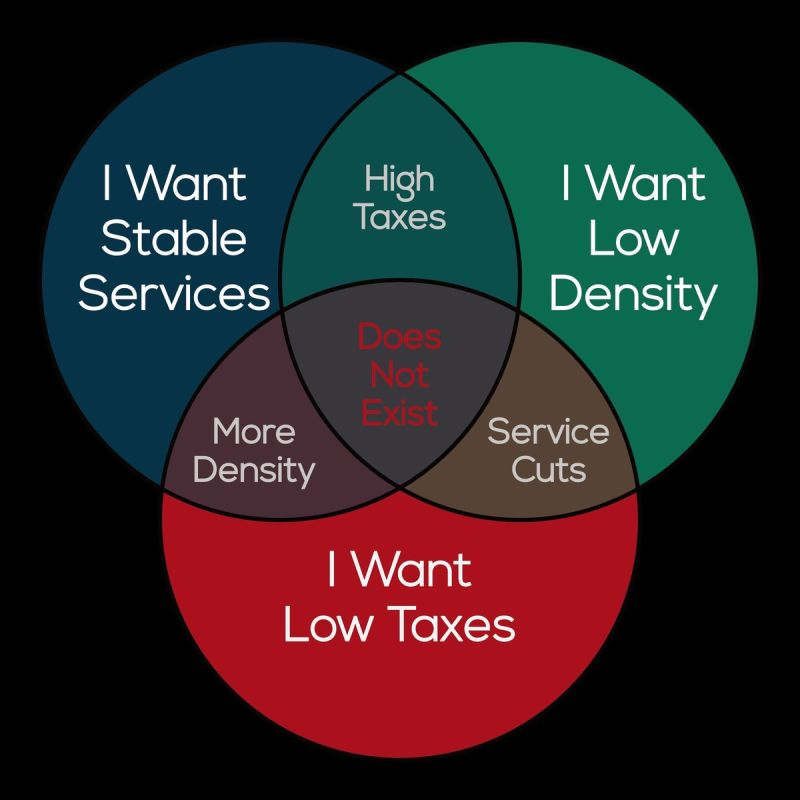
This post addresses a strange and frustrating dynamic in WA state politics: the state legislature, in addition to providing zero dollars annually for public transit subsidies for King County Metro, routinely denies Seattle/King County the ability to tax itself for transit projects desperately wanted and needed by voters. King County Metro, the largest and busiest bus-only transit agency in the country, is facing a devastating 17% service cut because it has no stable funding source, and instead of focusing on a way to stably fund Metro that voters support, they must first find a way to fund the agency in a way that state legislatures will let them. The latter is a much tougher sell than the former. Meanwhile, Clark county voters and politicians have consistently opposed extending Portland’s light rail system to Vancouver on principle, whether they have to pay for it or not. But the legislature is currently proposing to pour a ton of money into a giant (ill-advised and unnecessary) new Columbia river crossing project and fight for federal grants for it, only if it includes, against local wishes, light rail. Now, assuming the project goes forward (and there are reasons to think it shouldn’t), including light rail is the right policy on the merits, but the question remains, why is the legislature deny both King and Clark county what they want here? In comments, the best explanation I’ve seen so far:

They need Seattle’s votes to pass any tax increase statewide. So if Seattle can just go off and do our own thing, that doesn’t work for people outside the city who can’t get statewide approval for transportation packages without us.

If (Seattle/KC) had broad self-taxation authority, we could effectively secede from the state by taxing ourselves for the services we need while blocking all tax initiatives that would benefit the rest of the state.

This seems so obvious I feel silly for not thinking of it myself. There’s probably something about this phenomenon in the Federalism literature, but it’s probably not a wise use of my time to go  track it down. I’m no game theorist, but if this understanding of the dynamic of state politics is accurate, pro-transit Seattle voters should perhaps be a bit more reluctant to vote for roads+transit packages that are mostly regional, with a few crumbs for Seattle, even if they deem them worthwhile packages in the aggregate.

On the “pity-charity liberalism” critique

[ 136 ] April 15, 2013 | djw

It’s a robust internet tradition that the a significant portion of the comments in every post that responds to Matthew Yglesias, or even mentions him in passing, must be dominated by arguments about the proper global assessment of Matthew Yglesias, and the comments on Scott’s post below are no exception. Is he an odious right-winger in drag, or just wrong about certain issues? Does his wrong position of the day stem from ignorance, privilege, limited intellectual capacity, or some combination thereof? And so on and so forth. As far as internet traditions go, this seems like a strong candidate for abandonment for a variety of reasons, one being that it’s boring, and nothing new ever gets said.  But within that tradition, we can occasionally discern some substance. From today’s comments:

The Yglesias position is what Freddie DeBoer has called “pity-charity liberalism”. It reduces the position of the middle class to that of petitioners begging crumbs from their new masters’ tables. And there is no guarantee that these crumbs will be granted. It’s morally appalling and politically unviable.

There’s something to this critique of Yglesias’s preferred model of liberal democracy, to be sure: there are good reasons to prefer various forms of direct empowerment to transfers of wealth. But this characterization of such a form of liberalism troubles me insofar as it devalues democratic accomplishments. If we were ever to get the kind of constellation of policies that Yglesias wants in his “pity-charity liberalism,” which includes generous and robust transfers of wealth, would require an impressive, committed, broad-based political movement to achieve–elites certainly won’t do it on their own. It would necessarily be the result of a lot of people working really hard to change our political system to improve the lives of poor and middle class people. That’s real, empowering work, and all that democratic agency disappears in this characterization of Yglesias’ model. Yglesias himself doesn’t talk much about that work, of course, but that’s neither here nor there in characterizing the model of liberalism he offers.

There’s also an implied presumption in this critique that there’s an alternative model that, if successful, would successfully short-circuit elites from eroding political and economics gains made by the poor and middle classes in the future. This belief, I think is a wise one to resist. There are all manner of ways in poor/middle class political and economic victories can be eroded, clawed back, and undermined; the institutions of “pity-charity liberalism” don’t stand out much in this regard. (The best defense against regression of this sort is, simply, to create programs so popular politicians are afraid to touch them. But even then, such programs can be undermined by policy drift). Such as assumption reveals a profoundly naive understanding of social and political power: the kind of guarantees implied to be available here simply aren’t.  To quote myself, from an academic paper (that I think is quite good but can’t seem to get journal editors to agree):

When considering a particular institutional arrangement, we must choose between two assumptions: Nozick’s view that “whatever arises from a just situation that follows just steps is therefore just” or Shapiro’s view that even just hierarchies and arrangements, when “left unchecked” are potentially in danger of “atrophy(ing) into systems of domination” (Robert Nozick, Anarchy, State and Utopia, p. 151; Ian Shapiro, The State of Democratic Theory, p. 4). Nozick’s view is appropriate given his disinclination to view many forms of domination as normatively problematic. But Shapiro’s assumption seems much more fitting for a theorist concerned with opposing all forms of domination, regardless of origin and cause. If we choose Shapiro’s view, even if the rules and institutional structure of a legislative and contestatory democratic regime are constructed as well as they possibly could be, they might cause—or fail to prevent—some forms of domination.

The Nozickian assumption isn’t limited to libertarianism, it lurks all over the place; for example in the seemingly endless parade of “if only we’d abandon Roe and follow my 6 step plan, abortion wouldn’t be such a hot-button political issue” nonsense Scott has to deal with, but it’s not something progressives should succumb to, in any form. Politics doesn’t end, elites are creative and sneaky SOBs, and there are no guarantees, in the long run.

Glenn Greenwald is making sense

[ 142 ] April 8, 2013 | djw

Today, on the implications of the “don’t speak ill of the (recently) dead” rule:

But the key point is this: those who admire the deceased public figure (and their politics) aren’t silent at all. They are aggressively exploiting the emotions generated by the person’s death to create hagiography. Typifying these highly dubious claims was this (appropriately diplomatic) statement from President Obama: “The world has lost one of the great champions of freedom and liberty, and America has lost a true friend.” Those gushing depictions can be incredibly consequential, as it was for the week-long tidal wave of unbroken reverence that was heaped on Ronald Reagan upon his death, an episode that to this day shapes how Americans view him and the political ideas he symbolized. Demanding that no criticisms be voiced to counter that hagiography is to enable false history and a propagandistic whitewashing of bad acts, distortions that become quickly ossified and then endure by virtue of no opposition and the powerful emotions created by death. When a political leader dies, it is irresponsible in the extreme to demand that only praise be permitted but not criticisms.

To quibble: I don’t believe I’d describe Obama’s unfortunate linguistic choices as “incredibly consequential,” which seems like a bit of an overstatement, although I certainly wish the he’d gone a more generic direction with his statement today. I’m open to arguments for the appropriateness of a weaker version of the rule: a recent death is perhaps a time for heightened caution about how you speak ill of the dead; perhaps taking extra care to avoid unfair or needlessly personal attacks. The larger point, though, is clearly correct: the “don’t speak ill” rule is wielded as a tool to create a zone of protection around a particular rhetorical tool. No thanks.

On “anonymity”

[ 77 ] March 7, 2013 | djw

A familiar, but frustrating, observation was posted by cpinva in the thread below:

one comment: there is no such thing as “anonymity” on the internet. never has been, never will be. if someone really, really, really wants to find out who you are, they can. just as you can never “delete” a photo off the net, you ultimately can’t hide on the net either. your IP address can be found. depending on the skill level of the searcher, it might be found quickly or take a bit of time, but found it will be.

There’s an element of truth to this, but it’s highly misleading. Anonymity is, and always is, a social norm. There is no plausible context in which anonymity exists without social norms that support the respect of it. There is nothing unique or unusual about internet anonymity in this regard. The expression here suggests that any attempt to promote or maintain a norm of respecting anonymity on the internet is pointless, because it’s not capable of being technologically guaranteed. But again: the lesson here wouldn’t be to give up on anonymity on the internet, but to give up on anonymity in any social context in which its valued, for any reason, because of the possibility of breach.

In the real world of the internet, of course, anonymity is alive and well. Millions of people participate in it as a social practice, and a vanishingly small number of them have their anonymity breached. The norm is reasonably well supported most of the time. Norms retain value when they’re generally honored; no norm is universally respected in all cases but that doesn’t vitiate their value. That’s why Leiter’s behavior should be interpreted as a threat to anyone who values this norm, and why it’s important to push back against this kind of behavior. Norms retain their value and power when there are costs for violating them; costs Leiter has so far successfully avoided.

….cpinva notes below that (s)he meant the comment as one of prudence, rather than complacency. Duly noted; glad to hear it.

Innovations in carbon footprint math

[ 115 ] March 3, 2013 | djw

So “moronic state legislator of the day” is a cheap and easy excuse for a post, but this is a new-to-me innovation in the increasingly fantastical world of Republican Science. In Washington, an atrocious omnibus transportation bill has been proposed, and one of the trivial but dumb provisions is a bicycle tax to pay contribute to the transportation budget. (See Ben Scheindelman here).

A Washington bike shop owner expresses his understandable concern about this provision, noting that (in addition to the harm to Washington businesses selling bikes) this is a poor idea because it disincentivizes an environmentally friendly form of transportation.

Bike Tax supporter Ed Orcutt (R-Kalama) explains why this assumption is not accurate:

Also, you claim that it is environmentally friendly to ride a bike. But if I am not mistaken, a cyclists has an increased heart rate and respiration. That means that the act of riding a bike results in greater emissions of carbon dioxide from the rider.  Since CO2 is deemed to be a greenhouse gas and a pollutant, bicyclists are actually polluting when they ride.

Kohen on Yahoo’s Authoritarian turn

[ 78 ] February 24, 2013 | djw

Ari Kohen has an excellent post today discussing Yahoo CEO Marissa Mayer’s new policy prohibiting working from home:

I don’t even think about this issue from the perspective of someone who is devoted to family-friendly or feminist arguments (though these are not minor considerations by any means); for me, this is all about flexibility and productivity.

There are certainly some people who benefit from the traditional work environment and there are undoubtedly jobs where “being together” is important. But there are just as certainly some people who do faster and better work when they are in a different environment.

In my own case, there are some times when it’s absolutely critical that I’m physically present at work — either in the classroom, in my office, in a meeting. But there are other times when I benefit a great deal from being able to make use of technology and forward-thinking colleagues to work from home and participate in group work.

As an (obviously idiosyncratic) example (because my job is admittedly not a traditional office job): I’m currently involved in several collaborative research projects with other faculty members and with students. Occasionally, if our schedules allow, we’ll meet in person. More often, though, we’ll meet together on Google+ and share documents via Dropbox. It’s certainly nice to sit down together, but it’s absolutely false that doing so somehow produces better or faster work than meeting remotely.

Read the whole thing, etc. In addition to the obvious benefits for feminism and families, I would add the ecological benefits; driving is easily the most ecologically harmful activity most of us do in our day to day lives, and cutting down on commuting is one of the most obvious ways to reduce one’s environmental footprint. Kohen’s experience isn’t idiosyncratic; there’s evidence (follow the links in the second link) that flexible work arrangements and productivity gains go together. My own experience is a bit different; I don’t always find I’m more productive at home. I am occasionally prone to procrastination and time-wasting, and I often find the best way to address this problem is a change of scenery–from home to work or work to home or either to a coffee shop or the library. (Since I commute exclusively by bicycle, I suspect the productivity boost from a change of scenery may actually be a result of the 15-20 minutes of moderate exercise I get from changing location). But whatever: people respond differently to different environments distractions, the notion that taking away people’s ability to know an manage their own distractions is likely to improve productivity is transparently silly.

It’s difficult for me to interpret Yahoo’s policy shift (and resistance to workplace flexibility more broadly) as anything other than an example of the irrational authoritarian mindset (despite assurances from our libertarian friends that such a thing is logically impossible) many employers and managers implicitly adopt: the fear that someone somewhere might be getting away with something, and that surrendering any control is a loss in this battle. And having spent my life working mostly in the university setting, I see a distinct class element to this. At most universities, faculty are presumed to have maximum flexibility: aside from classes, they are mostly free to set their own schedule, declare multiple days of the week as off limits for meetings, and so on. Virtually all non-academic staff, however, are expected to do adhere to a something approximating a 9-5 schedule. This is often irrational, of course. I have a friend who has a complex and pretty high level administrative job at a university. As positions have been cut around her, she’s absorbed more duties and responsibilities, and her day-to-day tasks often overwhelm her ability to accomplish crucial long-term tasks that require uninterrupted concentration for several hours. And while according to the ideology that prevails in the university setting, the following admission is a sort of heresy: I’m confident her job is more important and quite a bit harder than mine. She’s allowed, informally, to work from home 2 days a month, a highly irregular arrangement that makes her boss nervious, and she rarely manages to get both of them in practice. On the days she actually does work from home, she’s vastly more productive than she could ever be at work, because she’s able to do the tasks her office environment render impossible (and I say this without considering the stress/time/resources saved by not commuting). As a member of the faculty class, I can take 2-3 days a week working from home if I wish, without seeking anyone’s permission, but it’s actually less important for my productivity to do that than it is for hers. As a member of the faculty class, I could declare a long block of time my “writing time”, close my office door, and for the most part not be bothered. But her boss is reluctant to give her the work from home time she needs to do her job, and HR is reluctant to craft policies that incentivize partial work from home arrangements for staff, despite the obvious and significant benefits, (in addition to the usual ones, this campus has a massive parking shortage) because at bottom the working assumption is there are employees the university is meant to control, and employees the university is meant to support, and she falls in the former group.

Donald Richie, 1924-2013

[ 7 ] February 20, 2013 | djw

RIP.

Richie was as valuable a guide to classical Japanese film as one could reasonably hope to have. His taste becomes increasingly cranky as we move closer to the present, as his critical generosity seems to diminish and his frustrations grow over time (notable exception, for understandable reasons: Koreeda, whom he rightly reveres). But for anything pre-1975ish, Richie is exceptionally valuable. My understanding is that he played a considerable role in getting Japanese films out to the world as well. I have some differences with his global interpretation of Ozu, but the book is fantastic; excellent essays not just on Ozu’s individual films but on his technique and working habits, is a fascinating read. (His account of Ozu’s script writing process is fascinating: take collaborator up to his remote mountain home, stay there, drinking heavily, until its done. He kept a meticulous journal tracking a) progress on script and b) alcohol consumed. The entry at the end of the Tokyo Story script writing: “Finished. 103 days, 43 bottles of Sake.”) 100 Years of Japanese Film is quite valuable (although the DVD guide is happily out of date). I’ve never seen any of his own films, which I am made aware of only through Wikipedia. In fact, I’ve only ever known Richie through his film writings, so I’m learning a great deal about him from his obituaries.

2009 interview on Japanese directors here, with his thoughts and insights on Kurosawa’s decline, and the Kurowawa/Mifune falling out, amongst other things.

Take the bribe

[ 42 ] February 13, 2013 | djw

I’m perhaps a bit less sanguine than Andrew Smith about the issues underlying Vulcan’s offer to Seattle described here:

The Seattle City Council has quietly shelved a proposal that would let Vulcan, Paul Allen’s real-estate firm, build a trio of 24-story towers near Lake Union if it gave the city a chunk of land to use for affordable housing and social services.

Richard Conlin, who chairs the council’s South Lake Union Committee, said the proposal known as Block 59 is not a priority for other council members and none of them wanted to advance the specific proposal made by Mayor Mike McGinn late last year.

That pitch was separate from the mayor’s less-controversial zoning plan, which would allow taller buildings, some up to 40 stories, in the fast-growing South Lake Union area.

As a general rule, corporations offering bribes in exchange for exemptions from the law is pretty problematic. In this case, though, not only is the bribe of substantial public value, the exception of the corporation is asking for is also clearly in the public interest. SLU is a neighborhood close to the urban core with considerable and growing demand for commercial and residential space (amazon.com’s main campus is nearby), and 65 feet is an absurdly low limit. What makes this decision even more absurd is that Seattle recently built an expensive, underused streetcar connecting SLU to (almost) the downtown core. Seattle’s failure to embrace transit-oriented development, even when bribed to do so by a corporate entity to whom they pretty much never say “no,” continues to be maddeningly counterproductive.

The war on drinkable beer

[ 159 ] February 11, 2013 | djw

Elizabeth Flock at US News has a pretty good piece on the issues at stake in the Justice Department’s lawsuit against AB-Inbev last month. One omitted detail that seems important–AB-Inbev has been able to ‘lead’ MillerCoors on price changes, while Grupo Modelo has been stubbornly independent. (The Justice Department may also be an inadvertent beneficiary of the Republican Party’s war on functional government.) The lawsuit has already lead to access to chilling, rage-inducing internal memos, such as “We must slow the volume trend of High End Segment and cannot let the industry transform.”

As Tom Philpott and Tim Heffernan reported a few months ago, a key to any such strategy is distribution. Flock:

Both Anheuser-Busch InBev and MillerCoors employ “category space analysts,” whose job is to visit a store like 7-Eleven and consult them on the optimal placements of beer on the shelves.

“They are doing the sets, they [say to a store]: ‘We can do that for you,’” says Koch. “And then they can take my beer from eye level to the top shelf, which drops my sales rate in half.”

With thousands of small breweries in the works, beer buyers and brewers say the battle for shelf space may only get worse.

Koch says he has also seen Samuel Adams beer pushed out of airports and sports venues—two places where consumers do a lot of sampling. “We work very hard to get our beer into a sports venue, and then when the big brewer realizes we got in there… they buy out the bowl, and then we’re gone.”

Despite the theoretical independence of the three ‘tiers’–production, distribution, retail–AB-Inbev and MillerCoors own their own distribution companies. They have their own “crafty” brands (Leinenkugel, Blue Moon, Shock-top) that they’ll push to replace shelf space devoted to the craft market with these brands. In places like Seattle and Portland, where Craft beers have broken through and have considerable market share (roughly 25% and 30%, respectively) these strategies won’t work, but in smaller markets, where craft beer has room for growth, these strategies could be devastating. The story of craft beer in the last 35 years has been a success story–one of impressive growth, even as the industry behemoths have consolidated and worked to prevent or co-opt changes in the industry. But there’s no guarantee the happy story will continue. This lawsuit is a positive sign, but liberalizing distribution rules, which a few states have done, could really help as well.


Page 1 of 21123451020...Last »
  • Switch to our mobile site