This Day in Labor History
On December 30, 1970, a coal mine exploded on Hurricane Creek, near Hyden, Kentucky. Thirty-eight miners died that day, yet another example of the terrible safety conditions of coal mining,.
On December 21, 1919, the anarchist Emma Goldman was deported from the United States to the Soviet Union as part of the larger crackdown against radicals under the Alien Act.
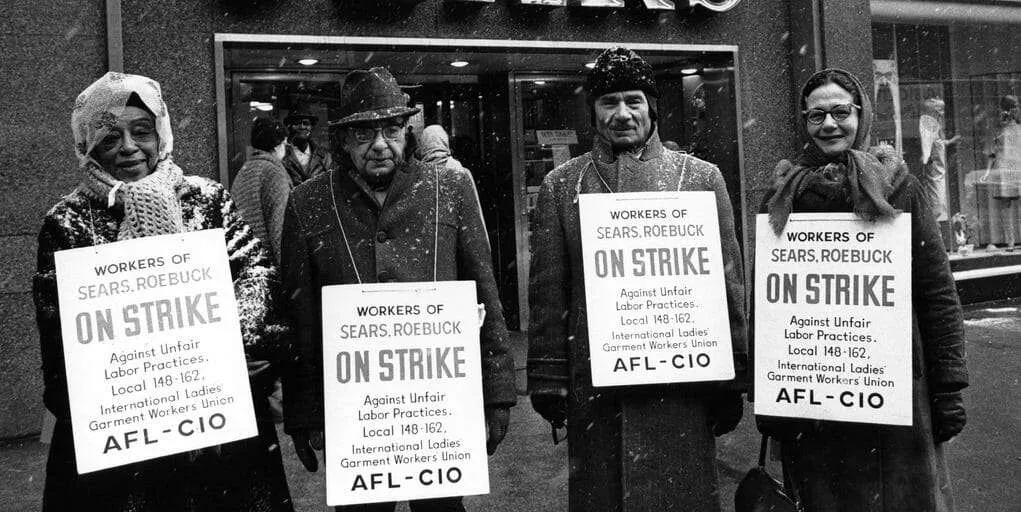
On November 27, 1937, the International Ladies Garment Workers Union (ILGWU) debuted its play "Pins and Needles," which would become the longest running musical of the 1930s. This cultural form.
On November 17, 1968, the New York State Education Commissioner reasserted control over the Ocean Hill-Brownsville school district in Brooklyn, ending the strike by teachers that started when African-American activists.
On November 7, 1861, the U.S. Army occupied the South Carolina sea islands. Suddenly having to deal with the existence of thousands of slaves with no masters, the military engaged.
On October 31, 1978, President Jimmy Carter signed the Pregnancy Discrimination Act. An amendment to Title VII of the 1964 Civil Rights Act, the new law stated the pregnant workers.
On October 10, 1933, thirty ranchers surrounded a group of agricultural strikers in Pixley, California. They opened fire and killed two. The massacre at Pixley culminated the farm strike that.
On September 27, 2002, 29 ports on the West Coast closed when the Pacific Maritime Association, a industry group of shippers, decided to lock out their workers affiliated with the.