
The LGM Village Green Cultural Preservation Society
 By
By 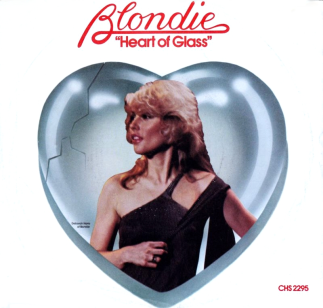
This is a follow-up to my previous post, inspired by the following transaction this morning. I was buying my wife a cup of coffee at our favorite hipster coffee shop (despite this intro this is a true story) and the barista, who I think is the daughter of the owner, must have been around 19, and Blondie’s song “Heart of Glass” was playing on the LCD sound system. (Surreal side point: There was a super racist idiot from Downriver — Michigan residents will recognize how geography is destiny here — on my Michigan football board who used to insist that Rapture was the first real rap song. I think he was serious, but he and all the other Trumpers have long since been driven away).
I toyed for a moment with the idea of asking her if she knew this song at all, but decided not to impose my ethnographic obsessions on her, so I’m imposing them on you instead.
In point of fact I was 19 when Heart of Glass was released (and was a pretty big hit) in 1979, which means that, chronologically speaking, a song with the same positionality to me as Heart of Glass has to this barista would have been released in 1932.
This is a banal observation, but I think the odds that any random 19 year old in the United States in 1979 could have identified literally ANY popular song released in 1932 can be safely calculated as zero. This is partially an artifact of technology: there were essentially no radio stations playing music from the 1930s, while popular records from that era were very much speciality items, and of course No YouTube etc etc.
It’s also very much an artifact of the demographics of the baby boom. There were and are so many of us, and we may — I’m speculating here — be particularly prone to the illusion that that which was long ago and far away was so much better than it is today, although this seems very much like a universal fallacy.
The moral of this story, the moral of this song, is that the ephemeral nature of culture is itself very culturally dependent on many factors, which is why you can hear Alison at the grocery store and Heart of Glass at the hipster coffee shop, among many other things.
. . . Music professor Dmitri Tymoczko sent me this very interesting comment about all this, which introduced me to a concept of musical “common practice” that I hadn’t heard of before, but makes a lot of sense to my amateur ear:
Musically, there is something really interesting going on: the parameters of contemporary popular music get set in about 1965 or so, and then don’t really change much afterwards. Basically Bob Dylan’s beat-poet surrealism, coupled with the Beatles’ modal harmony, coupled with drums-bass-guitar-(maybe keyboard)-vocals instrumentation. Since then you have various stylistic changes (punk, postpunk, rap, electronica). But the underlying language is pretty similar under the hood: songs mostly 2-5 minutes long, mostly verse-chorus-bridge arrangements, same harmonic and melodic language (broadly speaking). There’s variation, and people who break the mold, but it is recognizable as the same musical species.
Going back earlier, you have the start of modern, recorded popular music in 1920 or so. (Before that, popular music is notated and continuous with classical music.) Then there’s a fast-changing series of styles — early jazz, swing, bebop, rock and roll, all pretty different from each other. For me the big shift is around 1960, when both jazz and rock-and-roll catch up with the modal harmony that appeared in classical music around 1900; I think that harmonic shift is a big part of what distinguishes “rock and roll” from “rock.”
In music history there is a notion of “common practice.” From Corelli (1680) to Brahms (1880) there is a pretty recognizable similarity of language, especially when compared to the much more tumultuous periods before and after. Historians sometimes call the Corelli-to-Brahms period the “common practice period.” Everyone in 1880 knew Beethoven’s music from 1810. We are in a common practice period now, and Heart of Glass is IMO not that that different from the music people are making today.