
Solar Fields and Ecological Diversity
 By
By 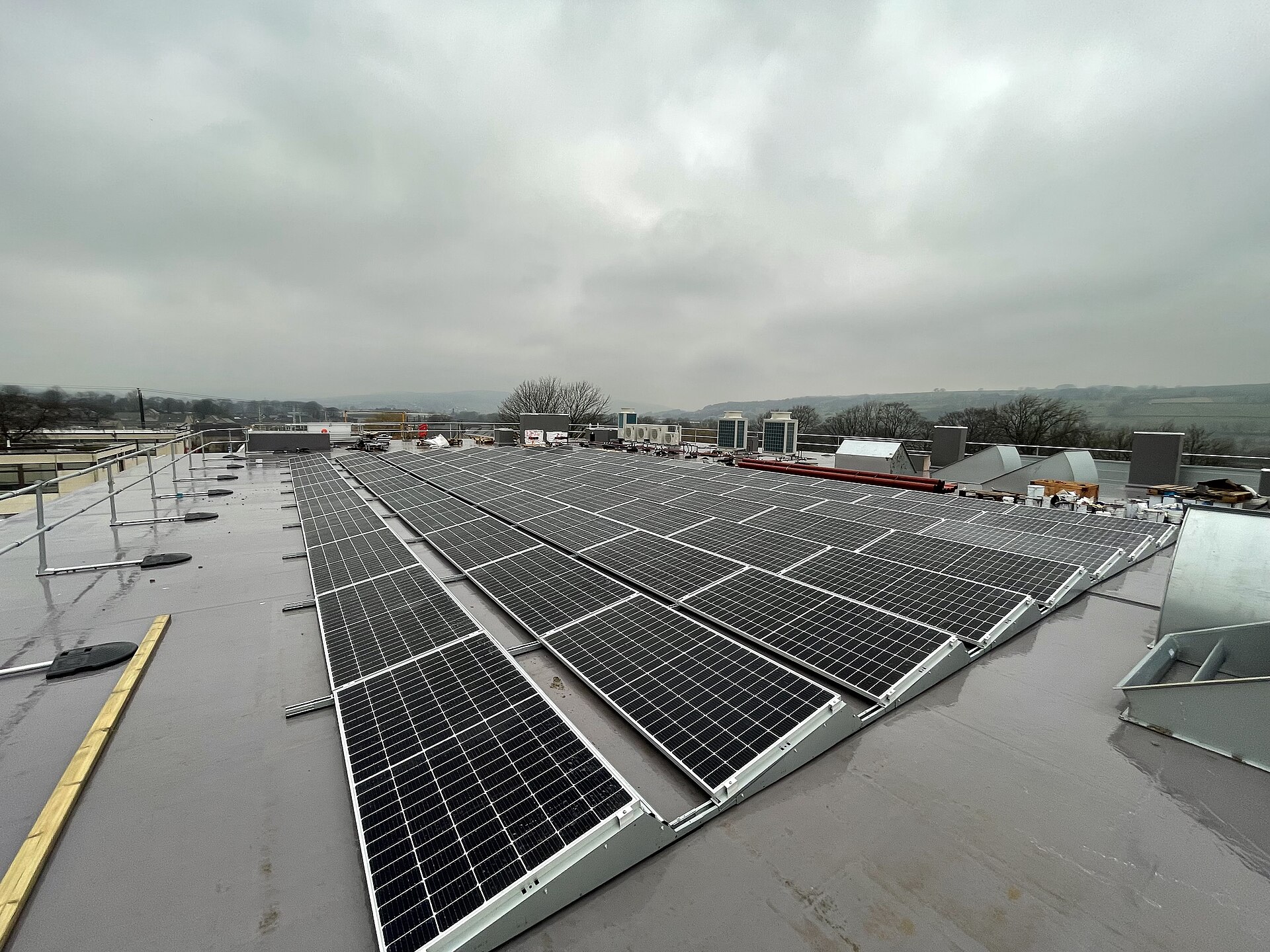
This story is a couple of years old, but for a Sunday afternoon, it’s worth a talk. One thing that people have worried about with big-time solar fields is what it would to an area’s ecology. I mean, the problem with them is that if we aren’t going to mandate them on every ceiling (which a better society would do), the production has to go somewhere and that is going to be land not already with buildings. I’m not saying that’s not worth it–obviously it has to happen. But you know, to see a lot of forest cut down for solar panels isn’t super great either. But at least this evidence demonstrates that solar panels can be good for insect communities, for which almost nothing is good for in this era of climate change and human domination of the globe.
Bumblebees buzz from flower to flower, stopping for a moment under a clear blue Minnesota sky. Birds chirp, and tall grasses blow in the breeze. This isn’t a scene from a pristine nature preserve or national park. It is nestled between photovoltaic (PV) solar arrays on rehabilitated farmland.
Researchers at the U.S. Department of Energy’s (DOE) Argonne National Laboratory and National Renewable Energy Laboratory wanted to understand the ecological value of PV solar energy sites planted with native grasses and wildflowers. They examined how vegetation would establish and how insect communities would respond to the newly established habitat. The five-year field study looked at two solar sites in southern Minnesota operated by Enel Green Power North America. Both sites were built on retired agricultural land.
…
Even more strategies can be added to this winning combination to support insect conservation. Agrivoltaics is the combination of solar energy production with agricultural and vegetation management practices. One type of agrivoltaics focuses on the establishment of habitat for insect pollinators and other wildlife that can provide important ecosystem services, such as pollination. Pairing solar energy facilities on previously disturbed lands with habitat enhancement sounds like a logical win-win strategy to address energy and biodiversity challenges. To date, however, there has been little field data available to document the feasibility and the ecological benefits of this novel land use approach.
I have nothing to offer except to say, OK, this is interesting.