
This Day in Labor History: May 1, 2010
 By
By 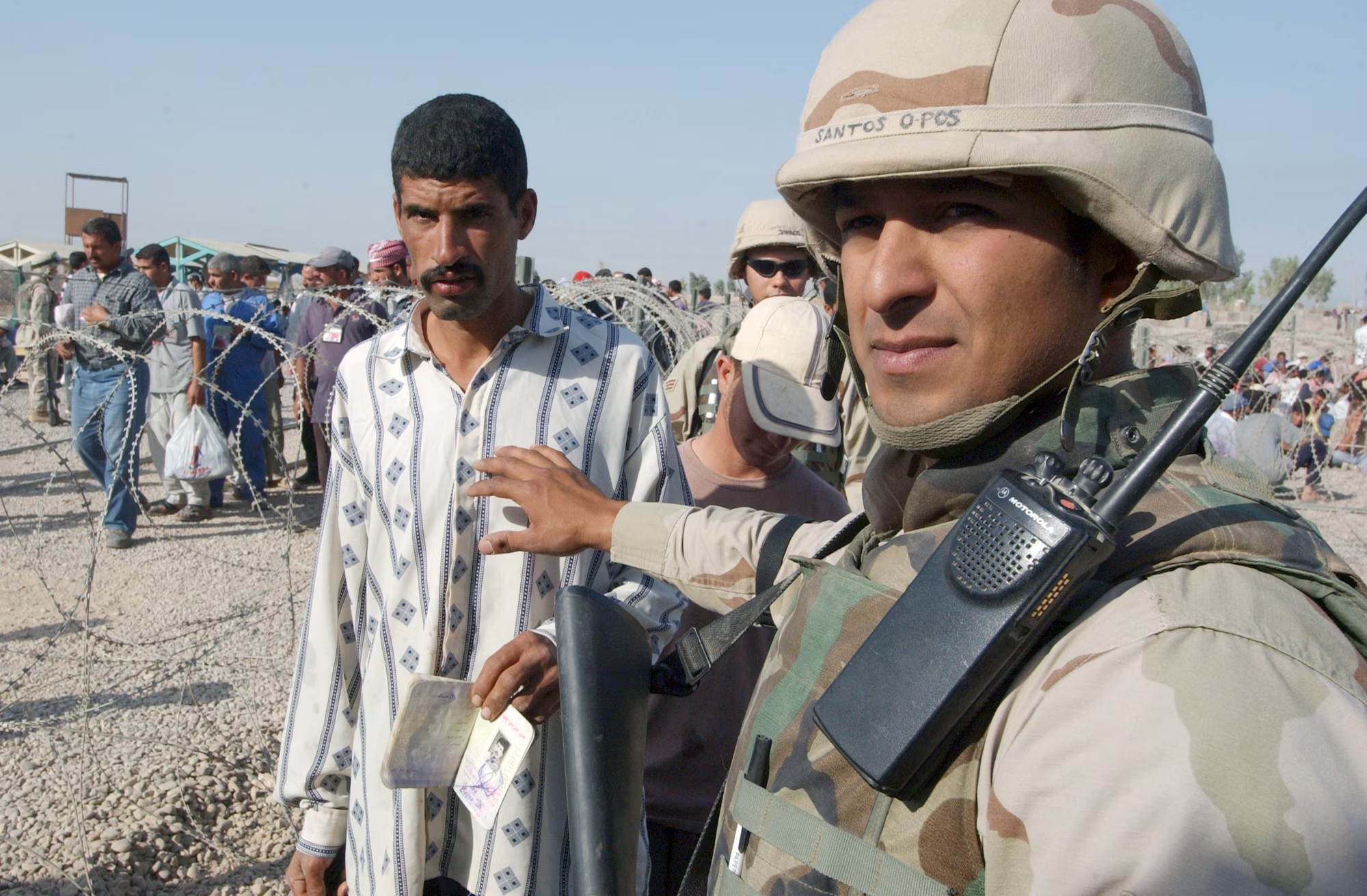
On May 1, 2010, a group of 1,000 subcontractors from India and Nepal laboring in Iraq working for the U.S. military occupation went on a violent rampage against their terrible living conditions, coincidentally using the May Day holiday to highlight how poorly they were treated. This is also a way to understand how the modern military uses foreign labor. We rarely think of this except in issues of, say, translators in Afghanistan trying to escape the Taliban, or things like this. But in fact, the U.S. military is completely reliant on foreign labor for its overseas presence.
At the time of this action, there were about 70,000 people employed by the Pentagon to labor in American military encampments in war zones, mostly in the Middle East. They aren’t just locals either. Fiji, for example, is a major draw for these workers. They are the cooks. They clean. They work the fast food joints on military basis. They are construction workers. They drive trucks. They come from the Philippines and Bosnia and Kenya and India. They are employed through contractors. Most of the time when we think about contractors in foreign wars, we are thinking about military contractors. But they only make up about 16 percent of the contractors used. The rest go to the grunt work of the military to make soldiers’ lives comfortable, handle logistics, and do things the military doesn’t want to do itself. Why waste soldier labor on cooking and cleaning toilets when you can hire someone from Bangladesh instead? That’s not an unreasonable line of thought.
But the working conditions in these facilities are not great and neither are the living quarters. Subcontracting means the profit is generated by squeezing labor and when you are recruited workers from impoverished countries, that’s already your stated goal. It did not take long for worker discontent to rise. The first strikes began in northern Iraq bases in 2004. Usually these were started by Filipinos. They were usually over pay and they often won some gains. The labor recruiters had openly lied to the workers, promising one pay rate that the workers would find out is a total lie upon arriving to the base. Moreover, they discovered that Turkish workers were getting paid more for the same work, sometimes up to twice as much.
Filipino workers later reported that Filipino-American soldiers would talk to them in Tagalog and tell them how they were getting screwed. Many early reports of labor contractor anger credit individual soldiers for telling them about what was going on and for sometimes helping them in their problems. This was not on the institutional level, but it could make a difference. KBR was the umbrella above most of these subcontracted bases and when it found out about the pay differentials, managers did seek to solve at least some of these problems. These short strikes empowered Filipinos to engage in more strikes over the next few years. This was mostly in food service as well, so not across the entire camps.
The response from the company more long-term was to recruit from more countries to divide the workforce, even if the lack of communication ability could lead to lower efficiency. Given that striking or other workplace actions required a lot of communication, what happened was that if one group got angry enough to do something about their terrible lives, well, KBR and its empire could shift some other group over who didn’t even understand what was going on.
In 2010, a group called Prime Projects International was running a U.S, base in Baghdad. This was a subcontractor of KBR (of course). The workers finally had it and rioted. They just starting destroying things, using their fists, pieces of wood or metal, whatever they could find. Their particular issue was a lack of food. PPI was profiting by shorting the food supply. There were over 1,000 workers. The cooks ran out of food with 500 workers still needing their dinner. The workers marched to the offices, demanding more rice. Management completely blew them off. That led more workers to start yelling. Some started throwing gravel at the managers. Then they started breaking windows. They forced open the food cellars and took all the food they could carry. The riot continued until U.S. military police–of course assisted by subcontracted security guards from Uganda–put it down. They had destroyed basically the entire camp by this point.
A few weeks later, a very similar incident happened at another camp, again throwing gravel (these camps were using gravel as flooring) at employers over late wages. Another camp burned their barracks to the ground over unpaid wages.
KBR didn’t care about any of this and neither did the U.S. military. These workers were brought over to have no rights. They were simply deported after this. There were always more poor people around the globe they could not feed or pay promised wages. There were some confrontations with labor recruiters back at home, but in the end, nothing changed for the global imperialist power who lies to people around the globe. The United States is an evil, bloodthirsty nation with just enough propaganda around it to convince people around the globe that it is actually good, which lasts just about as long as soldiers or labor recruiters arrive to spread the lies. A better country would ban military contracting entirely. We are not that better country.
Over time, labor resistance became more individualized, with workers walking away from one contractor and going to another. They could play one employer off of another and act like more normal workers by simply demanding more for their labor and taking who would give it to them. This certainly wasn’t going to solve anything structural. But it’s a completely understandable option for anyone stuck in these positions. Enough jumping and the contractors’ iron grip over workers gets a lot looser. There are risks of getting sent back for doing this, but lots and lots of workers did this. And I assume they still do today where the U.S. occupies lands abroad for its imperialist aims.
I borrowed from Adam Moore’s Empire’s Labor: The Global Army that Supports U.S. Wars and Sarah Stillman’s 2011 article in The New Yorker titled “The Invisible Army” to write this post.
This is the 600th post in this series. Previous posts are archived here.