
There’s more than one way to politicize the Fed
 By
By 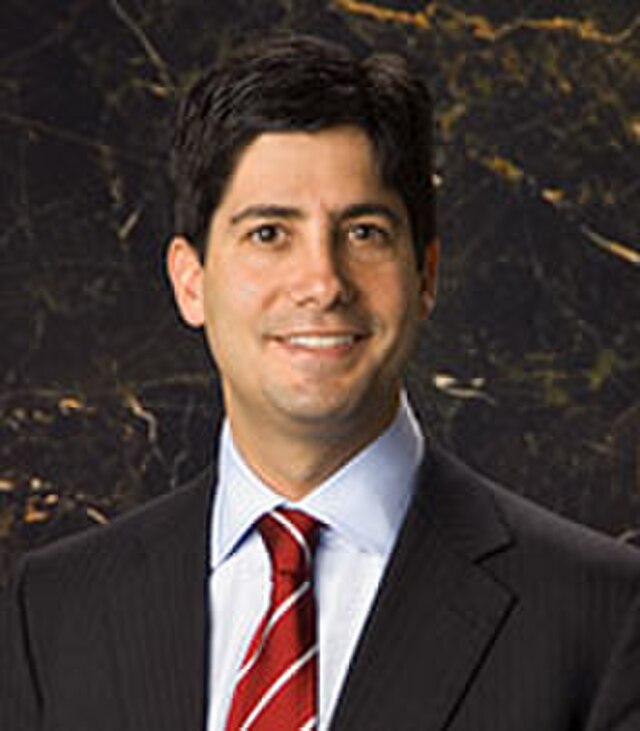
Krugman summarizes the downside risk of Kevin Warsh, who in the best case scenario will be ineffectual:
So Kevin Warsh will be the next Fed chair. The silver lining to his appointment is that he shouldn’t be able to do much damage, although with one big caveat (see below). The Fed is a republic, not a dictatorship; key decisions are made by a committee in which the chairperson has only one vote. Fed chairs can only drive policy through persuasion — and Warsh lacks the intellectual and moral credibility to be effective on that score. But God help us if we enter a crisis that requires decisive Fed leadership, the kind Fed chair Ben Bernanke showed during the financial crisis, or Jay Powell is now showing against Trump’s attacks.
Absent a crisis, my prediction is that the majority of Warsh’s colleagues will largely ignore him, albeit without expressing their contempt openly. Even a coalition among the Trump appointees to the Board of Governors – Warsh, Bowman and Miran – won’t be enough to overturn the responsible monetary policy stewardship of the other governors.
But that’s a low bar, and it may be lower than is generally appreciated. For while I don’t think Warsh will do too much damage to monetary policy, he, along with his fellow Trumper Michelle Bowman, the vice chair for financial supervision, may well eviscerate the Fed’s role as a financial regulator.
As I write this, many media reports are describing Warsh as a monetary hawk. That’s a category error. Warsh is a political animal. He calls for tight money and opposes any attempt to boost the economy when Democrats hold the White House. Like all Trumpers, he has been all for lower interest rates since November 2024.
Depressingly, some Democratic-leaning economists are stepping up to reassure us about Warsh’s qualifications. This is reminiscent of the way many economists rallied around the selection of Kevin Hassett as chair of the Council of Economic Advisers in 2017, although he was an obviously ludicrous hack. Since then Hassett has outperformed my expectations, revealing himself to be such an outrageous sycophant that even Trump realized that it would be a PR and financial disaster to nominate him as Fed chair.
“At least it’s not the Dow 36,000 guy” is how personnel decisions go for Trump 2.0.
What lies behind this contempt? Warsh’s most notable role in policy debate came in the years immediately following the global financial crisis, when he was a member of the Federal Reserve Board who argued strenuously against the Fed’s efforts to boost the economy. As I noted at the time, his arguments were confused and incoherent, but he implied (without saying so in clear language) that the Fed’s actions would be inflationary despite the depressed state of the economy.
He was completely wrong about that. Now, everyone makes bad predictions. But when you do, you’re supposed to admit your mistakes and learn from them. Warsh never did that. Instead, he kept inventing new reasons to call for higher interest rates — notably a bizarre claim that low rates were hurting business investment — as long as a Democrat was president.
The 10,000 spoon when all you need is a knife here is that if Warsh can’t influence the rest of the Board this is the best case scenario for Trump, since the alternative is heading into the midterms with rising inflation.