
The End Of Arms Control
 By
By 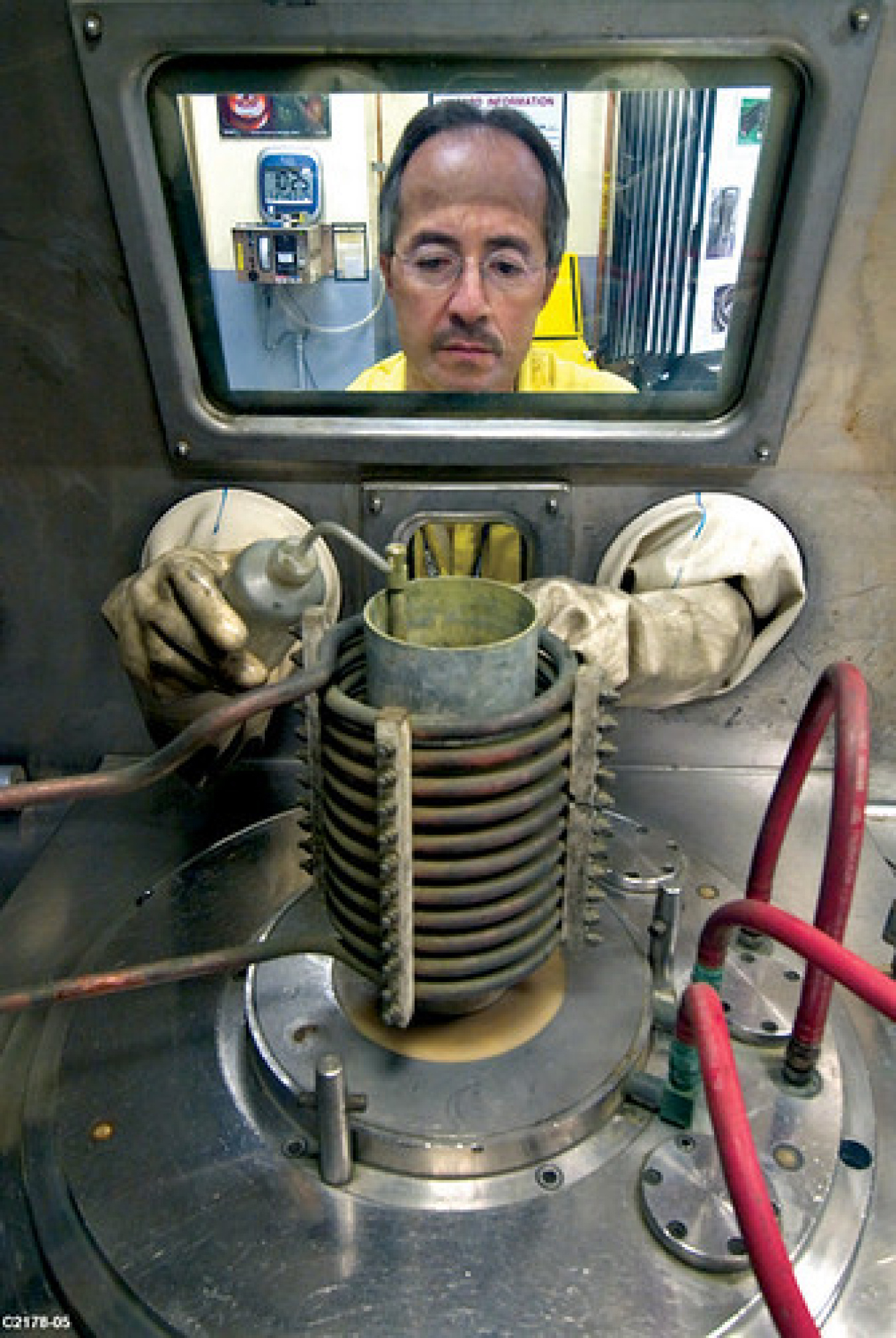
Next week, on February 5, the last of the historic nuclear arms control agreement lapses. The New START Treaty preserved the regime for a few more years, but the thinking that drove the Soviet Union and the United States to agree to limit nuclear weapons had started decaying long before.
Most arms control treaties were agreed to under Republican presidents, and they were undone under Republican presidents. The first was because Republicans were seen to be stronger on national defense, and the second was because of the burgeoning, now fully flowering, Republican hatred of treaties.
Treaties rank with the US Constitution as the law of the land. It says so in the Constitution. That means, to Republicans, that they constrain us from doing whatever we damn well please, leading to the peaceful reign of Donald the First, doing whatever he damn well pleases, this week threatening Iran.
Bill Clinton signed the Comprehensive Nuclear Test Ban Treaty, but Newt Gingrich’s Republican Congress refused to ratify it. That was a beginning. To show you the brilliance of this strategy, I present the Law of the Sea Convention, which Republicans refuse to ratify. That excludes the US from discussions about the uses and boundaries of the seas. But we’ve preserved our freedom of action, dadgum it!
But back to the nuclear treaty regime that Republicans have now completely tanked.
New START limited the deployment of nuclear weapons and their delivery vehicles.
- 700 deployed intercontinental ballistic missiles (ICBMs), deployed submarine-launched ballistic missiles (SLBMs), and deployed heavy bombers equipped for nuclear armaments;
- 1,550 nuclear warheads on deployed ICBMs, deployed SLBMs, and deployed heavy bombers equipped for nuclear armaments (each such heavy bomber is counted as one warhead toward this limit);
- 800 deployed and non-deployed ICBM launchers, SLBM launchers, and heavy bombers equipped for nuclear armaments.
(Both those links are to government websites that have not yet been “rectified” as of this writing.)
Those limits, one might think, would be enough for any nuclear war or the threat of nuclear war that is called deterrence. But there are those who want more, or perhaps simply want us not to be limited in any way. The latter is a somewhat platonic way of looking at it, putting a particular theory of freedom over the reality of nuclear war.
Both Russia and the US have retained a “just-in-case” reserve of nuclear weapons beyond the deployed limits. New START limits only those weapons that are ready to use. Others could be made available, up to about 7000 per side.
But the US weapons were all built some time ago. They go in for regular tune-ups and upgrades, but the radioactivity of the pits damages the pits themselves.
This is the place where, by convention, I must define “pit.” There are many conventional sets of words out there, dropped into articles by reporters who have no idea what they are talking about. The pit is the fissile material in a nuclear weapon that is designed to provide a fission explosion. It is usually a few kilograms of plutonium.
Plutonium is mildly radioactive, mostly emitting alpha particles. Those particles are large enough to knock atoms in the plutonium metal structure out of place. Enough of that, and the pit may no longer provide the fission kick to the bomb.
The advisory committee on such things, the JASONs, have expressed a concern about aging nuclear weapons that probably has to do with that kind of damage to the pit and other materials, but the JASON report has remained classified.
The solution to the problem is to rework the pits. Melt them down, recast and machine them. That’s not easy to do when you’re working with plutonium.
Los Alamos National Laboratory has the only experience and location to be able to rework pits. Over the past decade, the government has invested enormous sums of money to upgrade the existing plutonium facility there, which was built in the 1970s. Last year, they produced one certified pit. NNSA recently said that full production of 30 pits a year at Los Alamos will not be reached by 2030, the goal set earlier.
Savannah River DOE facility has also gotten into the game, promising to be an additional pit facility, but refurbishing or newly building a facility there will take even longer. Lawsuits against both facilities have been filed.
The bottom line is that the US cannot build a new nuclear arsenal. They could upload some of the reserve weapons.
The question, of course, is to what purpose. There are those who believe that more nuclear weapons equal more deterrence, or more varieties of ways to deliver them equal more deterrence. This is a naïve way to look at deterrence, which we now find has other problems, given the multiple holders of nuclear weapons in contrast to the simpler US versus USSR of earlier days.
If we were living in different times, I would suggest that we pursue the idea of letting nuclear weapons decay, with verification by both sides, but we are living in the times of Donald Trump and Vladimir Putin. We will not be able to consider such things until both men are gone from the scene.
My own feeling is that the danger of nuclear war is much less than what is projected in most news coverage. The situation after February 5 will not be a lot different from what it is today.
Cross-posted to Nuclear Diner