
Rare Earths In Greenland
 By
By 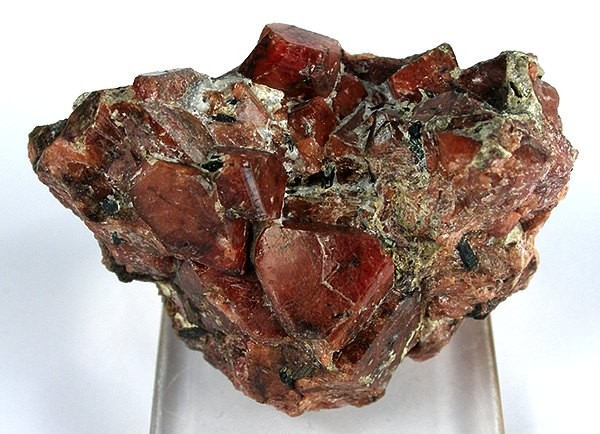
I wrote a short thread on Bluesky a week or so ago about mineral deposits, since they seem to loom so large in Donald Trump’s thinking. The Times (London) has an article that responds to many of my checkpoints from that thread, so I’ll put them side by side here. My checkpoints in italics.
Having a resource in the ground means next to nothing. Greenland is known to have two very large deposits of rare earth minerals on its southern tip – the Kvanefjeld complex and the Tanbreez deposit, which may be the second largest on earth, after the Bayan Obo deposit in China.
The resource must be mineable. This means many things. Can it be accessed by open pit mining? What is the groundwater situation? Is the land available? What is required for restoring the area after mining? Critical Minerals Corporation bought Tanbreez in 2024, so they own some of the land. Whether it’s enough is not discussed in the article.
The location must be capable of supporting a mine. That means transport must be available. The area must support people to work the mine. The deposits are close to an airport and a deepwater port. Temperatures are below freezing most of the time, so trucks must run 24 hours a day. Critical Minerals Corp announced a deal to ship half of the rare earths to Romania for processing.
The ore must be of a type that can be processed. The Tanbreez ore is reported to contain little uranium, which could mean that the tailings will not be significantly radioactive, if thorium is also missing, although thorium is usually associated with the rare earths. The ore is said to be mostly the mineral eudialyte, for which no processing has been developed.
There must be enough ore in one area for a company to make a profit. Presumably Critical Minerals believes this could be the case. But buying a property is only a small first step in developing a mine. More coring and testing must be done to evaluate the size and location of the ore body or bodies.
Mines take years to develop and longer to turn a profit. So the political situation must be stable, which is less likely if the US takes Greenland by force. The government must be able to assure agreements, and the mine companies must be convinced there will be no nationalization.
This quick comparison suggests that there is a very good chance that those Greenland deposits may not be attractive commercially. They are in the good-weather zone, in southern Greenland. Things will become more difficult for deposits further north.
Photo: Rob Lavinsky, iRocks.com – CC-BY-SA-3.0. Eudialyte Locality: Khibiny Massif, Kola Peninsula, Murmanskaja Oblast’, Northern Region, Russia (Locality at mindat.org) Size: 4.5 x 3.1 x 2.9 cm. Sharp, lustrous, partially gemmy, carmine-red crystals of eudialyte richly and aesthetically cover solid eudialyte matrix on this excellent specimen from the famed Khibiny Massif of the Kola Peninsula, Russia. The centrally located, 1.1 cm crystal has textbook crystal form. Eudialyte is a rare zirconium silicate and this is a highly representative specimen for the species and locality.

Cross-posted to Nuclear Diner