
Expensive imperialist fantasies
 By
By 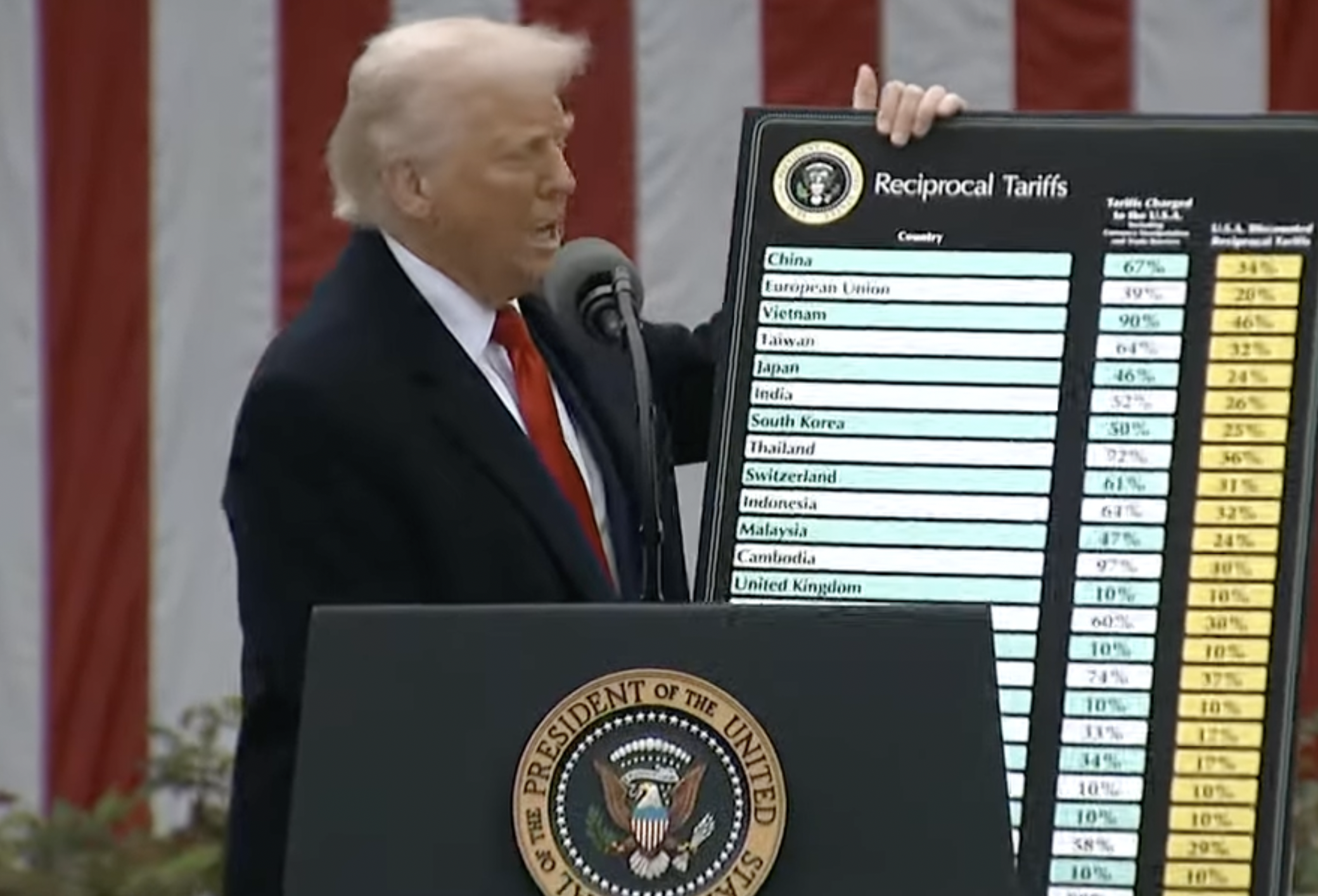
With Trump mounting another trade war over his lunatic aspirations to conquer Greenland, it’s worth reiterating that it’s American consumers (as well as businesses) who pay the price for it:
Americans, not foreigners, are bearing almost the entire cost of U.S. tariffs, according to new research that contradicts a key claim by President Trump and suggests he might have a weaker hand in a reemerging trade war with Europe.
Trump has repeatedly claimed that his historic tariffs, deployed aggressively over the past year as both a revenue-raising and foreign-policy tool, will be paid for by foreigners. Such assertions helped to reinforce the president’s bargaining power and encourage foreign governments to do deals with the U.S.
Trump’s claims have been supported by the resilience of the U.S. economy, which recorded relatively brisk growth and moderate inflation last year, even as growth in Europe and other advanced economies remained sluggish.
The new research, published Monday by the Kiel Institute for the World Economy, a well-regarded German think tank, suggests that the impact of tariffs is likely to show up over time in the form of higher U.S. consumer prices.
The findings don’t mean that the tariffs are a win for Europe—on the contrary. German exports to the U.S., which have rocketed in recent years, have contracted sharply in the past year.
The German research echoes recent reports by the Budget Lab at Yale and economists at Harvard Business School, finding that only a small fraction of the tariff costs were being borne by foreign producers.
It’s also worth noting that going to war over a mostly uninhabited island is something that almost nobody is asking for:
Three-quarters of Americans say they oppose the United States attempting to take control of Greenland, according to a new CNN poll conducted by SSRS, indicating that President Donald Trump’s push to expand America’s territory faces stiff headwinds with the public.
The survey finds just 25% of Americans favor the US attempting to take control of the Danish territory. Even the president’s partisans are about evenly divided, with 50% of Republicans and Republican-leaning independents saying they support it and 50% opposed. Democrats and Democratic-leaning independents are deeply against the move, with 94% opposed overall, including 80% who say they strongly oppose it. About 8 in 10 independents who don’t lean toward either party are also opposed.
It’s remarkable that the president that has a remarkable knack for finding 25/75 issues was being portrayed as the voice of the American Volk for much of the year, and still will be in some quarters.