
Erik Visits an American Grave, Part 2,060
 By
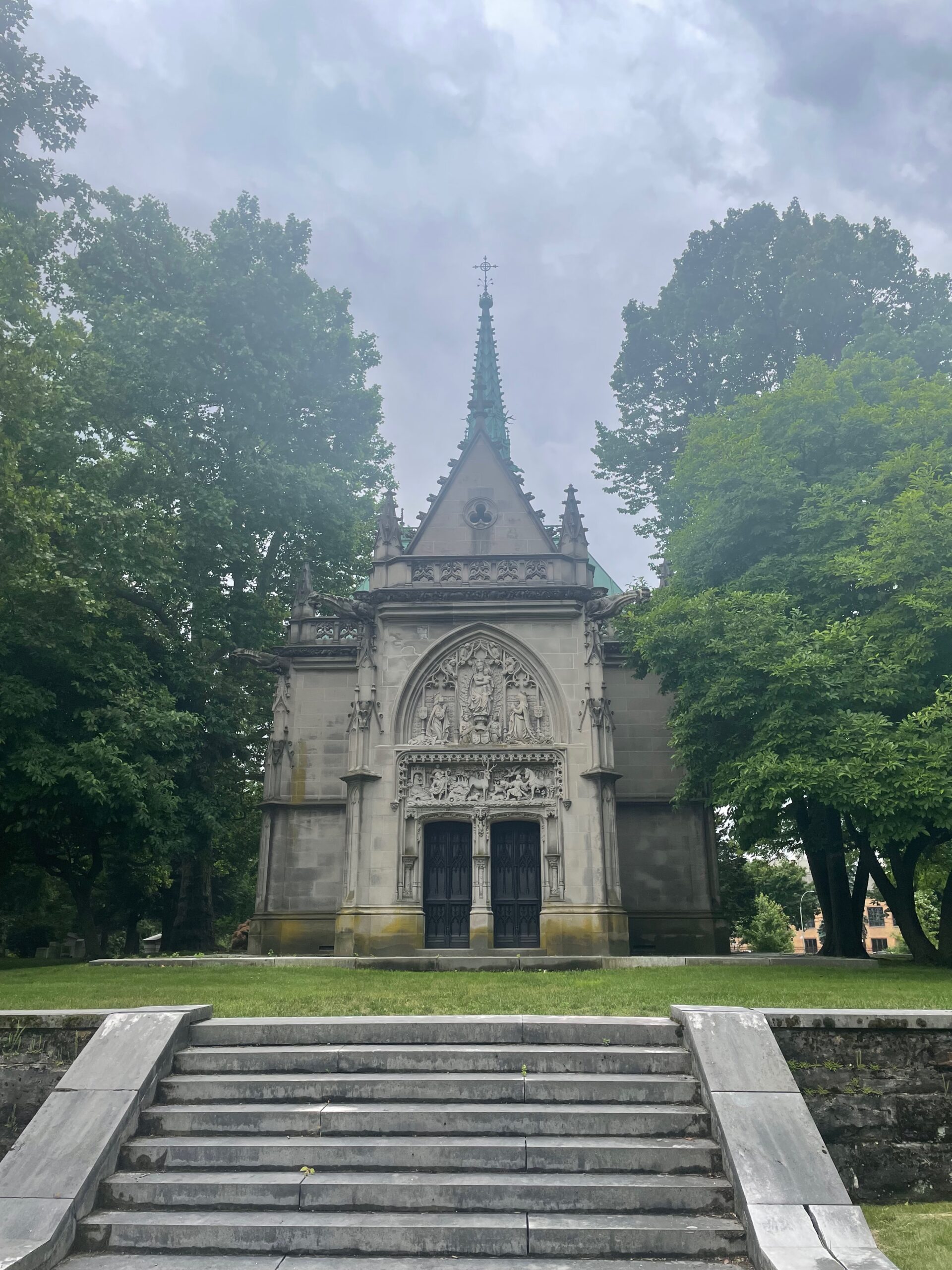
By This is the grave of Alva Belmont.
Born in 1853 in Mobile, Alabama, Alva Smith came from the white elite South, which meant massive numbers of slaves. Her family had a lot of southern politicians and merchants in it and all the money came from owning humans. The family was so wealthy and, importantly, economically diversified, so the end of the slavery didn’t have that much effect on their wealth. But like most old fortunes, many of which are still around today, the generation of the wealth came from humans, which is why we need the government to nationalize all wealth created from the slave trade and its descendants and redistribute it through a process of reparations.
Anyway, because of their slave money, Smith and her family summered in Newport, Rhode Island, went on long extended European trips, all that Gilded Age rich person stuff. In fact, they had left Mobile in 1859 for New York City anyway, not wanting to be in the sticks, but more than happy to continue making money off the enslavement of humans. Like a lot of these families, there was some postwar downward mobility though, exacerbated by lunacy spending habits. It was a family of daughters, so Alva was married off to a family that could certainly help with the income. She married William Kissam Vanderbilt, grandson of Cornelius, in 1875. By no account was there any love in this marriage. She claimed she did it for the family, others said she did it for herself, why not both?
This bad marriage did result in three children and it resulted in Alva Vanderbilt now becoming one of the queens of the Gilded Age. She was excellent at hosting parties, doing the New York scene, all that stuff that modern interpreters of the Gilded Age love to show on bad TV shows that appeal to white liberals who like fancy costumes. But this was not a happy couple at all. He cheated on her all the time. She took it for awhile. But then, in 1895, she did something that almost no society woman had ever done before–she divorced him. Divorce was super scandalous and among the rich, extra super scandalous. She immediately married one of her husband’s best friends, Oliver Belmont.
Alva Belmont would later extrapolate from her own experiences and become a major feminist. But that took awhile. Basically, she spent then next 23 years being the ultimate in elite Gilded Age women, with all that meant. In 1909 though, she decided to get involved in the growing suffrage movement. Like most people who end up in organizing, she had to be organized herself. In this case, it was Katherine Duer McKay, a good friend of Belmont’s, who started going to suffrage meetings and dragged Belmont along. It didn’t take long for Belmont to be all-in.
Belmont wasn’t content to be a random member. She was right about one thing too–the National American Women Suffrage Association was a bunch of old women stuck in the past with failed strategies. She thought them a bunch of dull fuddy-duddies. She knew the movement needed a new spark. So she more or less took over, not holding office, but funding it and giving speeches. Of course the funding is what really mattered here. She had all the money in the world and this is what she chose to spend it on. Belmont went to England and met the Pankhursts. She wasn’t quite ready to throw herself in front of horses on the race track to die, but she appreciated the militancy. So she brought some of that back from New York, began challenging politicians more directly, and made a ton of enemies within the movement, as often happens with new energy and ideas.
One reason she made enemies is that she supported Black women voting, at least in New York. As soon as I read she had enemies among southern suffragists, I assumed this was the reason and indeed, she was much better on race than many leading suffragists. She attended big meetings of Black suffragists, gave them money, opened a settlement house in Harlem that expanded that Progressive Era idea into Black communities, invited Black women to her home, and all the things that made most white suffragists sick. Of course, Belmont wasn’t perfect from our modern standards. Who is? No one. So she joined other Progressives in working to make sex work illegal, which does nothing but put women’s lives in danger.
Belmont helped Alice Paul form the National Women’s Party in 1916, including proving the house in Washington where they operated. She helped organize the picketing of the Wilson White House in 1917 that got a ton of attention and horror from more conservative minded suffragists. Then of course women got the vote thanks to the 19th Amendment. Years of work had paid off. Belmont was elected president on the NWP in 1917 and held that position until her death, but of course it was Paul who ran the show on a daily basis, especially in Belmont’s later years.
After the suffrage was won, Belmont mostly retreated back from politics. She was a rich woman after all with all the choices that wealth offered. Her daughter was living in France, so she chose to mostly be with her. She did continue her support for the Equal Rights Amendment and working with Paul, but more from a distance, thought with her significant financing of the movement, she was still critically important. I don’t know Belmont’s class politics really. Paul was a bitter anti-worker woman and because of this Eleanor Roosevelt and Frances Perkins refused to support the ERA until very late in their lives. Given that Belmont was super rich, I would not all be surprised if she basically agreed with Paul, but it wasn’t until the New Deal that Paul’s true contempt for the working class became clear and by then, Belmont was gone. But it’s safe to say that Belmont did not support protective legislation for women workers, which was the root of the civil war in the women’s movement during the 20s, since the NWP was explicitly opposed to that. However, Belmont, like many Progressives, had supported the Uprising of the 20,000 in 1909, that movement of working women. But at that time, it was about linking working women to suffrage and so the politics were different than 20 years later.
In 1932, Belmont suffered a stroke. The next year, she died, both because of that and other issues revolving around being old. She was 80 years old.
Alva Belmont is buried in Woodlawn Cemetery. The Bronx, New York. I hope it’s spacious enough for her.
If you would like this series to visit other suffrage activists, you can donate to cover the required expenses here. Lillian Feickert is in Scotch Plains, New Jersey and Paulina Davis is in Providence, Rhode Island. Previous posts in this series are archived here and here.