
Erik Visits an American Grave, Part 2,038
 By
By This is the grave of Frank Rizzo.
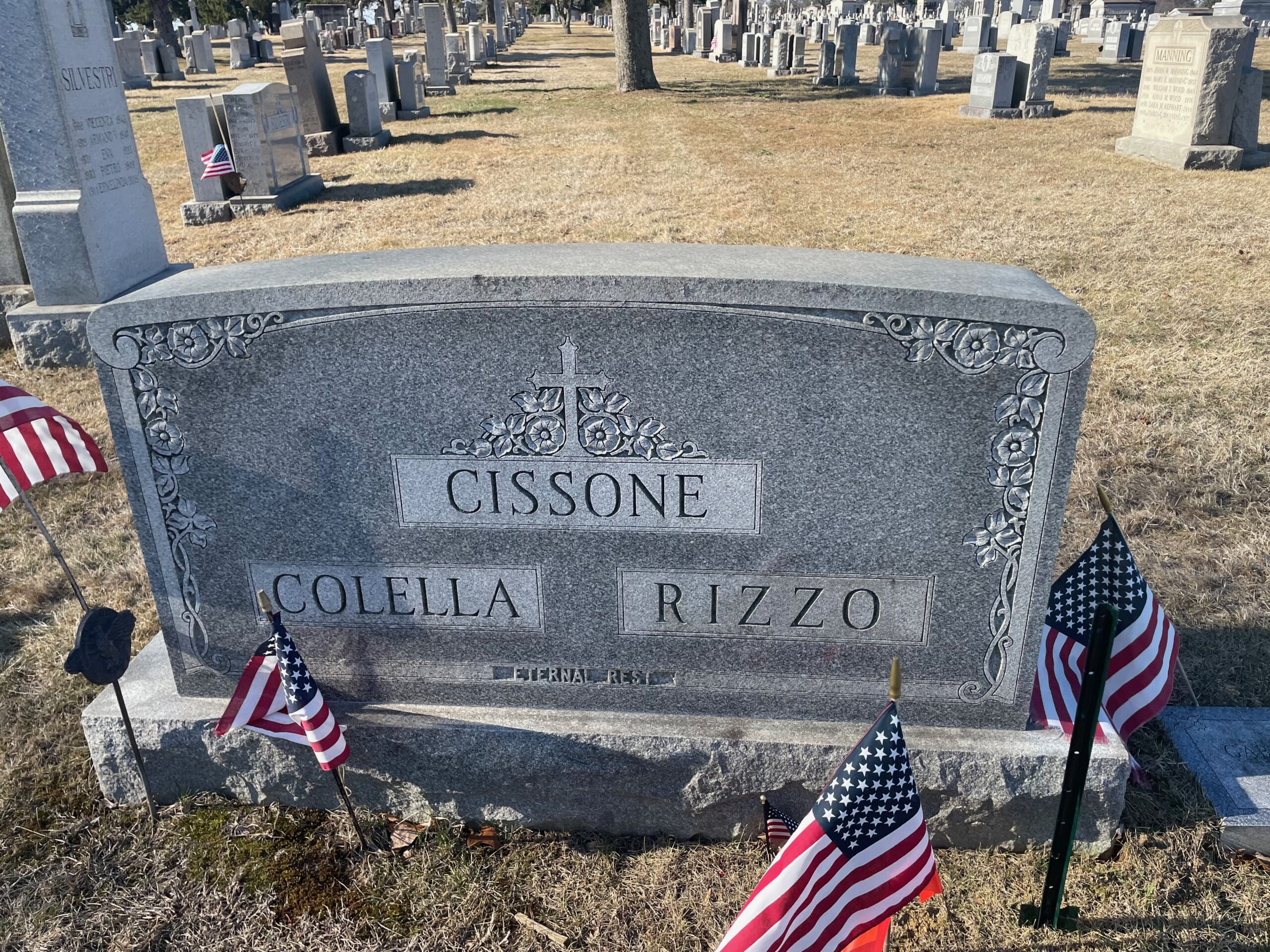
Born in 1920 in Philadelphia, no single person is more associated with that city in the second half of the twentieth century than Rizzo. His father was a cop and Frank would always love beating up some Black people with the power of the badge behind him, so he followed into that less than hallowed profession. He dropped out of high school and joined the Navy in World War II. But he was diagnosed as diabetic and so was discharged from the Navy in 1943. That’s when he joined the Philadelphia Police Department.
Rizzo rose through the ranks of the PPD and eventually became police commissioner in 1967. He was an absolute thug through all of this. He spoke brutally and he acted brutally. He gave the cops a free hand to do whatever they wanted to protestors of any kind, especially if they were Black. This was the era of white flight (can’t have our kids going to school with those people, better move to the suburbs) and so with impoverished inner cities flooded with drugs and a city with no tax base or no social services, it was war out there if you were a cop. These were animals, if you were Frank Rizzo. And Rizzo would tell his cops to treat them that way. He didn’t even hide this for the media. He openly talked in these terms. In fact, among the things Rizzo was known for during his rise in the force were his aggressive violence toward Black communities in west Philadelphia and also his love of busting up gay spaces and arrested people for homosexuality. In 1964, Rizzo commanded the response to the Columbia Avenue Uprising, one of the urban “riots” from that year, where the cops provoked a serious response from the Black community.
Now, in the early 60s, the PPD had moved to hire a lot of Black officers and were better than most other departments in the country on this. About 27 percent of new officers hired in 1967 were Black. Under Rizzo, Black hiring collapsed, down to about 7 percent of new officers in 1971, with the overall percentage of Black officers on the force declining from 21 to 17 percent in four years. Meanwhile, Rizzo responded to the rise of the Black Panthers in Philadelphia by calling in the media to show them him and his cops strip searching arrested Panthers.
Rizzo wasn’t content just being top racist cop. He wanted to be Philadelphia mayor. He was an early avatar of Trump. Other than George Wallace, Rizzo became perhaps the most famous avatar of what we can call proto-Trump politics. He was able to attract enormous support from the white working class in his mayoral run in 1971 by playing up on racism.
Rizzo would govern as mayor in the same fashion as he talked. Philadelphia was a liberal city, by and large, but could be divided by race. So the Black community in the city was able to move forward legislation around really good stuff such as public housing and school desegregation. Rizzo fought all of it, usually successfully. He promised people there would be no more public housing in their neighborhoods unless they wanted it. Of course the whites owning these homes would not want it. It was just racist NIMBYism, though he recognized that racism was always a good tactic in America. It’s not like he had to work to make Philadelphia Italians racist! It goes without saying that Rizzo opposed school busing–no issue will make white liberals unite with the right today than threatening their little special mini whites with having to go to school with the coloreds.
So of course Rizzo won that mayoral race. And as mayor, he continued to govern based on racism and his white ethnic base in Philadelphia continued to love him based on their own racism. The cops had an open season on Black Philadelphia. His hatred of public housing projects kept his racist based happy. One of the dominant issues in Philadelphia at this time was the MOVE compound, the fundamentalist Black Panther-esque commune run by John Africa that the city would later bomb in 1985. One doesn’t have to defend the weirdos in MOVE to note that Rizzo’s cops wanting to just kill them all and his orders to the police to raise hostilities, leading in 1978 to a standoff that killed a cop, was a very bad thing.
Rizzo claimed to be a Democrat and retained his party registration but openly supported Richard Nixon in 1972. He was an inveterate liar. The rest of the Philadelphia political world was furious that Rizzo would support Nixon. Peter Camiel, who was the party chairman in the city, and Rizzo hated each other. Rizzo accused Camiel of lying about something. A reporter asked Rizzo take a lie detector test over his claims. Rizzo agreed and of course he failed it. After that, he refused to do a press conference for two years. Then future mayor Wilson Goode led a lawsuit against Rizzo for the city’s refusal to hire Black people in the fire department–a department naturally led by Rizzo’s brother. This was a party at war with itself, the Black Democrats suing the old white Democrats. People started turning on Rizzo more anyway. The press most certainly didn’t love him. Reporters started investigating the racism, the police brutality, the indifference to Black lives.
Then Rizzo raised taxes. He was probably right in doing so, but this led to the anti-tax people joining with the rest of the people who hated Rizzo to launch a recall attempt. The state supreme court ruled the recall attempt unconstitutional, but Rizzo was pretty well damaged. Everyone now hated him except for the white ethnics who thought he was their hero for defending the white race.
In 1979, Rizzo wanted to run for a third term. But the city had term limits. So, in classic wannabe dictator mode, Rizzo tried to get his supporters to vote for a change to the city charter that would eliminate term limits. He told them–“Vote white.” Well….that was extreme even for Frank Rizzo. It’s not that the nation was changing that much or becoming more tolerant–nothing about the 80s would suggest greater racial liberalism–but it was moving beyond that kind of openly naked and embarrassing racism. So the charter was voted down and Rizzo could not stay in office. And maybe the city was ready to move on anyway. It had the chance to elect Rizzo again in 1983 and 1987, since he was now addicted to running for office, but he lost those elections too.
Rizzo reallly just couldn’t let it go. In 1991, he ran for mayor yet again. But this time, he died on the campaign trail. He was 70 years old.
There’s so much to say about this horrible, awful man, but we will leave it to comments.
Frank Rizzo is buried in Holy Sepulchre Cemetery, Cheltenham Township, Pennsylvania. Of course he’s buried in the suburbs.
If you would like this series to visit other American mayors, you can donate to cover the required expenses here. Carl Stokes is in Cleveland and Samuel Jones is in Toledo. Previous posts in this series are archived here and here.