
Ukraine’s Energy Strategy
 By
By 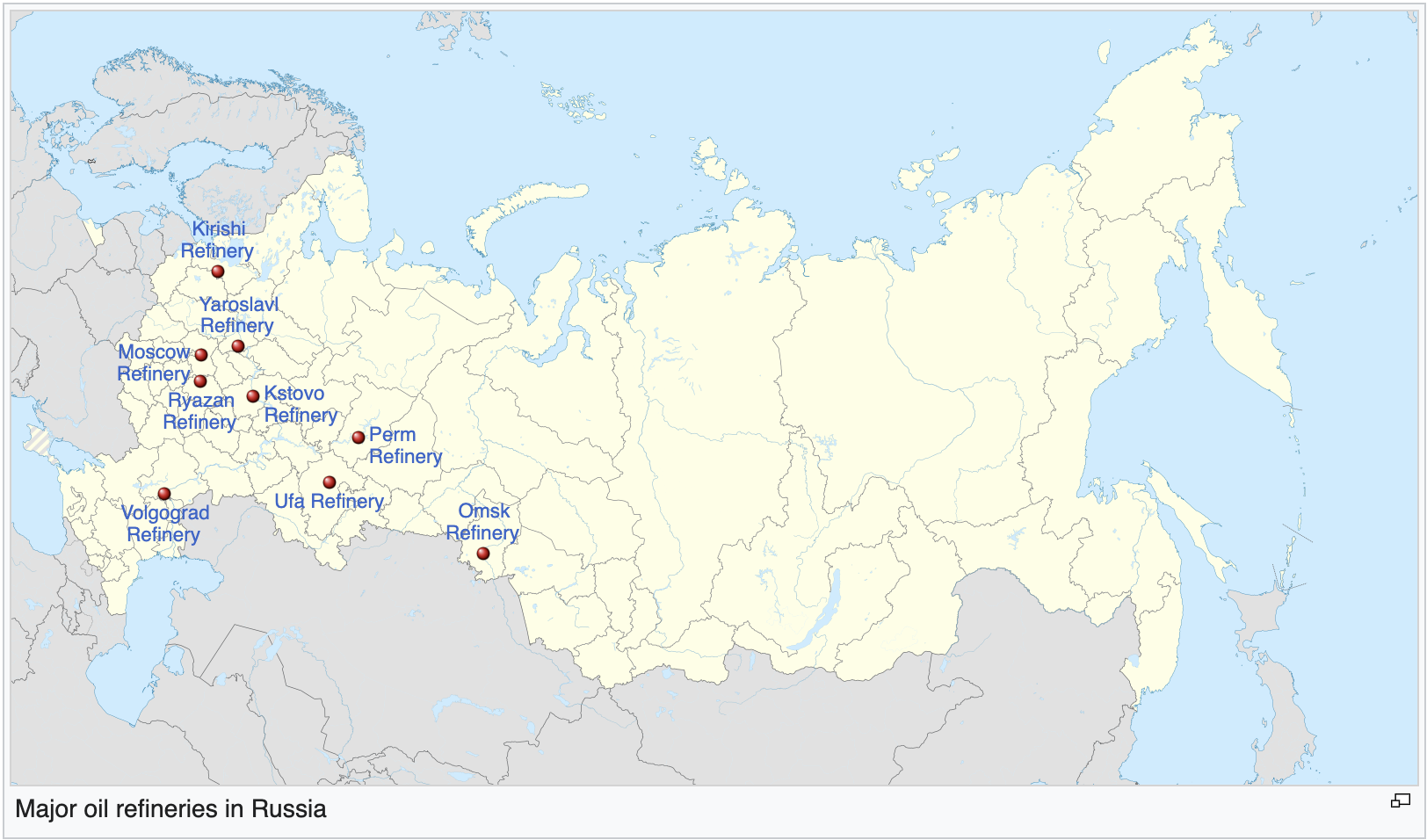
This is good news:
Washington has approved the transfer of thousands of Extended Range Attack Munitions (ERAM) to Ukraine, which will provide the country with a powerful new and relatively low-cost standoff strike capability, it has been reported. However, it’s unclear whether Kyiv will be able to use the new weapon to strike targets deep within Russia, with unnamed U.S. officials telling the Wall Street Journal that such targets are off-limits, at least for the U.S.-donated Army Tactical Missile System (ATACMS).
According to the WSJ, the Trump administration last week approved the sale of 3,350 ERAM missiles to Ukraine. The weapons, which have a range between 150-280 miles and are stated to be air-launched, at least initially, should start to arrive in around six weeks. “Several” unnamed U.S. officials told the same publication that ERAM use would require prior approval from the Pentagon, due to the fact that it could strike targets relatively deep within Russia.
I’m not so concerned by the restrictions, although as always the devil is in the details. Prohibiting strikes against targets just across the border is of course bad but the military value of targets tends to decline as you get farther away from the front. These missiles should help Ukraine inflict disruption on Russia’s logistical networks, although we should keep in mind that the Russians have been pretty good about adapting after short periods of disruption. Along these lines I’m not at all convinced of the decisiveness of Ukraine’s new cruise missile…
It’s hard to overstate the impact Ukraine’s new Flamingo cruise missile could have on the Russia-Ukraine war. For the first time in the 42 months since Russia widened its invasion of Ukraine, Ukrainian forces can strike Russia with the same intensity Russian forces routinely strike Ukraine.
“Ukraine is increasingly taking the war to Russia now,” American-Ukrainian war correspondent David Kirichenko wrote in a new essay for The Atlantic Council.
It gets worse for the Russians. Russia’s drone and missile campaign mostly targets Ukrainian cities in a country of just 233,000 square miles. Ukraine’s drones and missiles target air bases, factories and oil refineries in a country of 6.6 million square miles.
The Flamingo, made by Ukrainian firm Fire Point, should be able to hold at risk roughly half that area.
Ukraine’s air defense problem is hard but simple. Ukrainian air defenses must contend with nearly daily raids involving potentially hundreds of drones and missiles, but they can concentrate around the biggest cities that are the Russians’ main targets.
Long term readers will be fully aware that I am extraordinarily skeptical of the value of deep strikes against anything but critical military targets. Firing one of these at St. Petersburg or Moscow is both a war crime and a waste of a missile. Firing it at a munitions factory is a bit better but it is incredibly easy to repair damage to factories to the point that the price of the missile approaches the cost of repairs. And while David Axe is correct that the Russians face a devilish problem in terms of defending their airspace (something that has been true since the Cold War), I don’t doubt that Russian fighter jocks will have fun hunting these missiles, especially if they’re headed on predictable flight paths towards critical Russian military installations. A good rule of thumb (true since the Battle of Britain, at least) is that if your own population isn’t demoralized by long-range airstrikes, it’s not likely that the enemy population is going to be demoralized by them, either. That said, if you’re going to use deep strike for anything it’s best to use it against energy infrastructure:
The late Sen. John McCain once called Russia “a gas station with nukes.” Now, because of Ukrainian attacks, it must ration fuel.
The intensifying Ukrainian drone campaign against Russian refineries has taken some 13% of Russia’s fuel production offline, according to analysts. Sanctions imposed by the West after the 2022 invasion, meanwhile, have limited Moscow’s ability to repair infrastructure and service remaining installations.
At the same time, the now frequent disruptions by Ukrainian drones to Russia’s rail networks and airports have forced more Russians to travel by road during their summer holidays, just as fuel demand spiked because of the harvest season.
As a result, several regions, including Russian-occupied Crimea and parts of Siberia, have implemented rationing at gas stations. Where gas is available, it is much more expensive—Russian wholesale prices for 95-octane gasoline have risen 45% this year so far, even as global crude oil prices have significantly declined.
At this point in the war the name of the game is to drive up the costs to Russia of continuing the war. Damaging Russia’s energy industry is one of the best ways to do that.
Photo credit: By Uwe Dedering – Own work For file history see: File:Russia administrative location map.svg (no history split due to heavy usage), CC BY-SA 4.0, https://commons.wikimedia.org/w/index.php?curid=166982562