Subscribe via RSS Feed

Author Page for Robert Farley

rss feed

Seapower History Bleg

[ 19 ] May 6, 2013 | Robert Farley

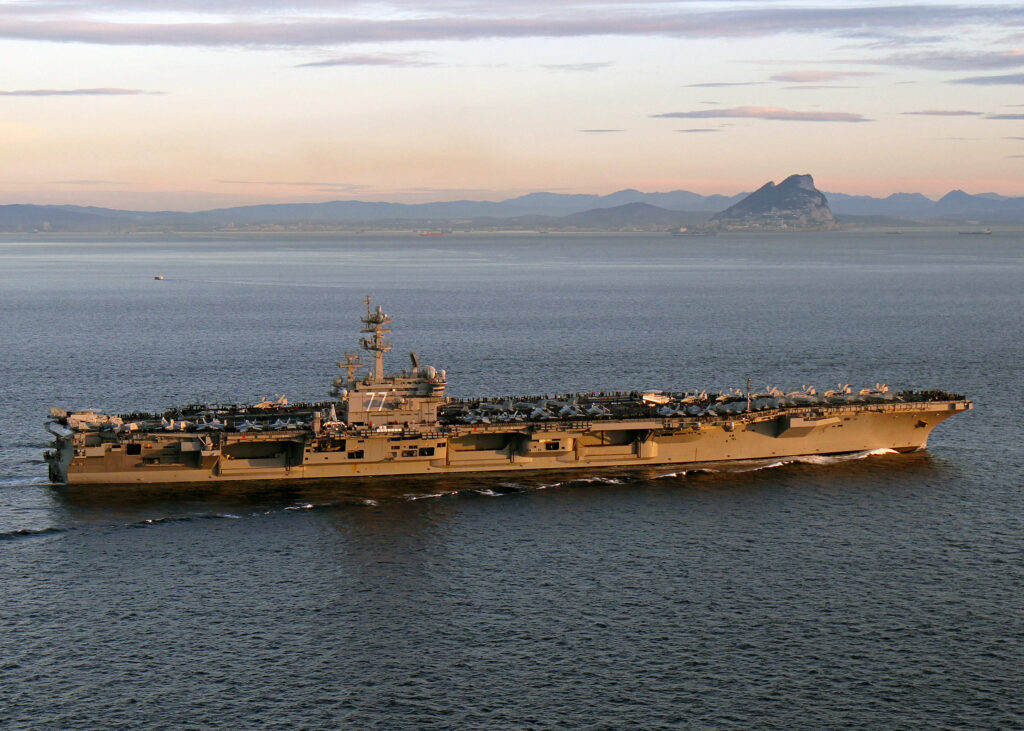
Does anyone know of any good work on competition/conflict between the Army and the Navy in either the Civil War or the Spanish-American War? Most of the extant work on inter-service conflict treats it as a 20th century phenomenon, generated by the expansion of warfare into the third dimension, but it seems likely to me there were instances of conflict in prior wars. Would appreciate any suggestions in comments.

Monday Linkage

[ 24 ] May 6, 2013 | Robert Farley

To start your week:


Star Wars Didn’t Matter

[ 50 ] May 5, 2013 | Robert Farley

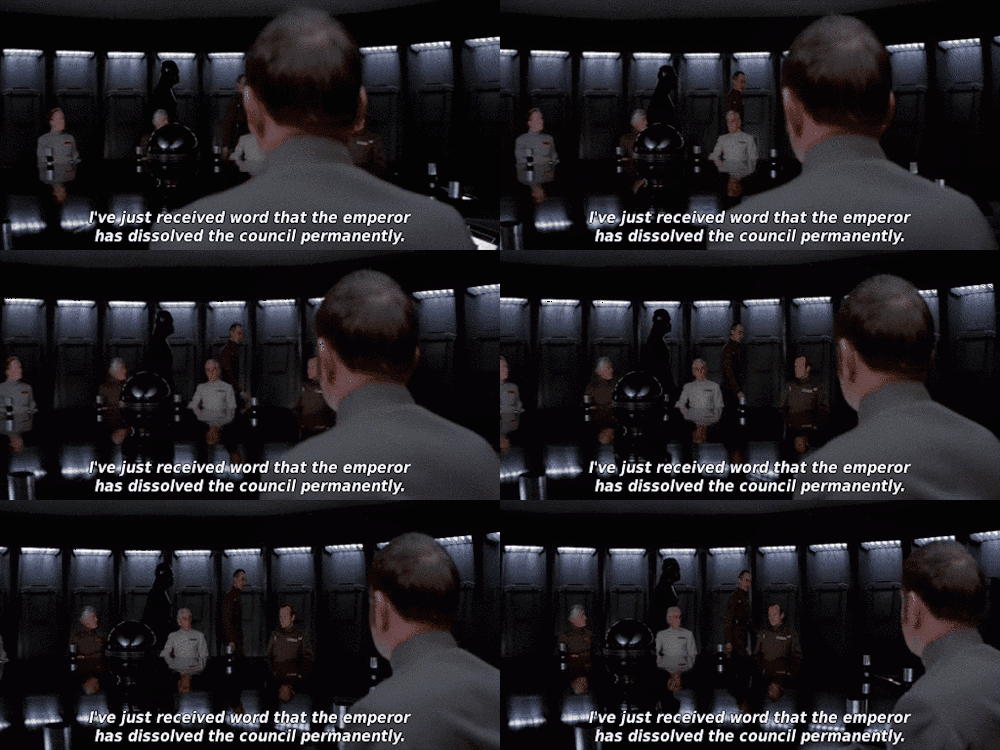
Given the coincidence of “May the Fourth be With You,” and the season finale of The Americans, this is worth a look:

The archival documents also help dispel the notion that the Star Wars program pushed the Soviet Union closer to the brink of an economic collapse. No one would argue that the Soviet economy was in good shape, and military spending was one of the factors dragging it down. But the cost of the arms race was very far down the Soviet leadership’s list of concerns at the time of the Reykjavik summit. Rather, it was the danger of a continuing nuclear buildup that motivated Gorbachev and his advisers to seek negotiated weapons reductions. While the Soviet Union did have a plan to respond to SDI with a similar program of its own, the documents show that work on that plan wound down long before the Soviet leaders came to appreciate the expense associated with missile defense.

US missile defense was never really an effective economic stressor on the Soviets — according to their estimates, technical counter-measures to defeat missile defenses would have cost no more than five percent of their SDI-like program. With these estimates in hand by the summer of 1987, the Soviet leadership felt confident that it could drop its opposition to Star Wars and go ahead with treaty negotiations and later disarmament talks. Although SDI remained a contentious political issue for many more years, the documents show that the Soviets did not believe it posed a danger to their nuclear forces, even after significant reductions in their arsenal.

Finally, the Soviet documents very clearly demonstrate the fallacy of the “dissuasion” argument advanced by American missile defense proponents. One of the ideas that emerged from the Star Wars debate and still circulates involves introducing uncertainty into calculations about the potential effectiveness of ballistic missiles. By creating such uncertainty, this argument goes, SDI demonstrated to the Russians that investing in missiles was futile. Instead, Star Wars had exactly the opposite effect. Far from being dissuaded from investing in missiles, the Soviet Union launched a number of projects in the mid-1980s that were designed to build new and better intercontinental ballistic missiles (ICBMs) that would be able to counter an SDI-like system.

I’m not sure that there’s any defense program in modern history that’s founded more on fantasy and falsehood than BMD. The critical scene in The Americans was perfect:

It is incredible. From the Latin, ‘incredibilis.’ ‘In’ meaning ‘not.’ “Credibili’ meaning … The technology, it’s ‘incredibilis.’ At best, it’s 50 years from being even remotely operational. The whole thing’s a fantasy.

Incidentally, The Americans is so much better than Homeland that it’s no longer useful to compare the two. Noah Emmerich is the real star, playing an FBI agent that plausibly resembles in attitude and mannerism actual, human employees of the FBI.

Foreign Entanglements: Next in Syria

[ 3 ] May 2, 2013 | Robert Farley

On this week’s episode of Foreign Entanglements, Matt and I talk about what will happen if Assad wins:

Overextension

[ 2 ] May 1, 2013 | Robert Farley

In this week’s Diplomat column I concern troll China:

Nevertheless, it is not clear why China has determined to assertively pursue both of these disputes at the same time. Historically, states with wide-ranging security problems are best advised to resolve those problems one at a time, hopefully in isolation with one another. In this case, it’s not completely clear that the same people are making decisions on policy in both the Himalayas and the East China Sea; the Chinese foreign and military policy-making process is sufficiently complicated that local authorities have some influence over border policy.  However, it hardly makes sense for China to antagonize both of its powerful neighbors at once, even if it is in the right in both cases.

It doesn’t take a genius to see the strategic logic of a strong India-Japan relationship. Tokyo and New Delhi have each other on speed dial, and in any case Washington is surely eager to connect the call . Some Indian commentators have already called for more robust responses, including calibrating Indian support for China’s maritime disputants in accordance to the situation on the border.  Japan’s moves to negotiate its long-running border disputes with Russia put the Chinese problem into stark relief. Whether or not Japan and Russia manage to finally secure a peace treaty, the effort indicates that Tokyo takes seriously the need to make its international crises manageable.


I’m Sure A-Rod is Somehow Responsible

[ 139 ] April 30, 2013 | Robert Farley

Is there no end to the perfidy of Justin Verlander?

Selling to the low bidder reduces the overall valuation of the franchise by about $35 million, which seems to be against the interests of owners league-wide. And Seattle is a much larger metropolitan area than Sacramento, so the leaue as a whole is missing out on an opportunity to grow its fanbase and increase national television revenue.

So why do this?

Well, it seems to all go back to the arena. You see, in addition to offering $365 million for the team, the Seattle bidders were offering to build a brand new arena for the Kings. By contrast, the Sacramento bidders managed to persuade the city of Sacramento to build a brand new arena for the Kings. The Seattle bid, in other words, would have set a good precedent for the future of American public policy. And the owners didn’t want that. The owners want to be able to make this move over and over again. “Give us a new publicly financed stadium or we’ll move to Seattle” is a threat that works as well in Portland or Milwaukee or Minneapolis or Salt Lake City or Memphis or New Orleans or Phoenix as it does in Sacramento. And the major American sports leagues are organized as a cartel for a reason. An individual owner just wants to sell to the highest bidder. But the league approval process means the owners as a whole can think of the interests of the overall cartel, and those interests very much include a strong interest in maintaining the ability to get cities to pony up subsidies.

If your resolution to this problem is “Lebron James should get paid less money,” then congratulations; a sportswriting gig at Slate awaits you…

Monday Evening Links…

[ 10 ] April 29, 2013 | Robert Farley

For your enjoyment:

Sunday Book Review: Stalin’s General: The Life of Georgy Zhukov

[ 60 ] April 28, 2013 | Robert Farley

Field Marshal Georgy Zhukov- RIA Novosti, Commons: RIA Novosti, P. Bernstein

Stalin’s General: The Life of Georgy Zhukov is a new biography of Field Marshal Georgy Zhukov from Geoffrey Roberts. The book is interesting, but ultimately disappointing to most audiences with a taste for Zhukov. Nevertheless, it’s good to see the re-emergence of a popular(ish) taste for Soviet military history in the West.

Product of a not-too-prosperous-but-not-altogether-impoverished peasant family from Strelkovka, Georgy Zhukov joined the Tsarist army in 1915 (age of 19), seeing his first action in the form of a German air attack on Russian rear positions. Zhukov did well for himself as a non-commissioned officer, displaying a flair for combat leadership.  He became a committed Bolshevik shortly after the Revolution, fighting on several fronts during the Russian Civil War. Because of other commitments (as well as bout of typhus), Zhukov missed the Russo-Polish War.

In Roberts’ account, Zhukov does not play much of a role in the intellectual life of the Red Army, especially during the particularly fertile inter-war period.  Zhukov never posted to the armor school at Kazan, or had much of an input into the development of Deep Battle.  On the one hand this isn’t terribly surprising; the intellectual core of the Red Army was decapitated in the great purge of 1937.  On the other hand, the experience of cavalry warfare in the Russo-Polish War and and the Civil War helped informed Deep Battle; it’s interesting that Zhukov managed, as a significant cavalry officer, not to have any impact on the constitution of Soviet military doctrine.

Roberts’ account of the purge isn’t terribly satisfying.  We learn that Zhukov escaped the Great Purge (just by the nape, by his own account), but we get little sense of how this affected the general.  He lost friends, teachers, students, colleagues, and subordinates; there’s very little to indicate how Zhukov felt about any of this. It doesn’t appear that Zhukov ever harbored any serious doubts about the legitimacy of the Communist Party, the Soviet Union, or Josef Stalin; his willingness to overtly display this loyalty may explain his ability to survive three purges.

Zhukov’s first great success (beyond avoiding the purge) was the victory over the Japanese at Khalkin-Gol.  With the advantage of numbers and technology, Zhukov methodically destroyed the Japanese incursion, remaining on site for several months in order to oversee truce negotiations.  Fortunately, this allowed Zhukov to miss the Soviet-Finnish War, which set back the careers of several senior Red Army commanders.  The availability of Zhukov for Finland presents an interesting counter-factual; had he become associated with the failure, he might not have been in line for command in early 1941. Conversely, the Soviet High Command did enough wrong in Finland, from poorly understanding its own capabilities to gravely misjudging the Finns, that you don’t have to imagine any genius stroke to see how Zhukov might have helped. Rather, you can imagine offensives more competently planned and executed, with a leadership more firmly in grip of the situation, leading to victory in shorter order and with far fewer casualties.  Of course, it’s possible that both of these would have been the case; Zhukov could have led the Red Army to a victory over the Finns that was simultaneously quicker than the historical victory, but that still left the USSR humiliated and Stalin deeply unhappy with his senior commanders.

Another way of putting it is to suggest that Zhukov is the sort of commander you would want to fight a war that you should win. Conversely, Zhukov as commander would have been out of place in the Russo-Polish War, where the pursuit of victory demanded the kind of innovative, high risk performance that was more characteristic of Tukhachevsky.  Roberts paints a portrait of Zhukov that makes him very much  Grant, and not a Lee.

It’s hard to pin down the role he played in the major Soviet operations of WWII. Zhukov had formal responsibility for most of the important Soviet victories on the Eastern Front, including the relief of Leningrad, the Battle of Moscow, the Battle of Stalingrad, Kursk, Operation Bagration, and the Battle of Berlin. He also experienced some notable failures, including Operation Mars (the northern counterpart to Stalingrad), and some defeats in the early months of 1941. The Red Army was such an immense creature, with such a large staff system and bureaucracy, that it’s not possible to assess Zhukov’s input into particular decisions in the same way that we accord responsibility to Hannibal, Napoleon, Lee, or even Patton. Complicating matters further is the collective nature of Soviet strategic decision-making; Stalin consulted closely with Zhukov and his other senior commanders in development of war strategy. When we think of Zhukov’s contribution, it is perhaps most appropriate to say that he was the “lead architect” of Stalingrad, Bagration, and the Battle of Berlin, with all that does and does not entail. The Zhukov that we’re offered here lacks the dash of Patton, or the intellectual flair of Tukhachevsky or Guderian.He won because he took calculated, high-reward risks, and he felt secure in taking those risks because he did not fear Stalin. Indeed, part of the underlying story of Zhukov is the willingness of Stalin to allow him to fail.  The relationship between the two reminded me (again) a bit of that between Lincoln and Grant in the last two years of the American Civil War.

This should not take away from the following fact: Georgy Zhukov was the greatest general in the largest army in the biggest conflict the world has ever seen, and likely will ever see. On such a scale, “lead architect” of such a succession of victories is, indeed, a magnificent achievement.

Zhukov’s post-war career was, given the arc of Soviet politics, predictable.  He returned to Moscow the conquering hero, but soon came under fire from other senior commanders of the Red Army, almost certainly with Stalin’s assent.  He found himself exiled to several trivial positions, before returning to the capitol shortly before Stalin’s death.  In the disordered period before the rise of Khruschev, Zhukov became Minister of Defense, only to fall to another purge in 1957.  This final purge effectively pushed him out of Soviet public life, leaving his remaining years for writing and compiling his memoirs.

Zhukov was, by Roberts’ account, never anything but loyal to the Soviet state, and the communist ideal.  He harbored no ambitions beyond the position that he had reached, and was always willing to bend the knee to constituted Soviet authority. It is surely worth lingering over this point; Zhukov lived through (and participated in) the worst crimes of the Soviet regime. When we evaluate German generals such as Rommel, Beck, and Guderian, we invariably ask about their relationship to Hitler and the Nazi Party; Zhukov’s complicity most certainly bears mention.

Roberts includes a few personal details, including those of Zhukov’s relationships with his wives, daughters, and mistresses. And of course, Zhukov is the sort of person that his opinion of Bridge on the River Kwai is automatically interesting: “too pacifist for me.  I prefer something with shooting like the Guns of Naverone.” Roberts’ account of Zhukov’s last purge is simultaneously fascinating and frustrating.

I was determined not to be a victim, not to break down, not to fall apart, not to lose my will to live… Returning home, I took a sleeping pill.  I slept for several hours. I got up. I ate.  I took a sleeping pill. Against I fell asleep. I got up again, took a sleeping pill, and fell asleep.  This went on for 15 days… In my dreams I relived everything that had been tormenting me… I disputed. I proved my point. I grieved- all in my sleep.  Then, after 15 days, I went fishing.

This is great, both as a anecdote and coping strategy, but Roberts doesn’t leave us with much to evaluate whether it’s true or not. It’s certainly possible that a 60 year old Russian General took sleeping pills for fifteen days in order to deal with his purge, but I’d say it’s also possible that he drank himself into oblivion for a good two weeks. Having read a book about the man, I’d like to think that I’d have some sense of whether he’s telling the truth about this incident, but the picture Roberts paints is so shallow that I really don’t.

This is a good discussion of Roberts’ lack of detail, although I’d suggest that Roberts commits errors both in overestimating and underestimating his audience; appreciation of Zhukov’s achievements requires more knowledge of the Red Army and of the campaigns that Roberts is willing to grant. Then again,  the history of the Red Army as an institution may have seemed difficult to place, because oddly enough, Zhukov doesn’t appear to have played much of a role in the development of its doctrine or culture.  Frunze, Tukhachevsky, and Voroshilov are much more important figures in this regard. Williams wisely refrains from giving deeply detailed account of Stalingrad, Moscow, Bagration, et al, in part I suspect because it’s hard to nail down precisely what contribution Zhukov made; excellent management is excellent, in some ways, because it’s boring.

But this is part of a problem; I came away from this book somewhat more familiar with Zhukov’s career path, but without any very good sense of what the man would be like in a conversation.  We’re told that he was an authoritarian and a womanizer, which distinguishes him from senior military officers through history in no particular way. It may seem trite, but reading a biography I like to have some theory of who might portray the subject on film.  In this case, I’m left with a blank. This is a great book for people who are kind of interested in the career of Georgy Zhukov, but who don’t really have that much of an interest in either the Red Army or World War II.  As such, it’s not likely to satisfy many readers.

Stuck in the Middle… With You?

[ 11 ] April 26, 2013 | Robert Farley

My latest and the Diplomat thinks through the middle power dilemma:

Canada’s dilemma in this regard is hardly unique. The broader question involves the degree to which military procurement policies will be guided by expectations of integration into a multi-lateral military framework. Middle powers have a choice between procurement policies that maximize their unilateral security, and policies that maximize their ability to contribute to multilateral operations. For example, the United Kingdom faces a choice between preserving its nuclear deterrent (at this point a fundamentally unilateral project), and maintaining viable conventional forces capable of operating at the sharp point of NATO.

Book Review: China’s Search for Security

[ 31 ] April 25, 2013 | Robert Farley

I reviewed Andrew Nathan and Andrew Scobell’s China’s Search for Security for H-Net:

Nevertheless, Nathan and Scobell argue that, despite its growing power, China’s international position remains almost uniquely precarious. China borders more countries that any nation on earth, and continues to have border disputes with several of the most powerful. Other strong states, such as the United States and Japan, threaten China’s littoral. Internally, political discontent threatens Beijing’s control of outlying areas, including Tibet and Xinjiang. Concerns about political discontent and the maintenance of economic growth continue to draw the Chinese Communist Party’s (CCP) focus inward.

On a related point see here, although I suspect that there are some translation issues regarding the terms “invasion” and “occupation.”

I Think I’ll Have the Links…

[ 15 ] April 24, 2013 | Robert Farley

Links to grow on:

The Reserve Clause, Public Funding, and Social Cohesion

[ 105 ] April 23, 2013 | Robert Farley

The following is a long discussion between myself and Ted McClelland, spurred by his Slate article on baseball player salaries and social cohesion. Mr. McClelland graciously offered to conduct an e-mail debate on the question, and to allow me to post the results of this debate on the blog. My initial questions are in bold; his responses and counter-questions are italicized.

Read more…

Page 2 of 37212345102030...Last »
  • Switch to our mobile site