
The Rescue
 By
By 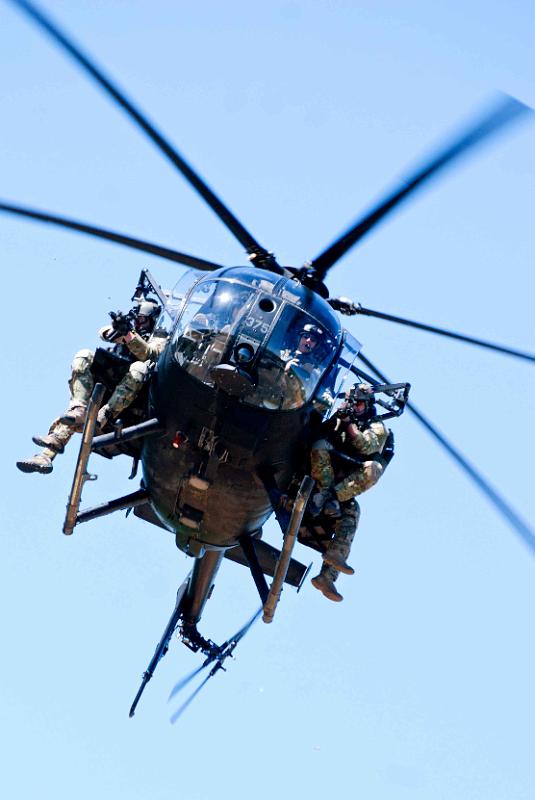
Lots of good info today about the operation to pick up the downed US aviator in Iran:
The two crew members of the F-15E Strike Eagle, the first lost to enemy fire in the monthlong war, had both ejected from the cockpit on Friday after Iran’s military struck their plane. The jet’s pilot was quickly rescued, but its weapons systems officer could not be found, setting off an urgent search with major consequences for Mr. Trump and the war that the United States and Israel launched on Feb. 28.
Finding the downed airman, who had been hiding behind enemy lines with little more than a pistol as defense, had been the U.S. military’s highest priority over the last 48 hours.
After ejecting from the F-15E, the officer hid in a mountain crevice, his location initially unknown to either Americans trying to rescue him, or Iranians trying to capture him.
The C.I.A. initiated a deception campaign to try to confuse Iranian forces, and convince them the airman had already been rescued and was moving out of the country in a ground convoy, a senior administration official said. The agency also ultimately found the airman’s hiding place, passing the information on to the Pentagon, which mounted the rescue operation, the senior administration official said.
On the CIA’s role in particular:
The C.I.A., which traditionally assists with efforts to rescue American pilots trapped behind enemy lines, developed a deception plan to buy time to find the airman by keeping the Iranians away from where he might be, according to a senior administration official. The official and others spoke under the condition of anonymity to discuss a sensitive rescue operation and intelligence collection.
While U.S. officials did not initially know exactly where the weapons officer was, they knew he had moved from where his ejection seat had hit the ground. They also knew he was injured, adding to the urgency of the search.
While it is unclear exactly what the deception plan involved or how successful it was precisely, the C.I.A. campaign aimed to spread word in Iran that the airman had been found and was moving out of the country in a ground convoy. The hope was that the Iranians would shift their search efforts from the place where the airman was thought to be, to the roads out of the region.
The C.I.A.’s operation did appear to cause confusion and uncertainty among the Iranian forces hunting for the airman, according to a senior administration official.
The airman evaded Iranian forces for more than 24 hours, eventually hiking up a 7,000-foot ridgeline and hiding in a crevice.
NYT reports that the operation involved landing multiple transport aircraft inside enemy territory. Two of the aircraft (likely MC-130Js) got stuck at the forward airfield and three more aircraft had to come and pickup the U.S. forces now stranded there. The aircraft were demolished in place in order for them not to fall into enemy hands.
So this went far beyond a heliborne rescue operation and according to the report, fixed-wing aircraft landed in enemy territory that was hot with activity. Of course, there are shades of the disastrous Operation Eagle Claw here, but this time, the end result was very different.
Iranian semi-state media has posted an image that appears to show two C-130s on the ground and another that shows a thick plume of black smoke at their location.
It has been reported that the two C-130s were demolished in place as they were incapable of departing, with three more aircraft coming in and extracting the special operations force. Amongst this wreckage appears to be at least one, and possibly two, burnt-out wrecks of MH-6/AH-6 Little Birds of the 160th Special Operations Aviation Regiment, better known as the Night Stalkers.
Obviously this is going to be a movie some day.
Yes, this is a lot of effort to rescue one guy, but as I mentioned yesterday the US has a history of engaging in costly and risk-acceptant operations in order to retrieve aviators. Part of this is force conservation (a trained WSO is a pretty expensive asset), part is morale (pilots take more risks if they know someone is going to come for them) and part of it is POW-avoidance (the political problem of Navy and Air Force POWs during the Vietnam War was genuinely traumatic for the services).
So good on the folks who rescued the aviator, and good for him that he wasn’t left behind. Shame about the expensive military equipment (F-15E, two C-130s, two choppers) that was destroyed. Bigger shame that this was all done in service of an illegal war that a demented old fool foisted upon the world.