
How Should Democrats Approach Israel?
 By
By 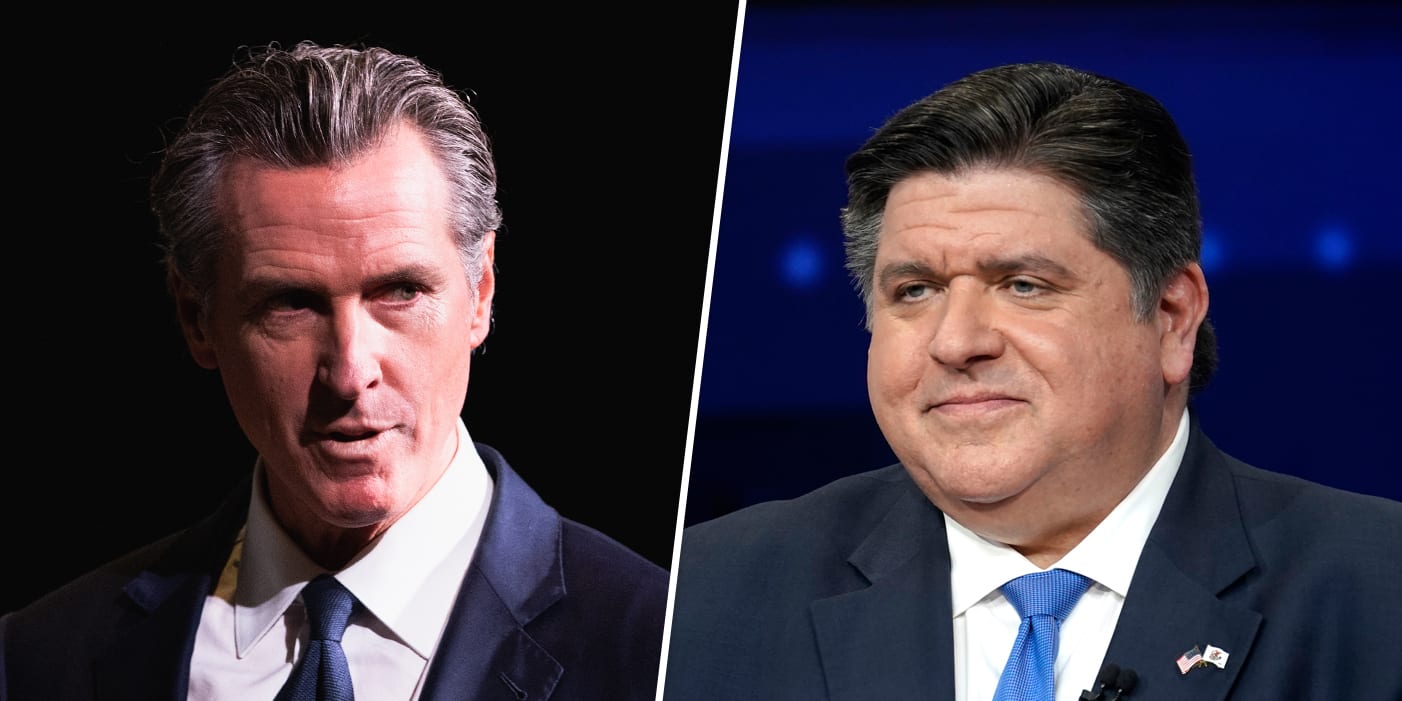
I don’t have a good answer to this question but there are lots of smart people working it out. Richard Yeselson and Trip Ventruella are in The New Republic to consider the issue. It’s worth your time:
With the presidential election of 2028 looming, Democrats will have a chance to decisively retake power. To do this, they are going to need a presidential candidate who can inspire the base and respect its policy preferences—and the base no longer supports unconditional support for the Israeli state as it is now constituted. If it does not align with the base, the party risks declining turnout in key states and perversely losing swing voters to a right-wing antisemitism redolent of the Lindbergh movement before the Second World War. But the war with Iran and a shifting consensus among their base will give aggressive politicians more room than ever before to change party policy.
The old, lazy mantra of a “two-state solution” seems almost delusional at this point (although, admittedly, so does a secular binational democratic state). But, at a minimum, an energetic, forward-looking policy of a Democratic administration must not reflexively co-sign on all Israeli aggression, depend on the very thin gruel of Israeli good faith, or require a Palestinian polity so enfeebled that it must accept all terms. Instead, it would insist on a pathway for Israel to become what Tony Judt once urged: a “normal state,” not a pariah, nor a new Sparta, as Netanyahu recently mused. It would apply the full weight of the U.S. government, in conjunction with the EU, G7, and regional Arab states, to compel just conditions on the parties conducive to Palestinian sovereignty and self-determination. It would recognize that Israel’s disenfranchisement and brutalization of millions of people of the same ethnicity on the West Bank is apartheid and would advocate and work to dismantle it. It would also cite the work of scholars of modern human rights and affirm that Israel—in a horrific and grim irony of postwar history—committed genocide in Gaza. It would acknowledge, or insist Israel publicly acknowledge, that it is a nuclear armed power. And it would, without fear or favor, apply U.S. law to Israel, rather than give it a winking carve-out.Among the party’s leading politicians, who can bridge the conflict between the base and the elites, and synthesize a new position on Israel? And how much might it matter whether this politician, who would almost necessarily be the party’s presidential nominee in 2028, is Jewish? Below, we undertake a survey of some representative possibilities, noting their general qualities, but focusing on the issue of U.S. policy toward Israel and how that will influence the nomination fight. (For the purposes of this exercise, we do not believe that Kamala Harris, if she runs again for president, has much chance to win the nomination. Her opportunity to break with Joe Biden and change U.S. policy toward Israel has come and gone.)
After considering a lot of possibilities, they point to J.B. Pritzker as the most likely person to pull this off:
The person for this mission likely needs to have a foot in both worlds. There is one candidate whose particular identity, politics, and prominence put him above all the others on this issue: Illinois Governor JB Pritzker. (Note: Co-author Trip Venturella was the creator in 2022 of a tongue-in-cheek Twitter account called “Nomadic Warriors for Pritzker.”)
Pritzker is an affable pol, a plutocrat with some of the class-traitor instincts of Franklin Delano Roosevelt. His Chicago accent and heavyset frame give Pritzker a kind of everyman quality. He is an outspoken progressive, having supported legislation eliminating cash bail, banning assault weapons, and prohibiting anti-union “captive audience” meetings in Illinois. He is also a scion of one of America’s most prominent Jewish families. The Pritzkers own Hyatt Hotels and sponsor the Pritzker Prize in architecture. The governor’s sister, Penny, is a former Obama Cabinet secretary who is now the head of Harvard’s Board of Overseers. Pritzker can run against the class hierarchy and privilege of the American political-economic-cultural elite—and, like FDR, he should. But it will never be said of him that he is not to that elite born and bred.
Pritzker has also demonstrated a profound commitment to the causes of Zionism and, especially, Jewish remembrance. He served on the board of AIPAC, and some of his closest advisers are AIPAC-affiliated. In multiple profiles, he has spoken of his work helping build the Illinois Holocaust Museum, an effort that he seems to regard as one of his life’s defining endeavors. Pritzker has credibility among the pro-Israel lobby. All of this would seem to make him an extremely unlikely prospect to forcefully shift party policy away from the status quo on Israel.
But in Pritzker’s case, his long-standing affiliation with the pro-Israel lobby—never a secret—doesn’t necessarily doom him. In response to the Gaza war, Pritzker seems to be revising his views about Israel, and his recent statements demonstrate, perhaps, a changing position. He has cautiously staked out a place on the party’s left flank, endorsing Sanders’s bill for arms sanctions, for instance. Unlike Newsom or Shapiro, he did not implement new state laws in Illinois cracking down on campus speech in response to the Gaza encampments of 2024. Tellingly, throughout his career, Pritzker has movingly emphasized the horror of the Holocaust—the extermination of European Jewry—rather than cheerleading for Israeli Jewish nationalism. In an extended interview with the Christian Science Monitor, during which he gave the reporter a tour of the Illinois Holocaust Museum, he noted that too little had been done to protect innocent Palestinians, a view he has now expressed in multiple statements. He was even more explicit on a recent episode of the popular I’ve Had It podcast, saying that as a Jew committed to upholding the values of social justice and people’s freedom, “I have to apply that equally to the state of Israel as I do to other countries that have committed atrocities.” From being an “unequivocal” supporter of Israel in the immediate aftermath of October 7, he has taken a much more skeptical view.
Well…what do people think?